
Alopecia areata and grey hair
Short answer
Alopecia areata may affect pigmented and grey hairs unevenly, creating an apparent colour change even though the underlying condition is patchy hair loss.
This answers one question. It is not a diagnosis and does not replace an assessment by a licensed doctor.
At a glance
- Apparent sudden greying
- Can reflect loss of pigmented hairs
- Early regrowth
- May be fine, pale or white
- Useful way to monitor
- Compare density and borders in consistent lighting
The short answer
Some regrowing hairs may also be white or lighter at first. Hair colour by itself does not show whether the condition is active or predict how much regrowth will occur.
Why colour can look different
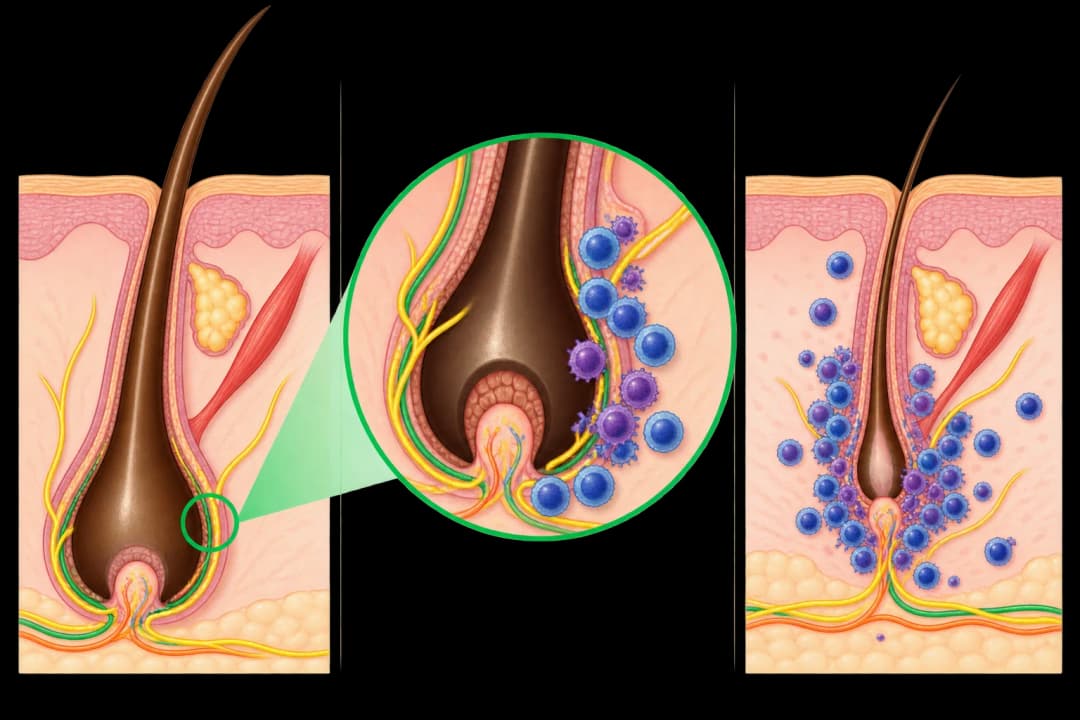
Hair colour depends on pigment added to the growing shaft within the follicle. During an alopecia areata episode, pigmented hairs may be lost while some grey or white hairs remain, making the area seem to turn grey suddenly rather than simply look thinner.
When growth resumes, early hairs can be fine and pale before becoming thicker or gaining pigment. Others may remain grey. These variations can occur within the same patch and are not, on their own, a sign of scarring or a treatment failure.
Tracking loss and caring for regrowth
Judge change by density, patch borders and new short hairs rather than colour alone. Photos in consistent natural lighting can reduce confusion caused by dye, reflections or differences in how the hair is parted. Tell the dermatologist about sudden shedding and any patches elsewhere.
Treat new growth gently: limit pulling, high heat and harsh processing over sensitive skin. Hair dye does not treat alopecia areata. If you choose to colour the hair, avoid applying dye to inflamed or broken skin and stop if burning, swelling or a rash develops.
When a colour change needs assessment
Book a clinical review if a colour shift comes with a smooth enlarging patch, increased shedding, eyebrow or eyelash loss, or nail changes. The examination can establish whether hair density has changed and whether the pattern fits alopecia areata.
Obtain prompt care for pain, pronounced redness, scale, crusting, discharge, blisters after dye use or scar-like skin. Those findings need assessment for irritation, allergy, infection or another inflammatory hair disorder rather than being attributed to greying.
Questions about pigment and regrowth
Ask whether the apparent colour change reflects selective shedding or pale regrowth, and which physical signs show current activity. If you colour your hair, clarify when the scalp is calm enough, which ingredients have previously irritated you and whether a prescribed scalp medicine changes product use.
Find care
General Clinics & Polyclinics in Abu Dhabi
That answer is general. If you want it applied to your own case, these are licensed general clinics & polyclinics listed in Abu Dhabi.
27 Ar Ruwwad St - Shakhbout City - MSH4 - Abu Dhabi - United Arab Emirates
Accepts: Daman, Thiqa, Cigna, MetLife +20 more
Al Ruwais, Al Dhafrah
Accepts: Daman, Thiqa, AXA, Cigna +16 more
Al Bahyah - Al Bahyah Old - Abu Dhabi - United Arab Emirates
Accepts: Daman, Thiqa, Cigna, Allianz Care +18 more
Abu Dhabi
Accepts: Daman, Thiqa, AXA, Cigna +27 more
Ordered by verification status and how complete each clinic's public record is, then alphabetically. This is a directory listing, not a ranking — Zavis does not rate or recommend providers.
A factual listing drawn from the DHA, DOH and MOHAP licence registers. It is not a referral, an endorsement, or advice that any of these providers is right for you.
Questions people ask
Can alopecia areata make hair turn grey overnight?
The impression of rapid greying can arise when darker hairs shed and existing grey hairs remain. That is a change in the visible mix of hairs, not proof that each shaft suddenly lost colour.
Will white regrowth regain its colour?
Some pale regrowth later gains pigment, while some remains white or grey. Colour alone cannot forecast the eventual density or course.
Is it safe to dye pale regrowth?
Dye can irritate the scalp and does not alter the condition. Wait until the skin is calm, follow product precautions and seek advice if you have had a previous reaction.
Related
Related reading
Keep reading
Medical disclaimer. This page is general health information, not medical advice, and it cannot diagnose you. Always consult a licensed healthcare provider about your own symptoms and treatment. In an emergency in the UAE, call 998 for an ambulance.