
Biologic and targeted treatment for alopecia areata
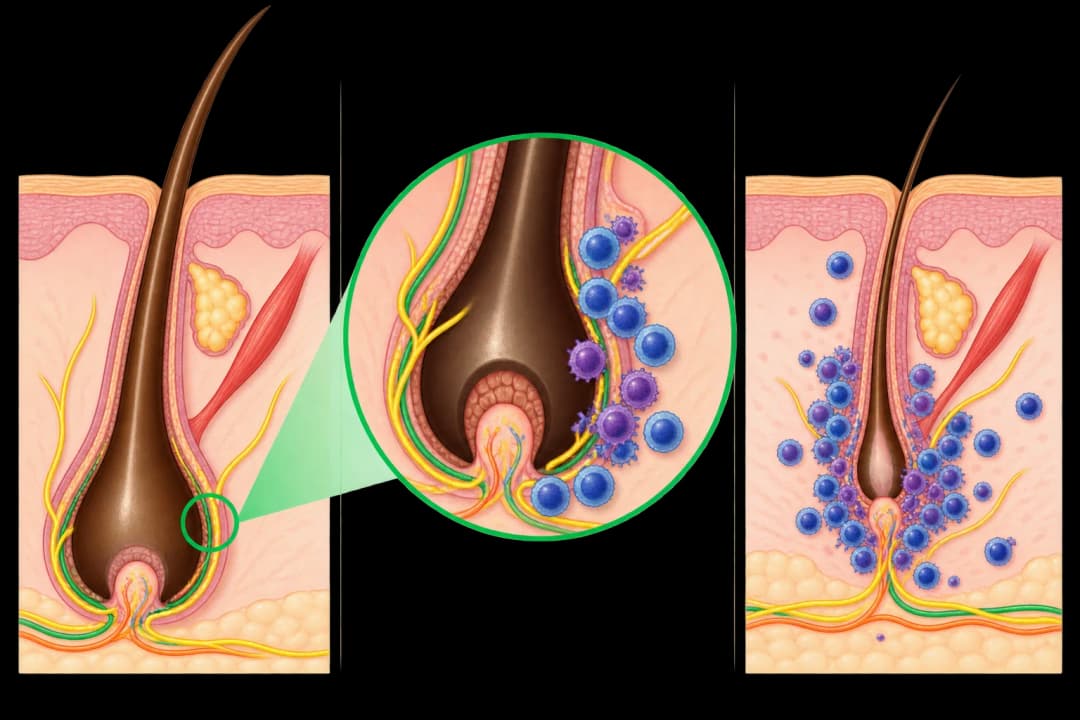
Short answer
Alopecia areata may be treated with medicines that modify immune activity, but the right option depends on the pattern, extent and impact of hair loss.
This answers one question. It is not a diagnosis and does not replace an assessment by a licensed doctor.
At a glance
- Treatment aim
- Reduce the immune disruption around hair follicles and support regrowth
- Key distinction
- JAK inhibitors are targeted small-molecule medicines, not biologic drugs
- Monitoring
- Systemic treatment can require health review, screening and blood tests
The short answer
People sometimes use “biologic” loosely for newer immune treatments. JAK inhibitors used for alopecia areata are targeted small-molecule medicines rather than biologic drugs. A dermatologist can clarify the exact medicine being discussed and whether it is authorised and appropriate for you.
What targeted treatment means
Alopecia areata develops when immune activity disrupts hair follicles, leading to non-scarring hair loss. Targeted medicines interrupt selected immune signals and may allow follicles to resume growth. They do not remove the underlying tendency, so hair loss can return after improvement or when treatment stops.
Systemic treatment affects the whole body and is generally considered when hair loss is extensive, progressing, affecting eyebrows or eyelashes, or causing substantial day-to-day distress. A few stable patches may instead be monitored or treated directly with topical corticosteroids or injections into the affected skin.
Planning treatment safely
Arrange a dermatology assessment to confirm the diagnosis and document which areas are affected. Before a systemic immune-modifying medicine, the clinician may review infections, vaccination history, pregnancy plans, other medicines, and personal risks involving blood clots, the heart or cancer. Blood tests and infection screening may be needed before and during therapy.
Discuss what improvement would matter to you, how progress will be photographed or measured, and when the plan will be reassessed. Do not begin, stop or share prescription immune treatment without the prescriber’s guidance. Gentle hair and scalp care, sun protection for exposed skin, and cosmetic camouflage can support comfort while waiting for regrowth.
When to seek medical care
Book a prompt review if hair loss is rapidly expanding, involves eyelashes or eyebrows, or the diagnosis has not been confirmed. While taking an immune-modifying medicine, seek urgent medical advice for fever with marked illness, breathing difficulty, chest pain, a painful swollen leg, or signs of a severe allergic reaction. Report a persistent infection, unusual bruising, or new concerning symptoms to the prescribing team.
Questions for your dermatologist
Ask for the medicine’s generic name and whether it is a biologic, JAK inhibitor, corticosteroid or another immune treatment. Useful follow-up questions include why it suits your pattern of loss, which screening and monitoring are needed, what side effects should trigger a call, and what happens if hair regrows or treatment is paused.
Find care
General Clinics & Polyclinics in Abu Dhabi
That answer is general. If you want it applied to your own case, these are licensed general clinics & polyclinics listed in Abu Dhabi.
27 Ar Ruwwad St - Shakhbout City - MSH4 - Abu Dhabi - United Arab Emirates
Accepts: Daman, Thiqa, Cigna, MetLife +20 more
Al Ruwais, Al Dhafrah
Accepts: Daman, Thiqa, AXA, Cigna +16 more
Al Bahyah - Al Bahyah Old - Abu Dhabi - United Arab Emirates
Accepts: Daman, Thiqa, Cigna, Allianz Care +18 more
Abu Dhabi
Accepts: Daman, Thiqa, AXA, Cigna +27 more
Ordered by verification status and how complete each clinic's public record is, then alphabetically. This is a directory listing, not a ranking — Zavis does not rate or recommend providers.
A factual listing drawn from the DHA, DOH and MOHAP licence registers. It is not a referral, an endorsement, or advice that any of these providers is right for you.
Questions people ask
Is a JAK inhibitor a biologic?
No. It targets immune signalling but is a small-molecule medicine. The distinction matters because administration, monitoring and risks differ between medicine classes.
Will targeted treatment cure alopecia areata?
It can help some people regrow hair, but it does not erase the tendency for alopecia areata. Response varies and relapse can occur.
Are injections the same as biologic treatment?
Not necessarily. Steroid injections placed into bald patches are local treatment and are different from a systemic biologic or oral targeted medicine.
Related
Related reading
Keep reading
Medical disclaimer. This page is general health information, not medical advice, and it cannot diagnose you. Always consult a licensed healthcare provider about your own symptoms and treatment. In an emergency in the UAE, call 998 for an ambulance.