
Alopecia areata in the beard
Short answer
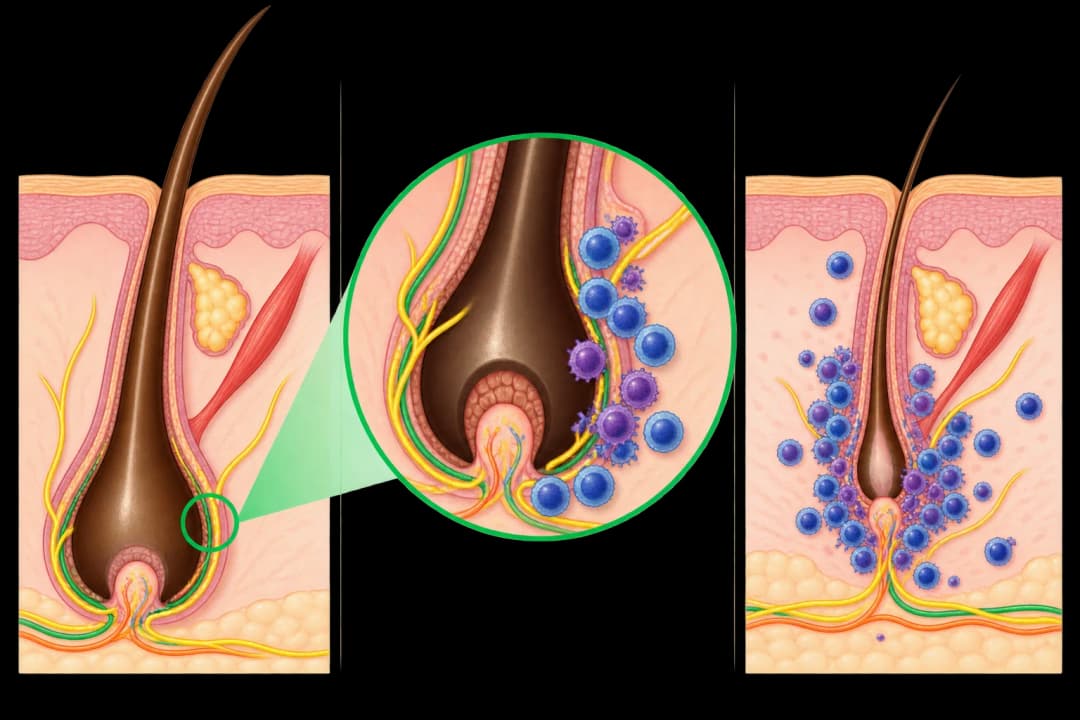
Alopecia areata can affect the beard, producing smooth patches with reduced hair while usually leaving the underlying facial skin without heavy scale or scarring.
This answers one question. It is not a diagnosis and does not replace an assessment by a licensed doctor.
At a glance
- Area affected
- One or more hair-bearing parts of the face
- Skin appearance
- Often smooth without heavy scale or scarring
- Grooming
- Reduce friction and avoid irritating unprescribed products
What does beard alopecia areata look like?
It may involve one facial area or appear alongside scalp, eyebrow or body-hair loss. Patchy beard loss is assessed on its own features; it should not be presumed to have the same cause as every scalp bald patch.
How beard hair loss is assessed
The clinician examines the patch edge, skin surface, broken hairs and follicle openings, often with magnification. Smooth skin and characteristic short hairs can support alopecia areata. Redness, pustules, scale or tenderness may instead suggest irritation, folliculitis or fungal infection.
Because alopecia areata does not usually destroy follicles, beard hair can return. Early regrowth may be fine or lighter than neighbouring hair before changing in texture or colour. The course remains unpredictable, and new areas can appear even after another patch fills in.
Care for affected facial skin
Use a gentle cleanser and minimise close shaving if it irritates the border. An electric trimmer, adjusted to avoid friction, may make grooming more comfortable. Do not apply strong essential oils, hair-growth mixtures or potent steroid creams to the face without clinical guidance.
Treatment depends on patch activity and size, other involved areas and your preferences. A dermatologist may consider carefully selected topical therapy or small injections into the affected skin. Facial skin is more vulnerable to certain side effects, so product strength and placement need supervision.
When the face needs review
Make an appointment for an unexplained beard patch, particularly when it is expanding, multiplying or accompanied by scalp, eyelash or eyebrow loss. Review is also useful if the cosmetic change is affecting mood, confidence or social activities.
Seek timely care for pain, warmth, pus, crusting, obvious scale or rapidly inflamed skin. These are not typical quiet-skin features of beard alopecia areata and may need testing or treatment for infection.
Questions about beard treatment
Ask how confident the diagnosis is, whether hairs elsewhere should be checked, and which option has the most suitable facial-skin safety profile. Clarify possible effects on skin colour or thickness and how shaving should be handled during treatment.
Find care
General Clinics & Polyclinics in Abu Dhabi
That answer is general. If you want it applied to your own case, these are licensed general clinics & polyclinics listed in Abu Dhabi.
27 Ar Ruwwad St - Shakhbout City - MSH4 - Abu Dhabi - United Arab Emirates
Accepts: Daman, Thiqa, Cigna, MetLife +20 more
Al Ruwais, Al Dhafrah
Accepts: Daman, Thiqa, AXA, Cigna +16 more
Al Bahyah - Al Bahyah Old - Abu Dhabi - United Arab Emirates
Accepts: Daman, Thiqa, Cigna, Allianz Care +18 more
Abu Dhabi
Accepts: Daman, Thiqa, AXA, Cigna +27 more
Ordered by verification status and how complete each clinic's public record is, then alphabetically. This is a directory listing, not a ranking — Zavis does not rate or recommend providers.
A factual listing drawn from the DHA, DOH and MOHAP licence registers. It is not a referral, an endorsement, or advice that any of these providers is right for you.
Questions people ask
Is patchy beard loss contagious?
Alopecia areata itself is not contagious. However, a fungal infection can also cause patchy beard loss, especially when scale, inflammation or broken hairs are present, so diagnosis matters.
Will shaving make beard alopecia spread?
Shaving does not drive the immune process or make alopecia areata spread. Rough shaving can irritate exposed facial skin and make redness harder to interpret.
Can beard alopecia occur without scalp hair loss?
Yes. Alopecia areata may be limited to the beard, though a clinician may still inspect the scalp, eyebrows, eyelashes and nails for subtle involvement.
Related
Related reading
Keep reading
Medical disclaimer. This page is general health information, not medical advice, and it cannot diagnose you. Always consult a licensed healthcare provider about your own symptoms and treatment. In an emergency in the UAE, call 998 for an ambulance.