
Alopecia areata and an itchy scalp
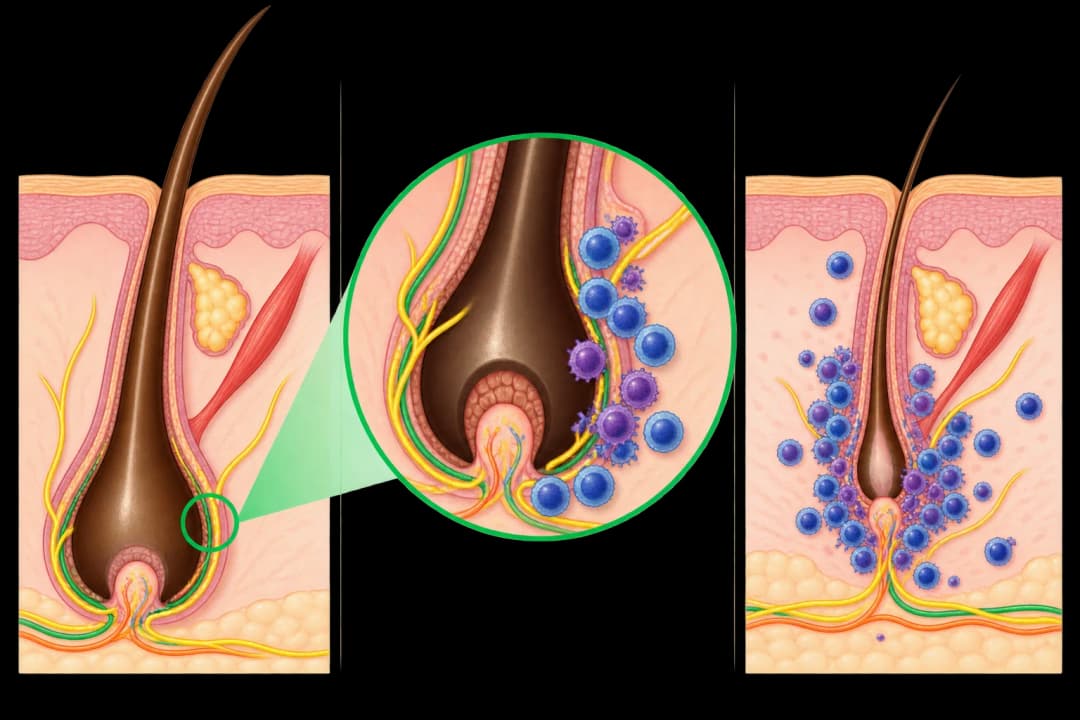
Short answer
Alopecia areata can be accompanied by scalp sensations, but persistent itching also warrants assessment for another scalp condition.
This answers one question. It is not a diagnosis and does not replace an assessment by a licensed doctor.
At a glance
- Pattern
- Alopecia areata commonly presents with smooth bald patches.
- Itch
- Itch may accompany a patch but can have a separate cause.
- Avoid
- Scratching and untested scalp mixtures can worsen irritation.
The short answer
Itching alone cannot identify the cause of hair loss. The appearance of the skin, pattern of loss and presence of scale, broken hairs or inflammation help distinguish alopecia areata from other problems.
What itching may mean
Alopecia areata often produces smooth, sharply defined areas of hair loss, and some people notice tingling, tenderness or itch around active patches. Pronounced scaling, greasy flakes, a rash or sores are not explained by the hair loss pattern alone.
Dandruff-related inflammation, eczema, contact reactions to hair products, psoriasis and fungal infection can all itch. Scratching may break hairs and irritate the skin, which can blur the original pattern. Alopecia areata and a separate itchy scalp disorder may also occur together.
How to care for the scalp now
Pause newly introduced dyes, fragranced oils, adhesives or styling products if irritation followed their use. Wash gently with lukewarm water, avoid picking scale, and keep fingernails short to limit skin damage. Do not share combs, hats or towels when infection is possible.
Take clear photographs before applying new remedies and note whether itch began before or after the bald patches. A clinician needs to know about flaking, pain, discharge, recent product use, contact with an affected person or animal, and any treatment already placed on the scalp.
Signs that need medical care
Arrange an examination when itching persists, bald areas enlarge, hairs break close to the scalp, or scale and redness are present. A clinician may need to examine hairs and skin closely or test for fungus before choosing treatment.
Seek urgent care for rapidly increasing swelling, severe pain, fever, spreading warmth, pus, or a serious reaction with facial swelling or breathing difficulty. These are red flags because of the skin or allergic symptoms, not because itch predicts a particular type of hair loss.
Questions for your appointment
Ask whether the bald areas have the smooth appearance of alopecia areata, whether the itch suggests a second diagnosis, and if fungal testing is needed. Confirm which product should treat the scalp skin, which option targets the hair loss, and where each should be applied.
Find care
General Clinics & Polyclinics in Abu Dhabi
That answer is general. If you want it applied to your own case, these are licensed general clinics & polyclinics listed in Abu Dhabi.
27 Ar Ruwwad St - Shakhbout City - MSH4 - Abu Dhabi - United Arab Emirates
Accepts: Daman, Thiqa, Cigna, MetLife +20 more
Al Ruwais, Al Dhafrah
Accepts: Daman, Thiqa, AXA, Cigna +16 more
Al Bahyah - Al Bahyah Old - Abu Dhabi - United Arab Emirates
Accepts: Daman, Thiqa, Cigna, Allianz Care +18 more
Abu Dhabi
Accepts: Daman, Thiqa, AXA, Cigna +27 more
Ordered by verification status and how complete each clinic's public record is, then alphabetically. This is a directory listing, not a ranking — Zavis does not rate or recommend providers.
A factual listing drawn from the DHA, DOH and MOHAP licence registers. It is not a referral, an endorsement, or advice that any of these providers is right for you.
Questions people ask
Does an itchy bald patch confirm alopecia areata?
No. Alopecia areata can cause scalp sensations, but fungal infection, eczema, psoriasis and contact reactions can also produce itchy hair loss. Examination distinguishes them.
Can I use a corticosteroid cream on an itchy patch?
Use it only when recommended for the diagnosed problem. Corticosteroids can treat selected inflammatory conditions, but using one without assessment may change the appearance of an infection and delay correct care.
Related
Related reading
Keep reading
Medical disclaimer. This page is general health information, not medical advice, and it cannot diagnose you. Always consult a licensed healthcare provider about your own symptoms and treatment. In an emergency in the UAE, call 998 for an ambulance.