
Alopecia areata and hair transplant
Short answer
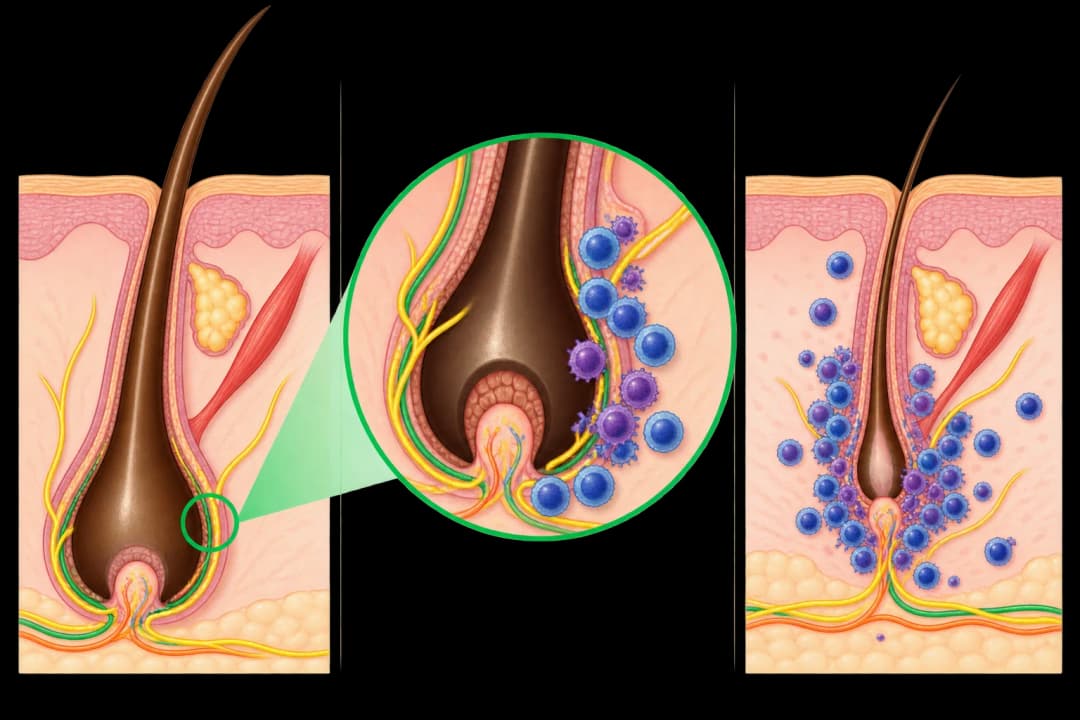
Hair transplantation is usually unsuitable for active alopecia areata because the immune process can affect transplanted follicles.
This answers one question. It is not a diagnosis and does not replace an assessment by a licensed doctor.
At a glance
- Purpose of transplant
- It redistributes existing follicles but does not suppress alopecia areata.
- First step
- Confirm the diagnosis and whether hair loss remains active.
- Key limitation
- Both transplanted hair and surrounding hair may be affected later.
The short answer
A transplant moves follicles; it does not stop the condition driving hair loss. Medical control and a clear diagnosis generally come before any discussion of surgery.
Why diagnosis and disease activity matter
Alopecia areata can change location, expand or regrow unpredictably. Follicles taken from a donor area may later be affected, while further loss around transplanted hairs can create an uneven result. Surgery also uses a limited donor supply that cannot simply be replaced.
Some permanent-looking patches have another cause, such as scarring hair loss, traction or pattern hair loss. Those conditions require different planning. A dermatologist may inspect the scalp closely and occasionally recommend additional testing before naming the type of hair loss.
What to do before considering surgery
Start with a dermatologist who treats hair disorders. Record when each patch appeared, whether it is still changing, what treatments you have tried, and whether eyebrows, eyelashes, beard or nails are involved. Serial photographs can help show whether the condition is stable.
Discuss non-surgical options matched to the extent and location of loss. Depending on the clinical picture, options may include corticosteroids applied to or injected into affected skin, or medicines that alter immune signalling. Cosmetic fibres, hairpieces and scalp styling can provide coverage without using donor follicles.
When to seek assessment
Arrange prompt review if patches are spreading quickly, hair is shedding widely, or eyebrows and eyelashes are being lost. Pain, scaling, pustules, marked redness or shiny scar-like skin are additional reasons for assessment because they may point to inflammation, infection or scarring.
Before paying a deposit or scheduling surgery, seek an opinion from a dermatologist independent of the transplant provider. The review should address diagnosis, current activity, donor-area health and the possibility of future loss.
Questions for a specialist
Ask what findings confirm alopecia areata, whether there is evidence of active loss, and what outcome is realistic without surgery. If transplantation is still being discussed, ask how the donor area was assessed, what would happen if new patches developed, and which medical treatments would continue.
Find care
General Clinics & Polyclinics in Abu Dhabi
That answer is general. If you want it applied to your own case, these are licensed general clinics & polyclinics listed in Abu Dhabi.
27 Ar Ruwwad St - Shakhbout City - MSH4 - Abu Dhabi - United Arab Emirates
Accepts: Daman, Thiqa, Cigna, MetLife +20 more
Al Ruwais, Al Dhafrah
Accepts: Daman, Thiqa, AXA, Cigna +16 more
Al Bahyah - Al Bahyah Old - Abu Dhabi - United Arab Emirates
Accepts: Daman, Thiqa, Cigna, Allianz Care +18 more
Abu Dhabi
Accepts: Daman, Thiqa, AXA, Cigna +27 more
Ordered by verification status and how complete each clinic's public record is, then alphabetically. This is a directory listing, not a ranking — Zavis does not rate or recommend providers.
A factual listing drawn from the DHA, DOH and MOHAP licence registers. It is not a referral, an endorsement, or advice that any of these providers is right for you.
Questions people ask
Can transplanted hair develop alopecia areata?
Yes. Moving a follicle does not protect it from the immune process, so transplanted follicles may also be affected.
Does stable-looking hair loss make transplantation appropriate?
Not by itself. Stability is one consideration, but the exact diagnosis, donor supply, scalp findings, treatment history and risk of renewed activity all need specialist review.
Related
Related reading
Keep reading
Medical disclaimer. This page is general health information, not medical advice, and it cannot diagnose you. Always consult a licensed healthcare provider about your own symptoms and treatment. In an emergency in the UAE, call 998 for an ambulance.