
Alopecia areata and diet
Short answer
No specific diet cures alopecia areata, but balanced nutrition helps support normal hair growth and overall health.
This answers one question. It is not a diagnosis and does not replace an assessment by a licensed doctor.
At a glance
- Main point
- Food supports hair production but does not directly cure alopecia areata.
- Testing
- Tests should be guided by symptoms, examination and dietary history.
- Supplements
- More is not better; unnecessary high doses can be harmful.
The short answer
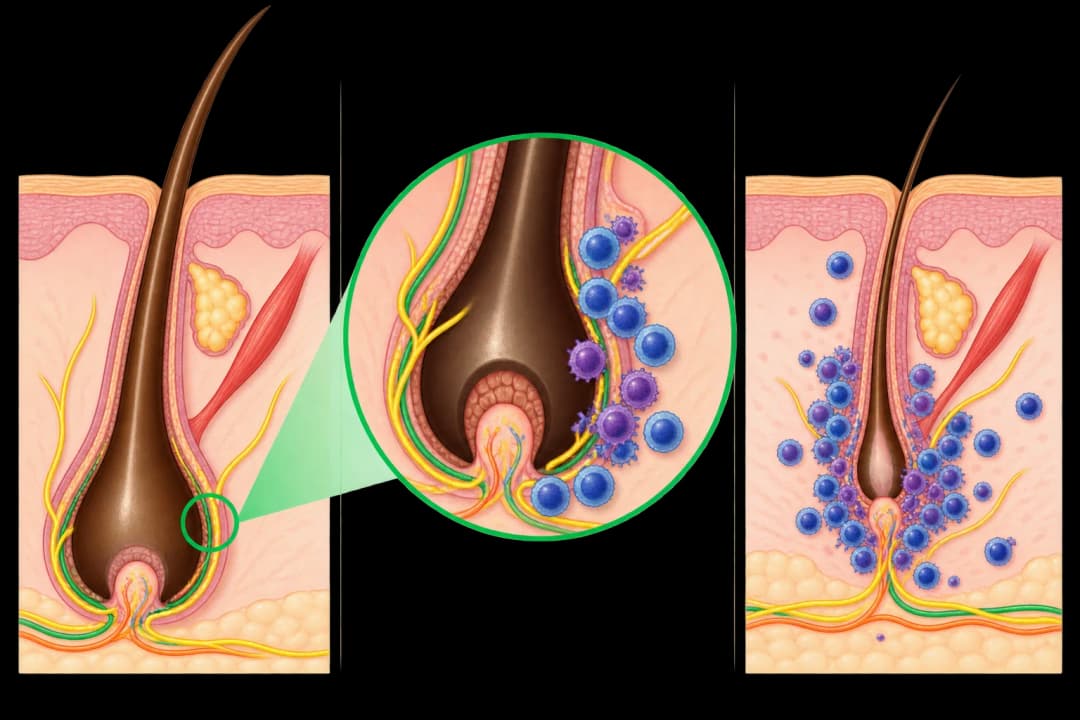
Alopecia areata is an immune-mediated condition, so removing a food is unlikely to switch it off. A deficiency can contribute to additional shedding or poor hair quality, but correcting that deficiency does not necessarily treat the alopecia areata itself.
How food relates to hair loss
Hair follicles need adequate energy, protein and micronutrients to produce hair. Very restrictive eating, rapid weight change or low intake can trigger diffuse shedding across the scalp. Alopecia areata more often presents with clearly defined bald patches, although patterns vary. More than one type of hair loss can occur at the same time.
Blood tests are most useful when your history or examination suggests a deficiency or another health issue. Testing may be considered for iron stores, thyroid function or selected vitamins, rather than taking a broad panel of supplements without a reason.
Practical eating steps
Aim for regular meals containing a protein source, vegetables or fruit, and varied whole foods. If you avoid major food groups, follow a vegan diet, have heavy menstrual bleeding, digestive symptoms or recent weight loss, tell your clinician because these details can guide testing.
Avoid high-dose hair supplements unless a clinician has identified a need. Excess amounts of some nutrients can cause harm or even worsen hair loss, and biotin can interfere with certain blood test results. Bring supplement bottles or a complete ingredient list to appointments.
When to arrange medical care
Book a dermatology assessment for new or enlarging bald patches, rapid shedding, loss of eyebrows or eyelashes, or nail changes. Seek earlier advice if the scalp is painful, very inflamed, crusted or draining, because these features need assessment for causes other than uncomplicated alopecia areata.
Also arrange care if dietary restriction is accompanied by faintness, marked fatigue, weakness, persistent digestive symptoms or unintended weight loss. These symptoms warrant a broader medical and nutritional review rather than dietary experimentation.
Questions for your clinician
Ask whether the pattern fits alopecia areata alone, whether your eating history suggests targeted blood tests, and how any confirmed deficiency should be treated. You can also ask how photographs might track regrowth and whether medical treatment is appropriate while nutrition is addressed.
Find care
General Clinics & Polyclinics in Abu Dhabi
That answer is general. If you want it applied to your own case, these are licensed general clinics & polyclinics listed in Abu Dhabi.
27 Ar Ruwwad St - Shakhbout City - MSH4 - Abu Dhabi - United Arab Emirates
Accepts: Daman, Thiqa, Cigna, MetLife +20 more
Al Ruwais, Al Dhafrah
Accepts: Daman, Thiqa, AXA, Cigna +16 more
Al Bahyah - Al Bahyah Old - Abu Dhabi - United Arab Emirates
Accepts: Daman, Thiqa, Cigna, Allianz Care +18 more
Abu Dhabi
Accepts: Daman, Thiqa, AXA, Cigna +27 more
Ordered by verification status and how complete each clinic's public record is, then alphabetically. This is a directory listing, not a ranking — Zavis does not rate or recommend providers.
A factual listing drawn from the DHA, DOH and MOHAP licence registers. It is not a referral, an endorsement, or advice that any of these providers is right for you.
Questions people ask
Should I avoid gluten for alopecia areata?
Not routinely. Avoiding gluten is appropriate when a clinician diagnoses coeliac disease or another clear reason. Unsupervised restriction can make it harder to meet nutritional needs.
Can supplements regrow alopecia areata patches?
Supplements can correct a confirmed deficiency, but they are not a substitute for alopecia areata treatment. A dermatologist can distinguish patchy autoimmune loss from shedding related to nutrition.
Related
Related reading
Keep reading
Medical disclaimer. This page is general health information, not medical advice, and it cannot diagnose you. Always consult a licensed healthcare provider about your own symptoms and treatment. In an emergency in the UAE, call 998 for an ambulance.