
Allergy pills for hives: uses and precautions
Short answer
Oral antihistamines can calm the itch and welts of hives, although the right product and dose depend on the patient.
This answers one question. It is not a diagnosis and does not replace an assessment by a licensed doctor.
At a glance
- Typical appearance
- Raised welts that move or change
- Common symptom
- Itching
- Deeper swelling
- Angioedema
Do allergy pills help hives?
These medicines block the effects of histamine. A clinician or pharmacist can help select a less-sedating or sedating option based on symptoms, other medicines, age and medical history.
What hives look and feel like
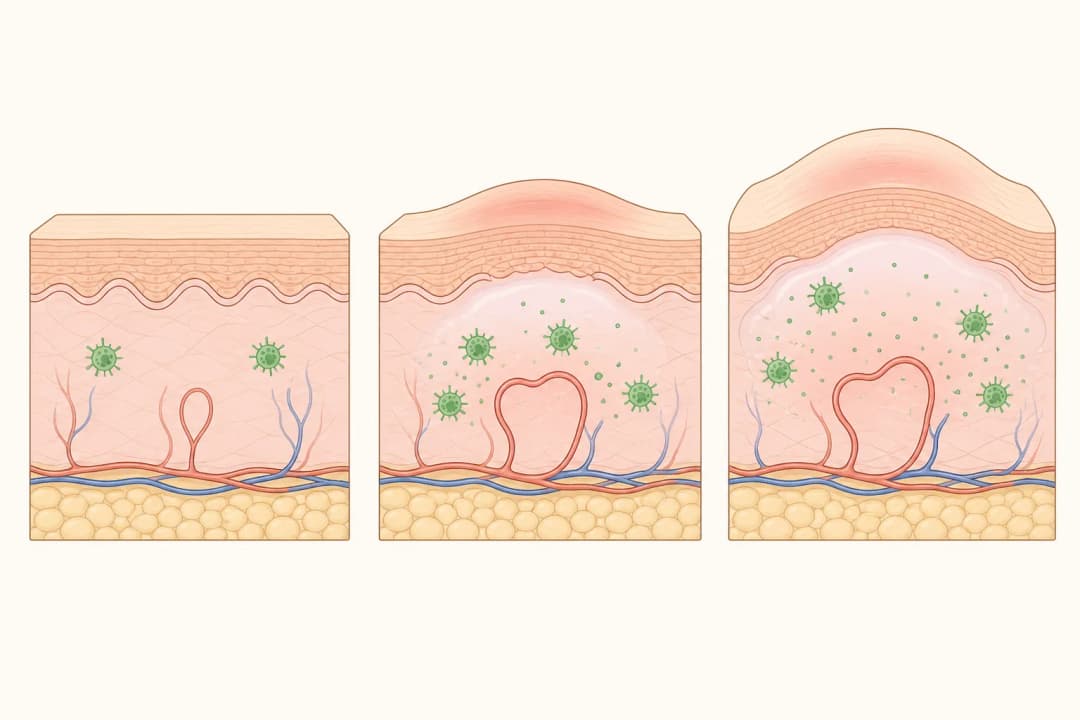
Hives present as raised, itchy welts that may change shape, fade in one place and appear elsewhere. The colour can be red, pink or close to the surrounding skin tone. Deeper swelling beneath the skin is called angioedema and often affects the eyelids, lips, hands or feet.
Triggers can include infections, medicines, foods, heat, pressure or other exposures, but a trigger is not always found. The pattern and accompanying symptoms matter more than guessing from one episode.
How to use allergy pills safely
Follow the label or the dosing plan provided by a healthcare professional. Check active ingredients before using a cold, sleep or allergy product at the same time. Sedating antihistamines can reduce alertness, so avoid driving or operating machinery if affected.
Record possible triggers, when each outbreak starts and how long individual welts remain. Photographs can help when the skin clears before an appointment. Seek medical review when episodes keep returning, a welt stays fixed or leaves bruising, or ordinary treatment is not controlling symptoms.
Swelling and breathing warning signs
Call emergency services immediately if hives occur with breathing difficulty, wheezing, throat tightness, faintness, confusion, or swelling of the tongue or mouth. Do not wait to see whether an allergy pill works.
Prompt assessment is also appropriate for significant facial swelling, repeated vomiting, a rapidly worsening eruption, fever, blistering, skin pain or peeling. Hives without these warning signs are often managed outside the emergency setting, but persistent or recurrent episodes still need evaluation.
What to discuss at an appointment
Ask whether the eruption fits hives, how long to continue the recommended antihistamine, and what to do if welts return. Mention pregnancy, breastfeeding, kidney or liver problems, glaucoma, urinary difficulty, and any medicines that make you sleepy.
Find care
General Clinics & Polyclinics in Abu Dhabi
That answer is general. If you want it applied to your own case, these are licensed general clinics & polyclinics listed in Abu Dhabi.
27 Ar Ruwwad St - Shakhbout City - MSH4 - Abu Dhabi - United Arab Emirates
Accepts: Daman, Thiqa, Cigna, MetLife +20 more
Al Ruwais, Al Dhafrah
Accepts: Daman, Thiqa, AXA, Cigna +16 more
Al Bahyah - Al Bahyah Old - Abu Dhabi - United Arab Emirates
Accepts: Daman, Thiqa, Cigna, Allianz Care +18 more
Abu Dhabi
Accepts: Daman, Thiqa, AXA, Cigna +27 more
Ordered by verification status and how complete each clinic's public record is, then alphabetically. This is a directory listing, not a ranking — Zavis does not rate or recommend providers.
A factual listing drawn from the DHA, DOH and MOHAP licence registers. It is not a referral, an endorsement, or advice that any of these providers is right for you.
Questions people ask
Should I use a drowsy or non-drowsy antihistamine?
The choice depends on your symptoms, daily activities, health history and other medicines. A pharmacist or clinician can identify an appropriate option and explain sedation risks.
Are corticosteroid tablets the same as allergy pills?
No. Antihistamines block histamine effects, whereas corticosteroids suppress inflammation more broadly. Oral corticosteroids have important risks and should only be used when prescribed for a specific situation.
Related
Related reading
Keep reading
Medical disclaimer. This page is general health information, not medical advice, and it cannot diagnose you. Always consult a licensed healthcare provider about your own symptoms and treatment. In an emergency in the UAE, call 998 for an ambulance.