
All symptoms of hyperthyroidism: what to notice
Short answer
Hyperthyroidism can affect the heart, digestion, temperature control, muscles, mood, sleep, eyes and menstrual cycle, but each person may experience a different combination.
This answers one question. It is not a diagnosis and does not replace an assessment by a licensed doctor.
At a glance
- Also called
- Overactive thyroid
- Diagnosis
- Symptoms are assessed alongside thyroid blood tests
- Possible pattern
- Heartbeat, heat, weight, bowel, mood and sleep changes may occur together
The short answer
Common features include a fast or irregular heartbeat, palpitations, shaking hands, feeling unusually warm, sweating, weight loss despite normal or increased appetite, frequent bowel movements, tiredness, muscle weakness, nervousness, irritability and difficulty sleeping.
How the symptoms fit together
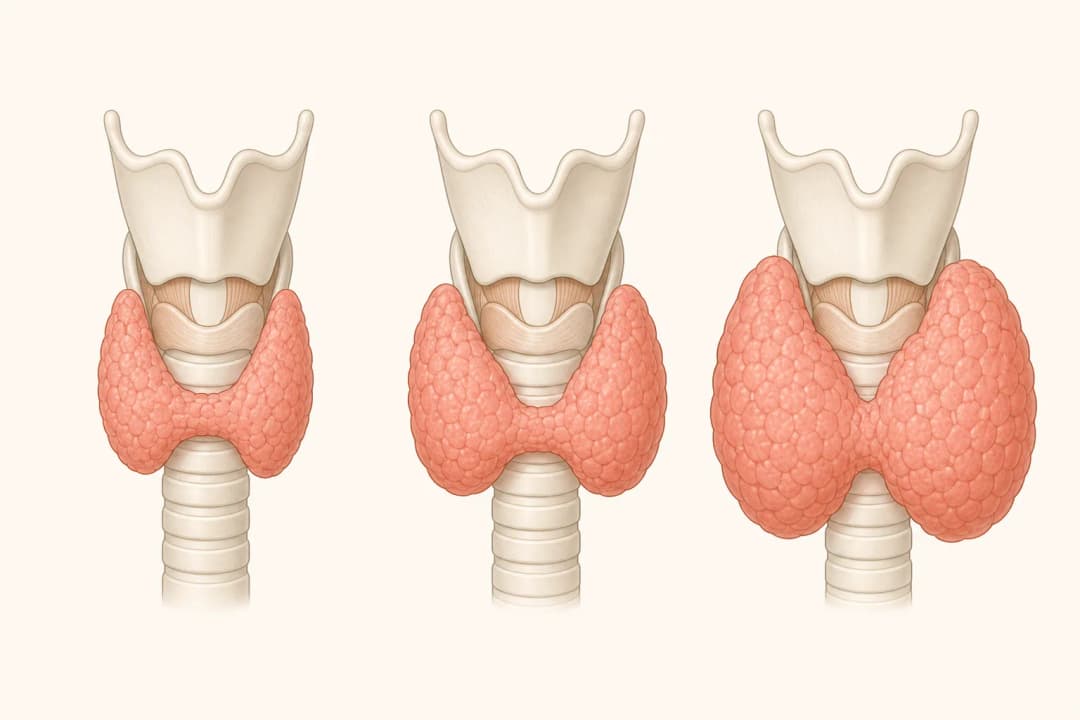
Excess thyroid hormone speeds up many body processes. People with hyperthyroidism may therefore notice several changes at once, such as heat intolerance alongside sweating, a racing pulse and unexplained weight loss. Other possible signs include a swelling at the front of the neck, hair thinning, fragile nails, itchy skin, thirst, needing to urinate more often, reduced exercise tolerance and changes in menstrual bleeding.
Older adults can have quieter features, including weakness, low mood, loss of appetite or an irregular heartbeat. When Graves' disease is the cause, gritty or dry eyes, light sensitivity, eyelid swelling, prominent-looking eyes or double vision can occur. Symptoms alone cannot confirm the diagnosis because anxiety, infection, medicines and other conditions can cause similar changes.
What to do next
Arrange a primary-care appointment if several symptoms persist, especially a fast pulse, tremor, heat intolerance or weight change without an obvious explanation. A clinician can review medicines and supplements, examine the neck and heart, and order thyroid blood tests. Do not stop prescribed thyroid medicine or take iodine-containing supplements to treat yourself without clinical advice.
Before the visit, note when symptoms began, whether they are worsening, any pulse readings you already take, changes in weight or menstrual pattern, eye problems, and all medicines or supplements used. This timeline helps distinguish a sustained thyroid pattern from a brief response to stress or illness.
When to seek urgent care
Seek emergency help for a very rapid or irregular heartbeat with chest pain, severe breathlessness, fainting or marked weakness. Fever with severe agitation, confusion, vomiting, diarrhoea or a rapidly worsening heartbeat can signal a dangerous thyroid crisis, particularly in someone with known or untreated hyperthyroidism. Sudden loss of vision, new colour-vision change, or severe eye pain also needs urgent assessment.
Questions for your doctor
Ask which blood tests will assess thyroid function, what could be causing the overactivity, whether your heartbeat needs checking, and whether any current medicine or supplement may interfere with testing. If you have eye symptoms, ask whether you need an eye examination and which changes should prompt urgent care.
Find care
General Clinics & Polyclinics in Abu Dhabi
That answer is general. If you want it applied to your own case, these are licensed general clinics & polyclinics listed in Abu Dhabi.
27 Ar Ruwwad St - Shakhbout City - MSH4 - Abu Dhabi - United Arab Emirates
Accepts: Daman, Thiqa, Cigna, MetLife +20 more
Al Ruwais, Al Dhafrah
Accepts: Daman, Thiqa, AXA, Cigna +16 more
Al Bahyah - Al Bahyah Old - Abu Dhabi - United Arab Emirates
Accepts: Daman, Thiqa, Cigna, Allianz Care +18 more
Abu Dhabi
Accepts: Daman, Thiqa, AXA, Cigna +27 more
Ordered by verification status and how complete each clinic's public record is, then alphabetically. This is a directory listing, not a ranking — Zavis does not rate or recommend providers.
A factual listing drawn from the DHA, DOH and MOHAP licence registers. It is not a referral, an endorsement, or advice that any of these providers is right for you.
Questions people ask
Can hyperthyroidism cause anxiety and poor sleep?
Yes. People with hyperthyroidism may feel restless, anxious or irritable and may struggle to fall or stay asleep. These symptoms have other possible causes, so a clinical assessment and thyroid testing are needed.
Can hyperthyroidism occur without weight loss?
Yes. Not everyone loses weight, and appetite, age, other conditions and the degree of thyroid overactivity can affect the pattern. A lack of weight loss does not rule it out.
Does every person with hyperthyroidism have eye symptoms?
No. Eye problems are particularly associated with Graves' disease and do not affect everyone with an overactive thyroid. New pain, double vision or changes in sight warrant prompt assessment.
Related
Related reading
Keep reading
Medical disclaimer. This page is general health information, not medical advice, and it cannot diagnose you. Always consult a licensed healthcare provider about your own symptoms and treatment. In an emergency in the UAE, call 998 for an ambulance.