
Advanced chronic kidney disease: care and warning signs
Short answer
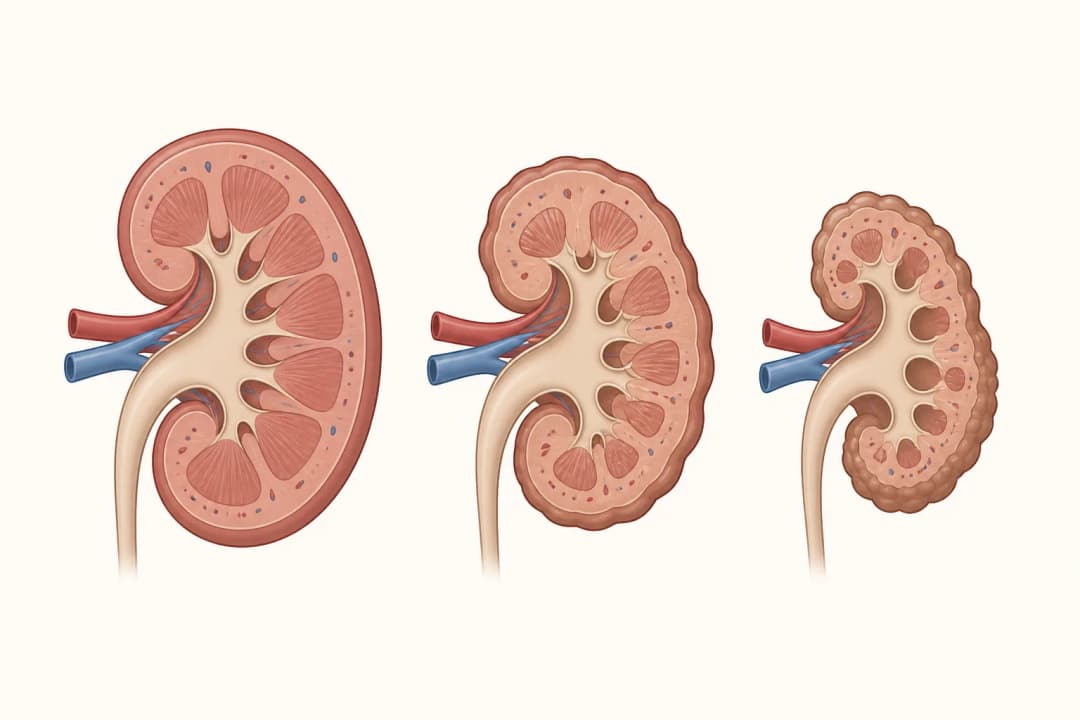
Advanced chronic kidney disease means kidney function is severely reduced, requiring specialist monitoring, careful medicine and diet planning, and preparation for possible kidney replacement treatment.
This answers one question. It is not a diagnosis and does not replace an assessment by a licensed doctor.
At a glance
- Monitoring
- Blood, urine, blood pressure and symptoms are interpreted together.
- Medicine safety
- Kidney function can change the suitable choice or dose of a medicine.
- Planning ahead
- Early discussion allows time to consider dialysis, transplantation or supportive care.
How reduced kidney function affects the body
Damaged kidneys struggle to clear waste, balance fluid and minerals, regulate blood pressure and support red blood cell production. Advanced disease may present with swelling, breathlessness, itching, nausea, poor appetite, fatigue, sleep disturbance, muscle cramps or changes in urination. Some people have few noticeable symptoms, so blood and urine results remain central to monitoring.
Possible complications include anaemia, abnormal potassium or acid balance, weakened bones, fluid overload and cardiovascular strain. The pattern differs between people and can change with infection, dehydration or a new medicine.
Managing advanced kidney disease
Keep nephrology appointments and complete requested blood, urine and blood-pressure checks. Take medicines exactly as agreed and let every clinician or pharmacist know about your kidney disease before receiving a new prescription, supplement or imaging contrast. Avoid starting over-the-counter painkillers or herbal remedies without checking whether they are kidney-safe.
Follow an individual plan for salt, fluid, potassium, phosphate, protein and diabetes management; restrictions are based on results and should not be copied from another patient. Discuss dialysis, transplantation and supportive kidney care early enough to understand the choices, even if treatment is not needed immediately.
Symptoms that need urgent assessment
Seek urgent help for severe breathlessness, chest pain, fainting, new confusion, seizures, profound weakness, a very slow or irregular heartbeat, or rapidly increasing swelling. Contact your kidney team promptly for a marked fall in urine output, persistent vomiting or diarrhoea, inability to take medicines, fever with shaking chills, or sudden weight gain with breathlessness. These changes can signal fluid, electrolyte or infection problems that need timely testing.
Questions for your kidney team
Ask what your recent kidney, potassium, acid-base and blood-count results mean, which symptoms should trigger a same-day call, and what to do with medicines during vomiting or diarrhoea. Clarify your dietary targets, vaccination plan, options for kidney replacement or supportive care, and who to contact outside clinic hours.
Find care
General Clinics & Polyclinics in Abu Dhabi
That answer is general. If you want it applied to your own case, these are licensed general clinics & polyclinics listed in Abu Dhabi.
27 Ar Ruwwad St - Shakhbout City - MSH4 - Abu Dhabi - United Arab Emirates
Accepts: Daman, Thiqa, Cigna, MetLife +20 more
Al Ruwais, Al Dhafrah
Accepts: Daman, Thiqa, AXA, Cigna +16 more
Al Bahyah - Al Bahyah Old - Abu Dhabi - United Arab Emirates
Accepts: Daman, Thiqa, Cigna, Allianz Care +18 more
Abu Dhabi
Accepts: Daman, Thiqa, AXA, Cigna +27 more
Ordered by verification status and how complete each clinic's public record is, then alphabetically. This is a directory listing, not a ranking — Zavis does not rate or recommend providers.
A factual listing drawn from the DHA, DOH and MOHAP licence registers. It is not a referral, an endorsement, or advice that any of these providers is right for you.
Questions people ask
Does advanced chronic kidney disease always cause obvious symptoms?
No. Significant loss of kidney function may cause few symptoms, which is why scheduled laboratory monitoring remains necessary.
Should everyone with advanced kidney disease restrict fluids and potassium?
No. Targets depend on blood results, urine output, medicines and other conditions, so follow the plan set by your kidney team.
Related
Related reading
Keep reading
Medical disclaimer. This page is general health information, not medical advice, and it cannot diagnose you. Always consult a licensed healthcare provider about your own symptoms and treatment. In an emergency in the UAE, call 998 for an ambulance.