
Adjuvant treatment after melanoma surgery
Short answer
Adjuvant melanoma treatment is additional therapy given after surgery to lower the chance of cancer returning.
This answers one question. It is not a diagnosis and does not replace an assessment by a licensed doctor.
At a glance
- Purpose
- Treatment targets the possibility of melanoma cells remaining after surgery.
- Decision
- Pathology, lymph-node information, health and personal preferences shape the plan.
- Monitoring
- Clinical review, tests and symptom reporting help identify recurrence or treatment effects.
The short answer
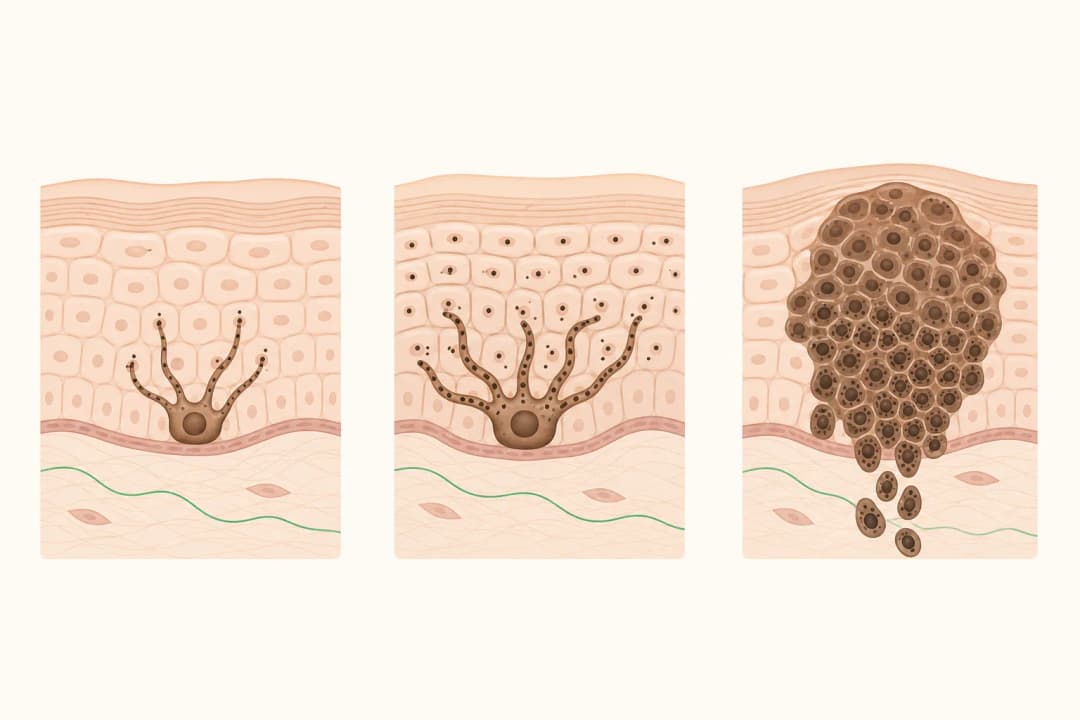
It is considered when melanoma has been removed but clinical and pathology features suggest that microscopic cancer cells could remain elsewhere. Treatment is directed at this unseen risk rather than at a visible tumour. The decision is individual and balances the expected benefit against side effects and the option of close surveillance.
How adjuvant care fits after surgery
The oncology team reviews the original melanoma, surgical pathology, lymph-node findings, imaging when relevant, general health and any molecular test results that may guide therapy. Adjuvant immunotherapy helps the immune system recognise and attack melanoma cells. Some melanomas with a specific molecular change may have an additional targeted-treatment option.
A recommendation for adjuvant therapy does not mean a scan has found active cancer. It means the team considers recurrence risk high enough to discuss treatment after complete removal. Observation with structured follow-up can also be a reasoned choice in some circumstances.
What to do before and during treatment
Bring your pathology and operation details to the oncology visit if they are not already available. Tell the team about autoimmune disease, organ transplantation, pregnancy plans, regular medicines and previous reactions to cancer treatment. Ask which treatment is proposed, how it is given, what monitoring is planned and how side effects would be managed.
Keep appointments for clinical examinations, blood tests and imaging arranged by the team. Record new symptoms and when they began instead of waiting for the next routine visit. Do not start supplements or immune-altering medicines without checking whether they could interfere with treatment or mask a side effect.
Symptoms that need prompt attention
Contact the oncology service promptly for new or worsening diarrhoea, severe abdominal pain, yellowing of the eyes or skin, persistent cough, shortness of breath, marked weakness, severe headache, confusion, vision change or a widespread blistering rash. Immunotherapy can inflame healthy organs, and early assessment can prevent a problem from becoming more serious.
Use emergency services for severe breathing difficulty, collapse, a seizure, sudden weakness on one side, or rapidly worsening confusion. Between visits, also report a new lump, unexplained persistent pain or a changing skin lesion so the team can decide whether earlier examination is needed.
Questions to take to the oncology visit
Ask how your pathology and lymph-node findings affect the recommendation, what alternatives exist, and what would happen if you chose surveillance. Clarify which side effects require a same-day call, whether an emergency information card is provided, how treatment may affect fertility or other medical conditions, and who coordinates skin checks with oncology follow-up.
Find care
General Clinics & Polyclinics in Abu Dhabi
That answer is general. If you want it applied to your own case, these are licensed general clinics & polyclinics listed in Abu Dhabi.
27 Ar Ruwwad St - Shakhbout City - MSH4 - Abu Dhabi - United Arab Emirates
Accepts: Daman, Thiqa, Cigna, MetLife +20 more
Al Ruwais, Al Dhafrah
Accepts: Daman, Thiqa, AXA, Cigna +16 more
Al Bahyah - Al Bahyah Old - Abu Dhabi - United Arab Emirates
Accepts: Daman, Thiqa, Cigna, Allianz Care +18 more
Abu Dhabi
Accepts: Daman, Thiqa, AXA, Cigna +27 more
Ordered by verification status and how complete each clinic's public record is, then alphabetically. This is a directory listing, not a ranking — Zavis does not rate or recommend providers.
A factual listing drawn from the DHA, DOH and MOHAP licence registers. It is not a referral, an endorsement, or advice that any of these providers is right for you.
Questions people ask
Is adjuvant treatment chemotherapy?
For melanoma, adjuvant treatment commonly involves immunotherapy or, for eligible tumours, targeted medicines rather than traditional chemotherapy.
Can melanoma return during follow-up?
Recurrence remains possible after surgery and adjuvant care, which is why scheduled skin, lymph-node and oncology surveillance matters.
Should side effects wait until the next appointment?
No. The oncology team should hear promptly about new symptoms because some immune-related effects need early testing and treatment.
Related
Related reading
Keep reading
Medical disclaimer. This page is general health information, not medical advice, and it cannot diagnose you. Always consult a licensed healthcare provider about your own symptoms and treatment. In an emergency in the UAE, call 998 for an ambulance.