
Adductor strain symptoms and warning signs
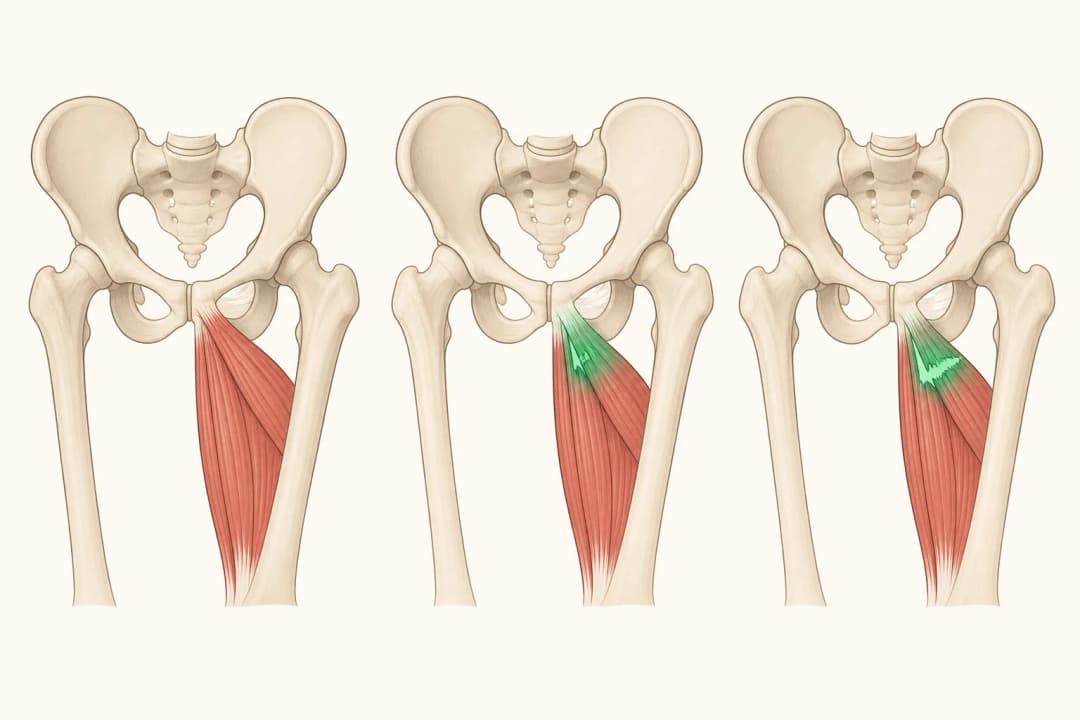
Short answer
An adductor strain commonly presents with inner-thigh or groin pain that begins during a forceful movement and worsens when the legs squeeze together.
This answers one question. It is not a diagnosis and does not replace an assessment by a licensed doctor.
At a glance
- Pain location
- Symptoms are often felt along the inner thigh or near the groin.
- Common provocation
- Resisted squeezing, sprinting, kicking and changing direction may reproduce pain.
- Diagnosis
- History and physical examination help distinguish a strain from other causes of groin pain.
The short answer
Tenderness, weakness, swelling or bruising may occur. Walking, running, kicking, changing direction or moving the leg sideways can provoke symptoms, depending on the extent and location of the strain.
How the symptom pattern is interpreted
Adductor muscles run along the inner thigh and help pull the leg inward while stabilising the pelvis. A strain often follows sudden acceleration, a wide reach, a slip or a powerful kick. Similar groin discomfort can arise from the hip joint, lower abdomen or other nearby tissues, so symptoms alone cannot confirm which structure is injured.
What to do after symptoms begin
Stop the movement that caused sharp pain and reduce running, cutting or kicking that continues to aggravate it. Comfortable walking and gentle hip movement may be reasonable if they do not increase symptoms. Avoid repeatedly testing a painful squeeze. A physiotherapy assessment can identify movement and strength limits and set a progressive loading plan for daily activity or sport.
Symptoms that need medical attention
Seek urgent assessment if severe pain follows trauma, you cannot bear weight, the leg looks deformed, numbness develops or swelling expands quickly. Fever, abdominal pain, vomiting, or testicular pain or swelling alongside groin pain also warrants prompt care. Arrange a non-urgent review when symptoms do not improve, keep recurring or limit ordinary walking and sleep.
What to ask during an examination
Ask whether the pattern fits an adductor strain or another source of groin pain, which movements are safe now, whether imaging would change management, how loading should progress and which functional checks will guide a return to work, running or sport.
Find care
General Clinics & Polyclinics in Abu Dhabi
That answer is general. If you want it applied to your own case, these are licensed general clinics & polyclinics listed in Abu Dhabi.
27 Ar Ruwwad St - Shakhbout City - MSH4 - Abu Dhabi - United Arab Emirates
Accepts: Daman, Thiqa, Cigna, MetLife +20 more
Al Ruwais, Al Dhafrah
Accepts: Daman, Thiqa, AXA, Cigna +16 more
Al Bahyah - Al Bahyah Old - Abu Dhabi - United Arab Emirates
Accepts: Daman, Thiqa, Cigna, Allianz Care +18 more
Abu Dhabi
Accepts: Daman, Thiqa, AXA, Cigna +27 more
Ordered by verification status and how complete each clinic's public record is, then alphabetically. This is a directory listing, not a ranking — Zavis does not rate or recommend providers.
A factual listing drawn from the DHA, DOH and MOHAP licence registers. It is not a referral, an endorsement, or advice that any of these providers is right for you.
Questions people ask
Can an adductor strain cause bruising?
Yes. Bruising or swelling can follow a strain, particularly after a sudden injury, although their absence does not rule one out.
Does groin pain mean I have an adductor strain?
No. Adductor strains often present with groin pain, but hip, abdominal and other nearby structures can also produce pain in this region. An examination helps separate these possibilities.
Related
Related reading
Keep reading
Medical disclaimer. This page is general health information, not medical advice, and it cannot diagnose you. Always consult a licensed healthcare provider about your own symptoms and treatment. In an emergency in the UAE, call 998 for an ambulance.