
Adductor strain rehabilitation guide
Short answer
Adductor strain rehabilitation should progress from comfortable movement and controlled strengthening to faster running, direction changes and sport-specific loading without a meaningful symptom flare.
This answers one question. It is not a diagnosis and does not replace an assessment by a licensed doctor.
At a glance
- Early focus
- Maintain comfortable motion and begin controlled muscle loading.
- Later focus
- Develop force, speed and confidence in activity-specific positions.
- Progress signal
- Exercises are advanced when movement stays controlled and symptoms settle as expected.
The short answer
Progress is guided by function rather than by a calendar alone. The location and extent of injury, current strength, sporting demands and response to each session all affect the pace.
What rehabilitation is rebuilding
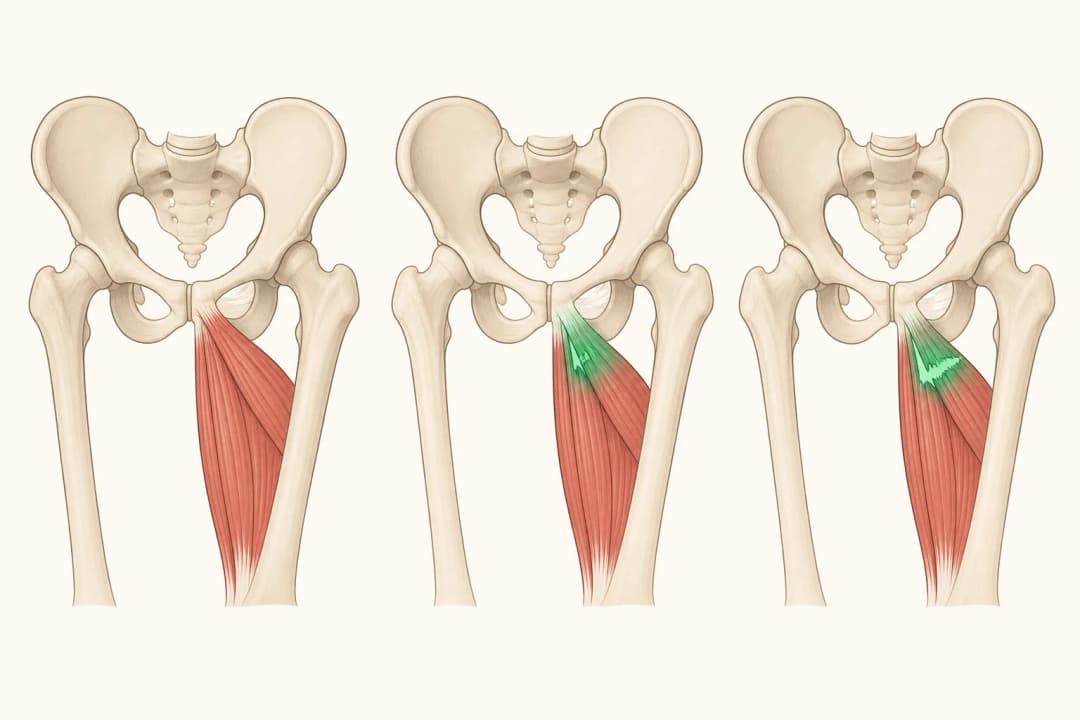
The adductors steady the pelvis and help control the leg during acceleration, kicking and changes of direction. After a strain, pain can inhibit force and make rapid lengthening uncomfortable. Rehabilitation restores tolerance first in predictable positions and later during the quick, demanding movements that caused or expose the injury.
How the programme usually progresses
Early work may include comfortable hip movement and gentle isometric squeezing. Resistance, range and speed are then increased through exercises that load the inner thigh. Running starts at an easy pace before acceleration, cutting and kicking are added. Use pain during the session, movement quality and the later response as feedback. A sharp increase in symptoms means the load needs adjusting, not that all movement must stop.
When to pause and get assessed
Seek prompt care after trauma if you cannot bear weight, notice extensive swelling or bruising, see a deformity or develop numbness. Assessment is also appropriate when pain worsens despite reduced loading, daily walking remains difficult, symptoms repeatedly return during progression or groin pain comes with fever, abdominal symptoms or testicular pain or swelling.
Planning your return to activity
Ask which adductor appears involved, what discomfort is acceptable during exercise, how strength will be compared between sides, which running and direction-change tasks matter for your activity, and what criteria should be met before full training resumes.
Find care
General Clinics & Polyclinics in Abu Dhabi
That answer is general. If you want it applied to your own case, these are licensed general clinics & polyclinics listed in Abu Dhabi.
27 Ar Ruwwad St - Shakhbout City - MSH4 - Abu Dhabi - United Arab Emirates
Accepts: Daman, Thiqa, Cigna, MetLife +20 more
Al Ruwais, Al Dhafrah
Accepts: Daman, Thiqa, AXA, Cigna +16 more
Al Bahyah - Al Bahyah Old - Abu Dhabi - United Arab Emirates
Accepts: Daman, Thiqa, Cigna, Allianz Care +18 more
Abu Dhabi
Accepts: Daman, Thiqa, AXA, Cigna +27 more
Ordered by verification status and how complete each clinic's public record is, then alphabetically. This is a directory listing, not a ranking — Zavis does not rate or recommend providers.
A factual listing drawn from the DHA, DOH and MOHAP licence registers. It is not a referral, an endorsement, or advice that any of these providers is right for you.
Questions people ask
Should I stretch an adductor strain?
Gentle movement may feel helpful, but forceful stretching can irritate healing tissue. Stretching should match the injury stage and should not create sharp pain.
When can I return to sport after an adductor strain?
Return is considered when daily activity is comfortable and strength, running, acceleration, cutting and sport-specific actions can be completed with control and without a significant symptom increase.
Related
Related reading
Keep reading
Medical disclaimer. This page is general health information, not medical advice, and it cannot diagnose you. Always consult a licensed healthcare provider about your own symptoms and treatment. In an emergency in the UAE, call 998 for an ambulance.