
Treating an adductor magnus strain
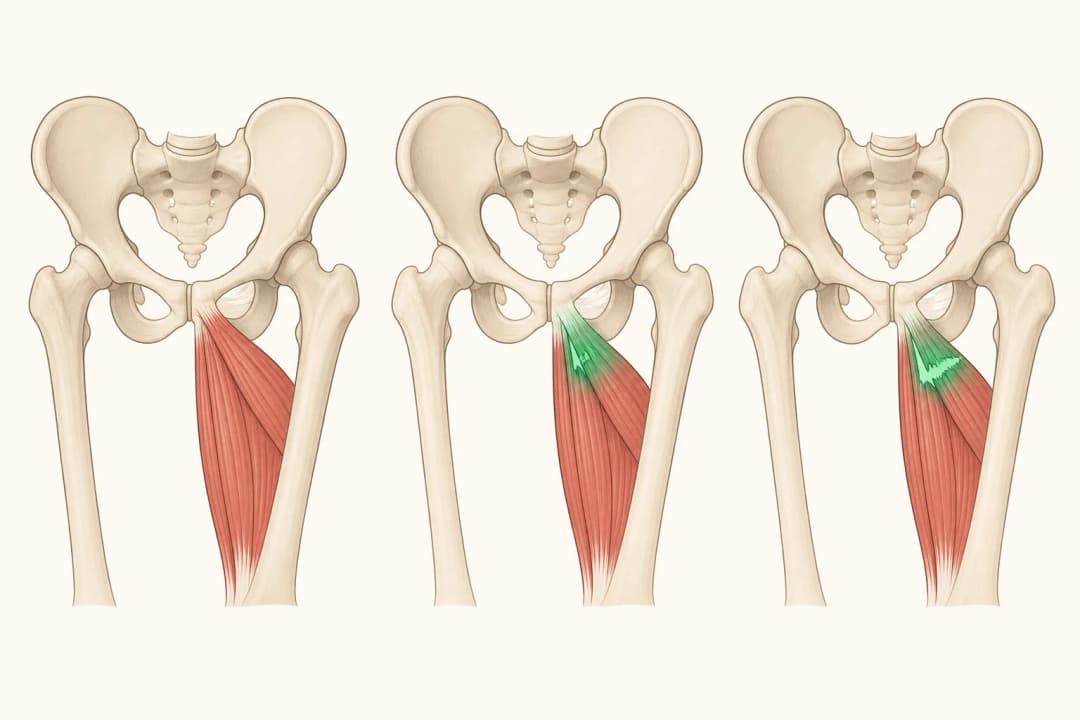
Short answer
Treatment for an adductor magnus strain usually combines temporary activity reduction with gradual mobility, strengthening and sport-specific loading.
This answers one question. It is not a diagnosis and does not replace an assessment by a licensed doctor.
At a glance
- Early priority
- Settle sharp pain while maintaining comfortable movement
- Later priority
- Restore strength, speed and directional control
- Return decisions
- Base them on function and symptom response, not time alone
How is an adductor magnus strain treated?
The appropriate starting point depends on pain, bruising, walking ability and strength. Many strains are managed without surgery, but a clinician should assess a suspected major tear, pronounced weakness or loss of function.
Why rehabilitation is progressive
The adductor magnus must tolerate force when the leg draws inward, the hip extends and the body changes direction. Rest alone does not rebuild that capacity. Rehabilitation starts with loads the muscle can manage and advances toward the speed, range and direction required for work or sport.
Pain response helps set the dose: a task should not provoke sharp pain, a worsening limp or a notable flare later. Progress may include isometric squeezes, resisted hip movements, squats, running drills and cutting tasks, selected for the individual rather than followed as a fixed calendar.
Practical steps during recovery
Initially, stop sprinting, kicking or wide side-steps if they reproduce sharp pain. Keep everyday movement within a comfortable range and avoid repeatedly stretching into pain. A cold pack wrapped in cloth can ease short-term soreness, while medication suitability should be checked with a pharmacist or doctor if you have other conditions or take regular medicines.
Build exercise resistance and movement speed in stages. Before returning fully, test the actions your activity demands, such as acceleration, deceleration and changing direction. Comparable control on both sides and no meaningful symptom increase after practice are more useful than time alone.
When treatment needs clinical review
Book an assessment if you have marked bruising, persistent weakness, a limp that is not settling or pain that keeps returning as loads rise. Prompt review is sensible if the injury followed a forceful split or you felt a snap and then could not continue.
Seek urgent care if you cannot bear weight after significant trauma, the limb looks deformed, or you develop numbness, unusual paleness or coldness in the leg. Fever, severe abdominal or testicular pain alongside groin pain also requires urgent evaluation.
Useful treatment questions
Ask how much loading is suitable now, which exercise should be progressed first, and how you will judge readiness for running or sport. Also ask whether the examination suggests tendon or hip-joint involvement that would change the plan.
Find care
General Clinics & Polyclinics in Abu Dhabi
That answer is general. If you want it applied to your own case, these are licensed general clinics & polyclinics listed in Abu Dhabi.
27 Ar Ruwwad St - Shakhbout City - MSH4 - Abu Dhabi - United Arab Emirates
Accepts: Daman, Thiqa, Cigna, MetLife +20 more
Al Ruwais, Al Dhafrah
Accepts: Daman, Thiqa, AXA, Cigna +16 more
Al Bahyah - Al Bahyah Old - Abu Dhabi - United Arab Emirates
Accepts: Daman, Thiqa, Cigna, Allianz Care +18 more
Abu Dhabi
Accepts: Daman, Thiqa, AXA, Cigna +27 more
Ordered by verification status and how complete each clinic's public record is, then alphabetically. This is a directory listing, not a ranking — Zavis does not rate or recommend providers.
A factual listing drawn from the DHA, DOH and MOHAP licence registers. It is not a referral, an endorsement, or advice that any of these providers is right for you.
Questions people ask
Is complete rest needed for an adductor magnus strain?
Complete rest is rarely the whole plan. Temporarily avoid painful loads, then reintroduce comfortable movement and progressive strengthening according to your response.
When can I run after an adductor strain?
Running can be introduced when walking and basic strengthening are controlled without sharp pain or a meaningful later flare. Start easier than your usual pace and build gradually.
Can physiotherapy help a recurring strain?
A physiotherapist can assess strength, hip control, running load and sport-specific movement, then adjust exercise to address deficits linked with repeated symptoms.
Related
Related reading
Keep reading
Medical disclaimer. This page is general health information, not medical advice, and it cannot diagnose you. Always consult a licensed healthcare provider about your own symptoms and treatment. In an emergency in the UAE, call 998 for an ambulance.