
Adductor brevis strain: recovery and rehabilitation
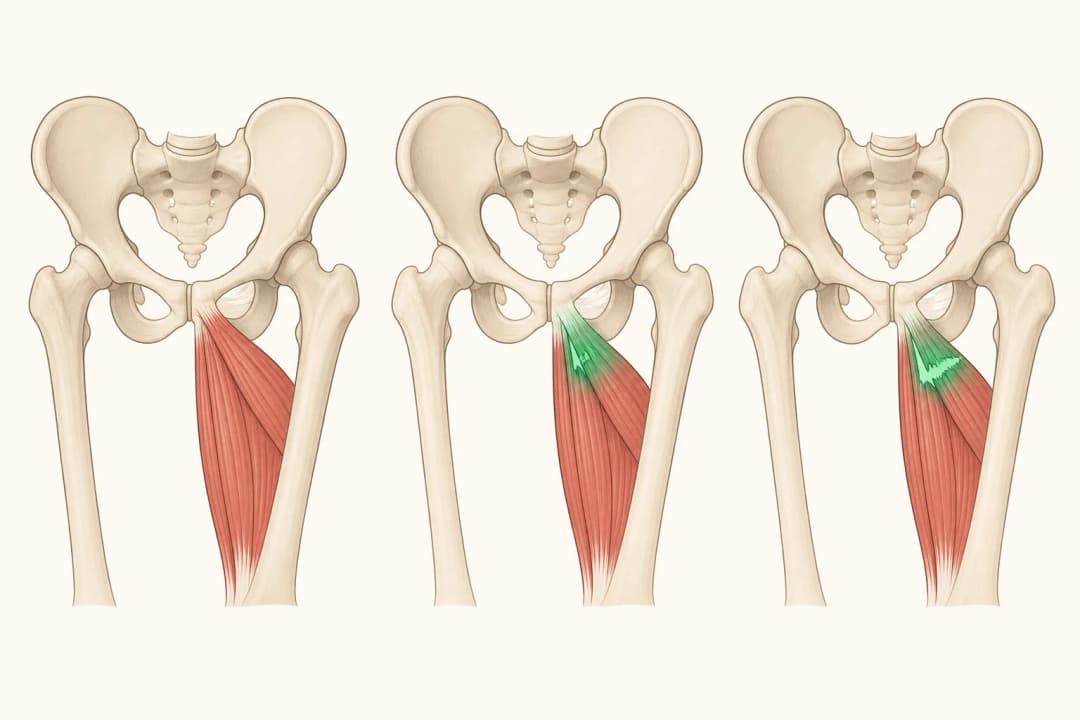
Short answer
An adductor brevis strain is an injury to a deep inner-thigh muscle that is managed with protection, progressive loading, and a criteria-based return to activity.
This answers one question. It is not a diagnosis and does not replace an assessment by a licensed doctor.
At a glance
- Injured structure
- A deep muscle in the inner-thigh adductor group
- Typical trigger
- Forceful kicking, sprinting, slipping or changing direction
- Return principle
- Restore load tolerance and sport-specific capacity before unrestricted play
Understanding the injury
The injury may occur when the muscle is forcefully lengthened or contracts hard during a sprint, kick, slip or rapid change of direction. Pain is often felt high in the inner thigh or groin and may worsen when bringing the legs together. Bruising, tenderness or loss of power can accompany a more substantial injury.
What determines the recovery plan
A clinician considers the injury mechanism, the precise tender area, pain during resisted movement, walking ability and strength compared with the other side. Because the adductor brevis lies beneath other adductor muscles, an examination may identify the adductor group as the source without isolating a single muscle confidently.
Recovery is shaped by tissue damage, current pain, previous groin injury, sport demands and how the muscle responds to increasing load. Imaging is not automatically needed; it is more useful when the diagnosis is uncertain, a major tear is suspected, or the result would change treatment. A calendar alone should not decide readiness for sport.
Building back strength and movement
In the early phase, stop the action that caused sharp pain and temporarily reduce sprinting, kicking, deep side lunges and fast direction changes. Comfortable walking and gentle hip movement may continue if they do not provoke a marked increase in symptoms. Avoid repeatedly squeezing or stretching the muscle to check whether it is healed.
Rehabilitation can progress from tolerable static adductor contractions to controlled strengthening through a larger range, then faster running and sport-specific change of direction. Increase one demand at a time so that pain during exercise and the response afterward remain manageable. A sports physiotherapist can test strength, acceleration, cutting and confidence before unrestricted return.
When to get medical help
Arrange prompt assessment if you felt a snap, cannot walk normally, develop extensive bruising or swelling, notice a visible defect, or cannot generate any force when moving the leg inward. Pain that fails to improve with sensible load reduction also merits review because hip, tendon, bone or abdominal causes may need consideration.
Seek urgent care for a deformed limb, inability to bear weight after significant trauma, loss of sensation, a cold or pale foot, severe testicular pain, a tender groin lump, fever or rapidly escalating pain. Those features are not routine signs of an uncomplicated muscle strain.
Planning a safe return
Ask which findings support a strain diagnosis, whether imaging would change care, and how much discomfort is acceptable during strengthening. Before returning to sport, clarify the required targets for adductor strength, running speed, kicking, direction changes and recovery after a demanding session.
Find care
General Clinics & Polyclinics in Abu Dhabi
That answer is general. If you want it applied to your own case, these are licensed general clinics & polyclinics listed in Abu Dhabi.
27 Ar Ruwwad St - Shakhbout City - MSH4 - Abu Dhabi - United Arab Emirates
Accepts: Daman, Thiqa, Cigna, MetLife +20 more
Al Ruwais, Al Dhafrah
Accepts: Daman, Thiqa, AXA, Cigna +16 more
Al Bahyah - Al Bahyah Old - Abu Dhabi - United Arab Emirates
Accepts: Daman, Thiqa, Cigna, Allianz Care +18 more
Abu Dhabi
Accepts: Daman, Thiqa, AXA, Cigna +27 more
Ordered by verification status and how complete each clinic's public record is, then alphabetically. This is a directory listing, not a ranking — Zavis does not rate or recommend providers.
A factual listing drawn from the DHA, DOH and MOHAP licence registers. It is not a referral, an endorsement, or advice that any of these providers is right for you.
Questions people ask
Can I keep training with an adductor brevis strain?
Training usually needs modification so sharp pain is not repeatedly provoked. You may be able to maintain fitness with tolerable alternatives while progressively rebuilding adductor strength and sport-specific movement.
How long does an adductor brevis strain take to heal?
There is no single recovery time because strains vary in severity and sporting demands differ. Progress should follow walking comfort, strength, running and direction-change capacity rather than a fixed date.
Do I need a scan for a groin strain?
Many strains can be assessed clinically. Imaging may be considered when findings are unclear, symptoms are severe, progress is unexpectedly limited or the result would alter the treatment plan.
Related
Related reading
Keep reading
Medical disclaimer. This page is general health information, not medical advice, and it cannot diagnose you. Always consult a licensed healthcare provider about your own symptoms and treatment. In an emergency in the UAE, call 998 for an ambulance.