
Acute kidney injury on top of chronic kidney disease
Short answer
Acute kidney injury on chronic kidney disease is a sudden further loss of kidney function that needs prompt medical assessment.
This answers one question. It is not a diagnosis and does not replace an assessment by a licensed doctor.
At a glance
- Pattern
- A rapid kidney-function decline superimposed on a long-term condition
- Assessment
- Usually includes medicine review, examination, blood tests and urine tests
- Key action
- Report acute illness or reduced urine promptly
The short answer
It may be reversible, but reduced kidney reserve makes early identification of the trigger especially important.
What acute-on-chronic kidney injury means
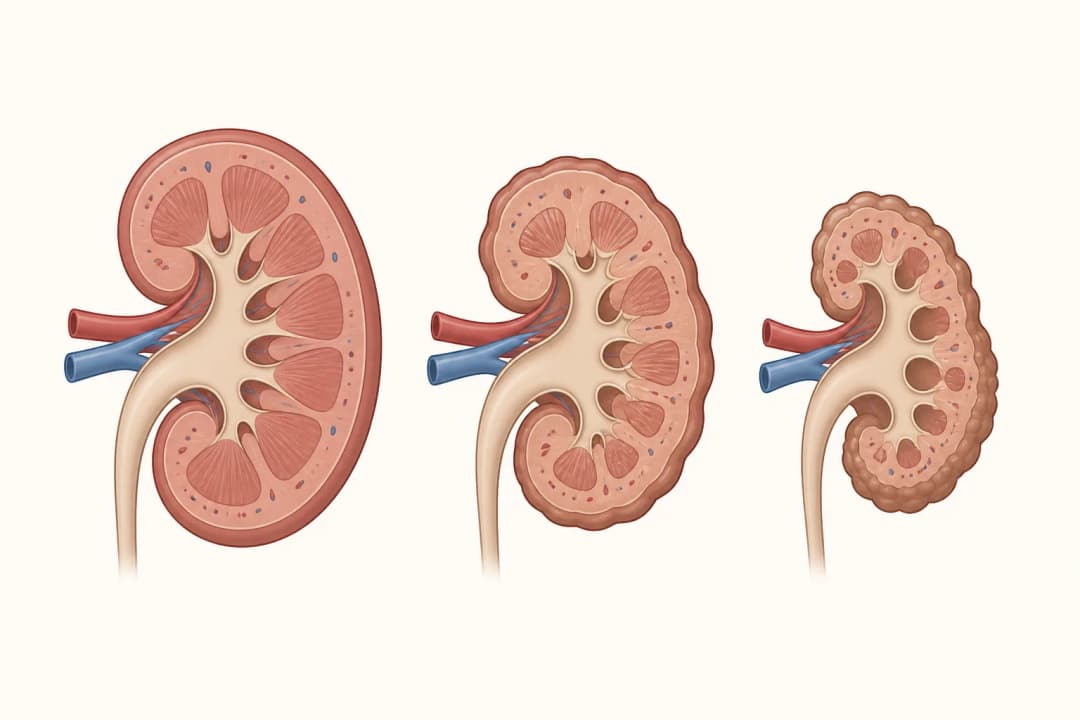
Chronic kidney disease develops over time, while acute kidney injury is a rapid change over hours or days. Common triggers include dehydration from vomiting or diarrhoea, a severe infection, low blood pressure, urinary blockage, and medicines that affect kidney blood flow or fluid balance. Blood tests showing rising creatinine and changes in urine output help clinicians recognise the acute change.
The condition may cause little warning at first. Possible features include passing less urine, swelling, nausea, unusual drowsiness, breathlessness or worsening fatigue. These features can also have other causes, so assessment relies on examination, blood and urine tests, and sometimes imaging.
What to do now
Contact a clinician promptly if you have chronic kidney disease and become acutely unwell, especially after fluid loss, fever, difficulty passing urine or a recent medicine change. Bring a current medicines list and describe your usual urine pattern, recent intake and any vomiting or diarrhoea.
Do not try to correct the problem by forcing large amounts of fluid, because this may be unsafe when the body is retaining fluid. Avoid starting non-prescribed anti-inflammatory painkillers. A clinician should decide whether any regular medicine needs temporary adjustment and treat the underlying cause.
When urgent care is needed
Seek emergency care for severe breathlessness, chest pain, new confusion, fainting, marked drowsiness, inability to pass urine, rapidly increasing swelling, or persistent vomiting that prevents drinking. These signs can reflect dangerous fluid, salt or waste-product changes and should not wait for a routine appointment.
Questions for your doctor
Ask what likely triggered the acute change, how your current blood results compare with your usual kidney function, whether imaging is needed, which medicines are safe during the illness, and when blood and urine tests should be repeated. Also ask for clear instructions about fluid intake and the symptoms that should trigger emergency care.
Find care
General Clinics & Polyclinics in Abu Dhabi
That answer is general. If you want it applied to your own case, these are licensed general clinics & polyclinics listed in Abu Dhabi.
27 Ar Ruwwad St - Shakhbout City - MSH4 - Abu Dhabi - United Arab Emirates
Accepts: Daman, Thiqa, Cigna, MetLife +20 more
Al Ruwais, Al Dhafrah
Accepts: Daman, Thiqa, AXA, Cigna +16 more
Al Bahyah - Al Bahyah Old - Abu Dhabi - United Arab Emirates
Accepts: Daman, Thiqa, Cigna, Allianz Care +18 more
Abu Dhabi
Accepts: Daman, Thiqa, AXA, Cigna +27 more
Ordered by verification status and how complete each clinic's public record is, then alphabetically. This is a directory listing, not a ranking — Zavis does not rate or recommend providers.
A factual listing drawn from the DHA, DOH and MOHAP licence registers. It is not a referral, an endorsement, or advice that any of these providers is right for you.
Questions people ask
Can kidney function recover after an acute injury?
Kidney function can improve when the trigger is found and treated, although recovery varies and it may not return fully to the previous baseline. Follow-up testing shows the direction of recovery.
Should I stop my usual medicines if I become unwell?
Do not stop prescribed medicines without individual advice unless you already have a clinician-provided sick-day plan. Contact your care team promptly because the right decision depends on the illness, kidney function and medicine involved.
Related
Related reading
Keep reading
Medical disclaimer. This page is general health information, not medical advice, and it cannot diagnose you. Always consult a licensed healthcare provider about your own symptoms and treatment. In an emergency in the UAE, call 998 for an ambulance.