
What should you know about acute giardiasis?
Short answer
Acute giardiasis is an intestinal parasite infection that commonly presents with diarrhoea, cramps, bloating, gas, nausea, fatigue, and sometimes greasy stools.
This answers one question. It is not a diagnosis and does not replace an assessment by a licensed doctor.
At a glance
- Cause
- Giardiasis is caused by a microscopic parasite that infects the intestine.
- Diagnosis
- A clinician may request stool samples to look for Giardia.
- Prevention
- Soap-and-water handwashing and avoiding unsafe water help limit transmission.
The short answer
It spreads when Giardia from faeces is swallowed through contaminated water, food, hands, surfaces, or close contact. Hydration matters, and a clinician may confirm the infection with stool testing and prescribe an antiparasitic medicine.
How giardiasis affects the gut
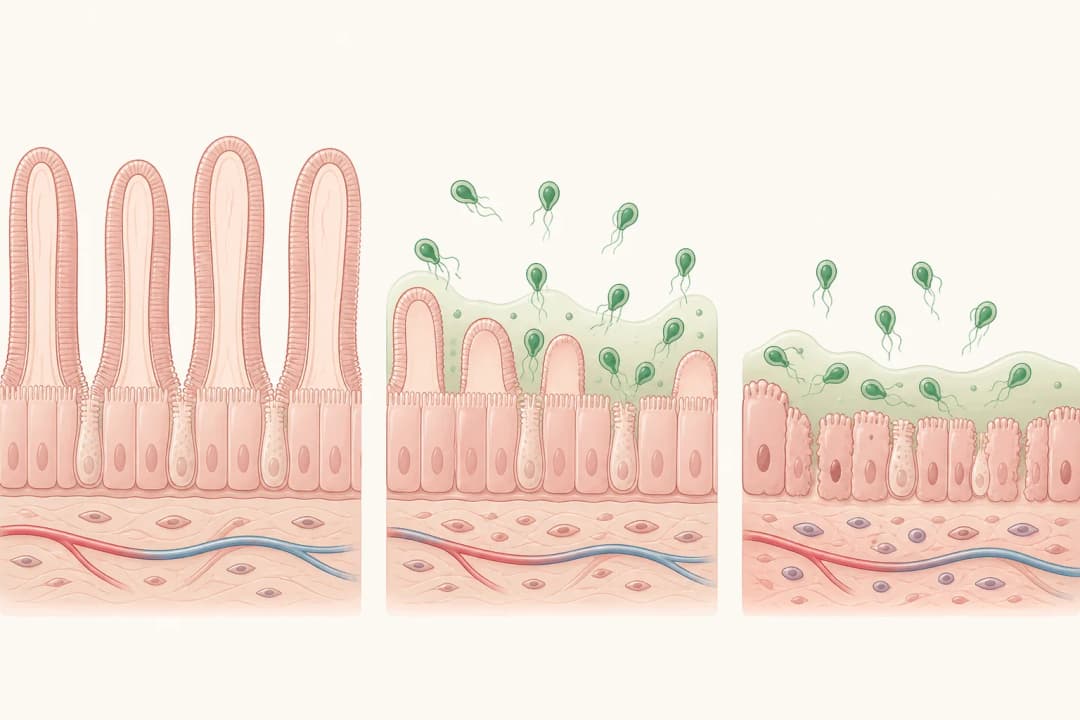
Giardia lives in the small intestine and can interfere with normal digestion and absorption. Stools may become loose, foul-smelling, pale, or oily, while increased gas and bloating can make meals uncomfortable. Fever and bloody diarrhoea are not typical features and may point to another or additional problem.
Exposure can occur after swallowing untreated water, recreational water, or food handled with contaminated hands. Infection can also pass between people when hand hygiene is poor, particularly around toileting or nappy changing.
Practical next steps
Drink regularly to replace fluid lost through diarrhoea. Choose foods according to appetite, and note whether dairy products temporarily worsen cramps or loose stools. Contact a GP if giardiasis is possible; diagnosis may require stool samples, and prescribed treatment should be taken exactly as directed.
Use soap and water after using the toilet or changing nappies and before preparing food. Do not swim while you have diarrhoea, avoid swallowing pool or open-water water, and keep bathroom surfaces clean. Household members with symptoms may need their own assessment rather than sharing medicine.
Warning signs that need care
Get urgent medical help for marked drowsiness or confusion, fainting, very little urine, inability to retain drinks, severe or increasing abdominal pain, or blood or black stool. These signs can indicate significant dehydration or a condition other than uncomplicated giardiasis.
Seek timely assessment when diarrhoea persists, symptoms return after treatment, weight is falling, or eating and drinking remain difficult. Earlier advice is sensible for infants, pregnant people, older adults, and anyone with a weakened immune system because fluid loss can affect them more quickly.
Prepare for your appointment
Tell your doctor about untreated water, swimming, travel, childcare contact, similar illness at home, and previous treatment. Useful questions include how to collect stool samples, whether your medicines need adjustment, when you may safely return to shared activities, and what to do if symptoms continue.
Find care
General Clinics & Polyclinics in Abu Dhabi
That answer is general. If you want it applied to your own case, these are licensed general clinics & polyclinics listed in Abu Dhabi.
27 Ar Ruwwad St - Shakhbout City - MSH4 - Abu Dhabi - United Arab Emirates
Accepts: Daman, Thiqa, Cigna, MetLife +20 more
Al Ruwais, Al Dhafrah
Accepts: Daman, Thiqa, AXA, Cigna +16 more
Al Bahyah - Al Bahyah Old - Abu Dhabi - United Arab Emirates
Accepts: Daman, Thiqa, Cigna, Allianz Care +18 more
Abu Dhabi
Accepts: Daman, Thiqa, AXA, Cigna +27 more
Ordered by verification status and how complete each clinic's public record is, then alphabetically. This is a directory listing, not a ranking — Zavis does not rate or recommend providers.
A factual listing drawn from the DHA, DOH and MOHAP licence registers. It is not a referral, an endorsement, or advice that any of these providers is right for you.
Questions people ask
Does every Giardia infection need medicine?
Treatment depends on symptoms, medical history, pregnancy status, and the risk of passing infection to others. A clinician can decide whether prescription antiparasitic treatment is appropriate.
Why might symptoms continue after treatment?
Possible explanations include reinfection, incomplete clearance, another cause of diarrhoea, or temporary gut sensitivity after the parasite has cleared. Further stool testing or review may be needed.
Can I catch giardiasis from drinking water?
Yes. Swallowing water contaminated with Giardia can transmit the infection, including untreated water and recreational water. Use a safe water source and avoid swallowing water while swimming.
Related
Related reading
Keep reading
Medical disclaimer. This page is general health information, not medical advice, and it cannot diagnose you. Always consult a licensed healthcare provider about your own symptoms and treatment. In an emergency in the UAE, call 998 for an ambulance.