
What should you know about acral lentiginous malignant melanoma?
Short answer
Acral lentiginous malignant melanoma is a skin cancer of the palms, soles or nail region that requires biopsy for a definite diagnosis.
This answers one question. It is not a diagnosis and does not replace an assessment by a licensed doctor.
At a glance
- Typical sites
- Palms, soles and the skin beneath or around nails
- Confirmation
- A biopsy and pathology examination establish the diagnosis
- Local treatment
- Surgery is planned according to the pathology and anatomical site
Direct answer
It can appear as an enlarging irregular patch, a changing spot on a sole or palm, or a pigmented band in a nail. Suspicious change should be examined promptly because visual inspection cannot confirm melanoma.
Where and how it appears
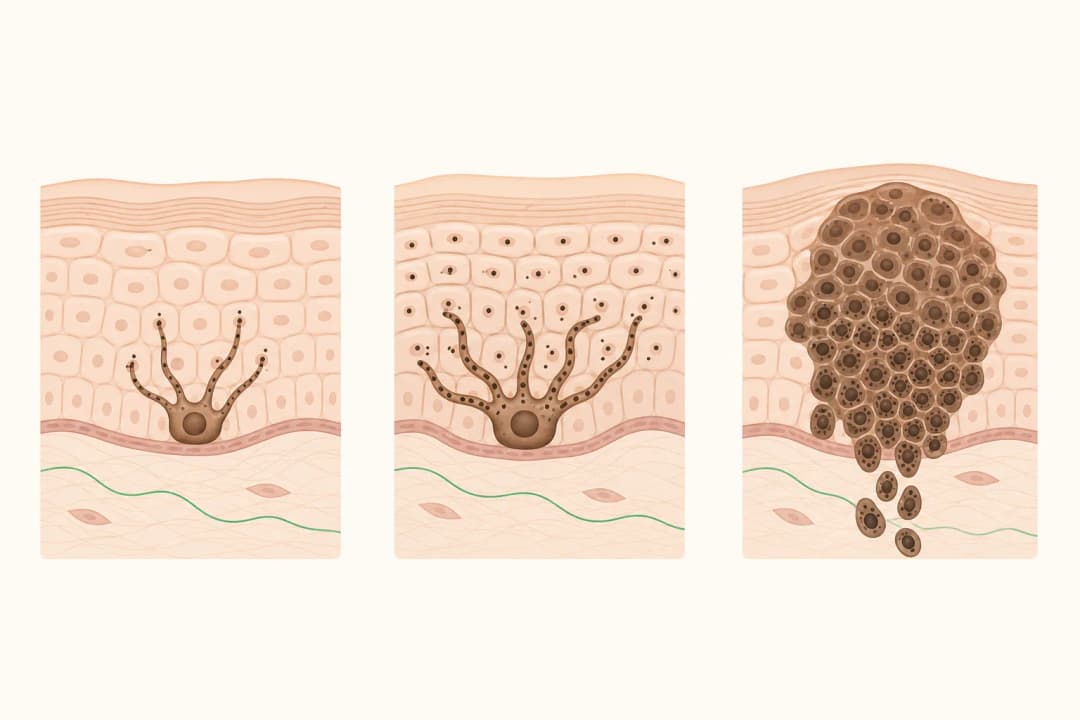
Acral refers to the palms, soles, fingers, toes and nail units. Lentiginous describes an early sideways growth pattern of abnormal pigment-producing cells. The term malignant melanoma indicates that those cells are cancerous and may invade deeper tissue.
Possible presentations include uneven brown or black pigmentation, mixed colours, an irregular edge, progressive enlargement, nail splitting or pigment extending onto nearby skin. Acral melanoma presents with such changes, but many marks in these locations are benign; the direction of concern runs from the diagnosed condition to its possible signs, not from a sign to a presumed diagnosis.
Assessment and treatment
Arrange a dermatology review for a new or evolving acral mark. The clinician may use a dermatoscope and compare the pigment pattern with surrounding skin. If melanoma is suspected, a biopsy provides tissue for diagnosis and measures features that guide staging.
Surgical removal is the main treatment for a localised tumour, with the margin planned from the pathology findings. A sentinel lymph node biopsy may be discussed in some cases to check regional spread. More advanced disease can require imaging and systemic treatment such as immunotherapy, planned by a multidisciplinary cancer team.
Changes that need prompt review
Seek prompt assessment for a palm or sole mark that enlarges, changes colour or shape, bleeds, ulcerates or does not heal. A widening nail streak, a new streak in one nail, nail distortion, or pigment spreading beyond the nail onto adjacent skin also warrants review.
Do not wait for pain: melanoma may be painless. If a confirmed melanoma is followed by new persistent neurological symptoms, breathing difficulty, unexplained weakness or rapidly worsening illness, contact the cancer team urgently for assessment of possible spread or another serious cause.
Questions after diagnosis
Ask what the pathology shows about tumour depth and ulceration, whether further surgery or lymph-node assessment is advised, and whether scans are needed. Request a clear plan for wound care, skin and nail checks, surveillance visits, and symptoms that should bring the appointment forward.
Find care
General Clinics & Polyclinics in Abu Dhabi
That answer is general. If you want it applied to your own case, these are licensed general clinics & polyclinics listed in Abu Dhabi.
27 Ar Ruwwad St - Shakhbout City - MSH4 - Abu Dhabi - United Arab Emirates
Accepts: Daman, Thiqa, Cigna, MetLife +20 more
Al Ruwais, Al Dhafrah
Accepts: Daman, Thiqa, AXA, Cigna +16 more
Al Bahyah - Al Bahyah Old - Abu Dhabi - United Arab Emirates
Accepts: Daman, Thiqa, Cigna, Allianz Care +18 more
Abu Dhabi
Accepts: Daman, Thiqa, AXA, Cigna +27 more
Ordered by verification status and how complete each clinic's public record is, then alphabetically. This is a directory listing, not a ranking — Zavis does not rate or recommend providers.
A factual listing drawn from the DHA, DOH and MOHAP licence registers. It is not a referral, an endorsement, or advice that any of these providers is right for you.
Questions people ask
Does every dark mark on a palm or sole indicate melanoma?
No. Benign moles, bleeding under thick skin and other conditions can look dark. A changing or unusual mark still merits examination, and biopsy is used when the diagnosis remains suspicious.
Can acral lentiginous melanoma occur under a nail?
Yes. It may present in the nail unit as a changing pigmented band, nail damage or pigment reaching adjacent skin. Similar nail changes have other causes, so specialist assessment is needed.
What happens after surgery?
The pathology guides whether more local surgery, lymph-node assessment or other treatment is considered. Follow-up includes examination of the treated site, regional nodes and the rest of the skin.
Related
Related reading
Keep reading
Medical disclaimer. This page is general health information, not medical advice, and it cannot diagnose you. Always consult a licensed healthcare provider about your own symptoms and treatment. In an emergency in the UAE, call 998 for an ambulance.