
Abdominal melanoma: signs and next steps
Short answer
Abdominal melanoma is a skin cancer that requires prompt specialist assessment, confirmation by tissue examination and treatment based on its stage.
This answers one question. It is not a diagnosis and does not replace an assessment by a licensed doctor.
At a glance
- Key warning
- A new or changing lesion
- Confirmation
- Laboratory examination of tissue
- Treatment planning
- Guided by pathology, stage and individual health
The short answer
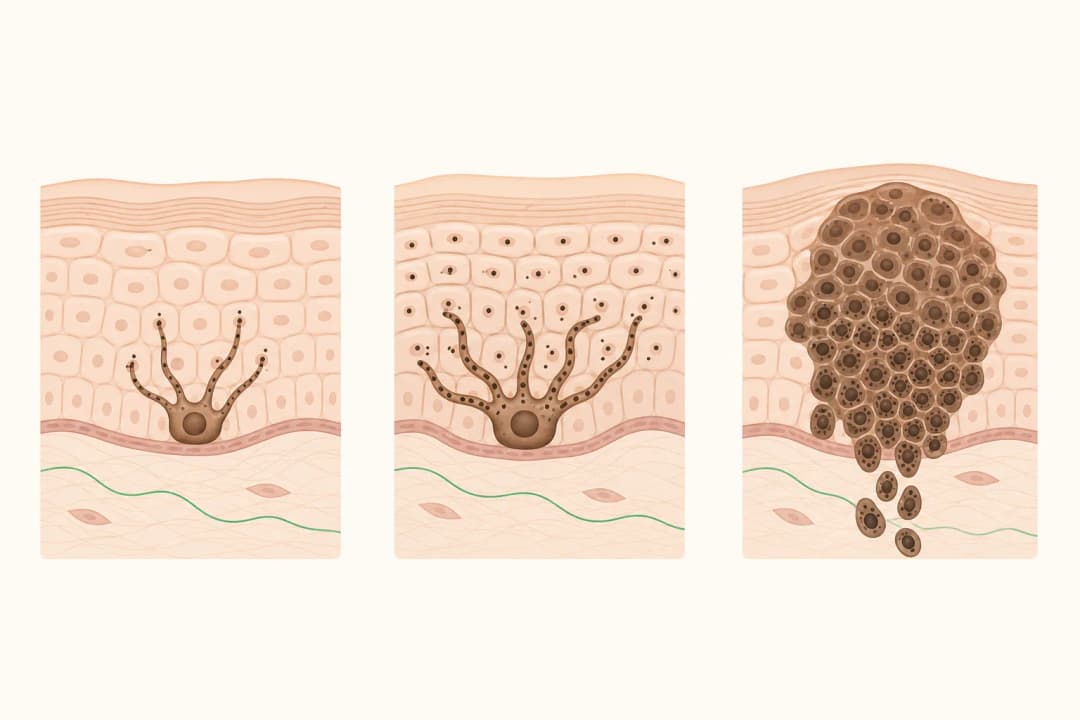
Melanoma on the abdomen may present as a new pigmented spot or as an existing mole that changes in size, shape, colour or sensation. Some melanomas contain little pigment, so a pink or reddish changing growth also needs attention.
What clinicians assess
A clinician looks for asymmetry, an irregular border, varied colour and ongoing evolution, while comparing the lesion with the person's other marks. These clues guide assessment but do not confirm melanoma. Examination with a dermatoscope can reveal structures beneath the surface, and diagnosis depends on laboratory examination of removed tissue.
If melanoma is confirmed, features of the tissue help guide whether further surgery, lymph-node assessment, imaging or systemic treatment should be discussed. The plan is individual; a visible abdominal location does not by itself determine how advanced the disease is.
Act on change without damaging the lesion
Arrange a prompt skin examination for a new or evolving spot, especially one that looks unlike your other marks. Note when the change began and bring clear earlier photographs if available. Do not cut, burn, freeze or treat it with an acid or mole-removal product, because injury can complicate examination and delay diagnosis.
When melanoma is found, surgery commonly removes the lesion with a margin of surrounding skin. Additional care may include a sentinel lymph node procedure, further tumour surgery, immunotherapy or structured surveillance, depending on the findings and overall health.
Do not wait on an evolving spot
Seek timely medical assessment if an abdominal mole or spot is enlarging, changing shape or colour, repeatedly bleeding, crusting, itching or failing to heal. A rapidly changing lesion should be assessed urgently. These signs do not establish the diagnosis, but they are reasons for direct examination rather than watchful waiting at home.
Questions after examination or diagnosis
Ask how the tissue will be removed and examined, whether the entire lesion is being sampled, and when results will be explained. If melanoma is confirmed, clarify what the pathology features mean, whether lymph-node testing or scans are relevant, who coordinates treatment, and what skin and lymph-node follow-up is planned.
Find care
General Clinics & Polyclinics in Abu Dhabi
That answer is general. If you want it applied to your own case, these are licensed general clinics & polyclinics listed in Abu Dhabi.
27 Ar Ruwwad St - Shakhbout City - MSH4 - Abu Dhabi - United Arab Emirates
Accepts: Daman, Thiqa, Cigna, MetLife +20 more
Al Ruwais, Al Dhafrah
Accepts: Daman, Thiqa, AXA, Cigna +16 more
Al Bahyah - Al Bahyah Old - Abu Dhabi - United Arab Emirates
Accepts: Daman, Thiqa, Cigna, Allianz Care +18 more
Abu Dhabi
Accepts: Daman, Thiqa, AXA, Cigna +27 more
Ordered by verification status and how complete each clinic's public record is, then alphabetically. This is a directory listing, not a ranking — Zavis does not rate or recommend providers.
A factual listing drawn from the DHA, DOH and MOHAP licence registers. It is not a referral, an endorsement, or advice that any of these providers is right for you.
Questions people ask
Can melanoma on the abdomen be colourless?
Yes. Some melanomas have little visible pigment and may look pink or red. A changing growth warrants examination regardless of colour.
Does an itchy abdominal mole mean melanoma?
Itching has many possible causes and does not diagnose melanoma. Melanoma can present with itching or other evolution, so a changing or persistently symptomatic mole should be examined.
Related
Related reading
Keep reading
Medical disclaimer. This page is general health information, not medical advice, and it cannot diagnose you. Always consult a licensed healthcare provider about your own symptoms and treatment. In an emergency in the UAE, call 998 for an ambulance.