
Abdominal and Groin Strain Explained
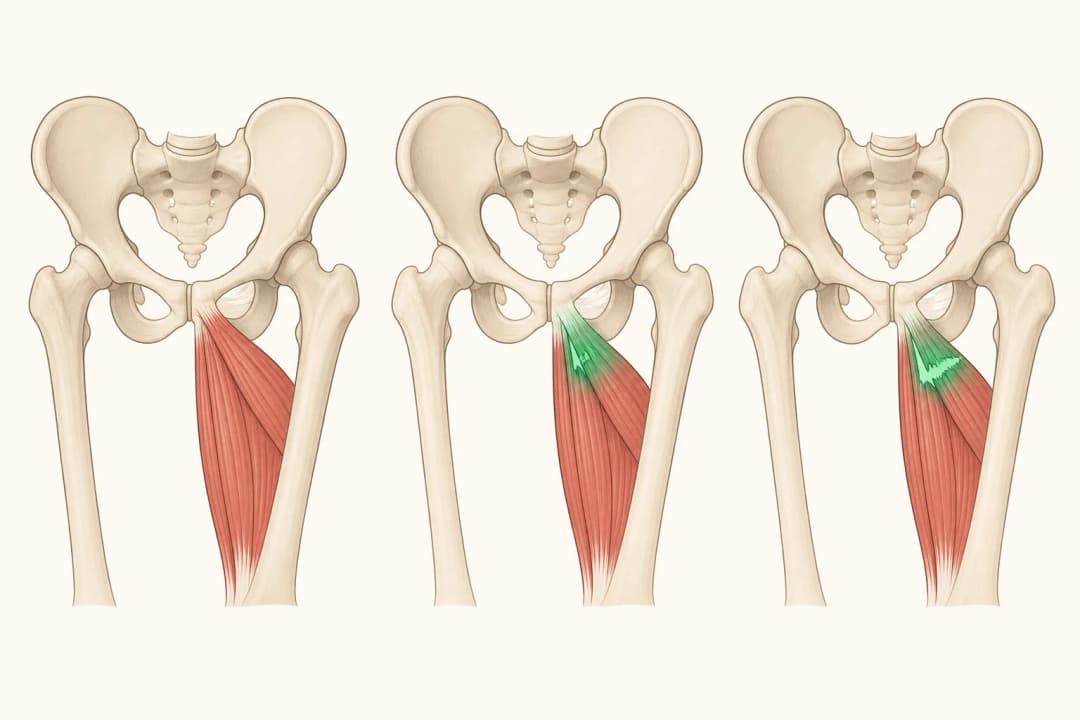
Short answer
An abdominal groin strain involves overstretching or tearing muscles near the lower abdomen, inner thigh, or their attachments, often during forceful twisting, kicking, or acceleration.
This answers one question. It is not a diagnosis and does not replace an assessment by a licensed doctor.
At a glance
- Common setting
- Sports involving acceleration, cutting, kicking, or trunk rotation
- Rehabilitation focus
- Progressive inner-thigh, trunk, hip, and leg loading
- Return principle
- Restore control and sport-specific capacity before unrestricted training
Where the injury is felt
Discomfort may sit along the lower abdominal wall, at the crease of the hip, or in the inner thigh. It can begin suddenly during sport or build with repeated cutting, kicking, sprinting, or trunk rotation. Tenderness and pain when squeezing the knees together, changing direction, doing a sit-up, coughing, or getting out of bed can occur. Because the hip joint, groin muscles, abdominal wall, and hernias can create overlapping symptoms, persistent pain should not be labelled a strain without assessment.
Building back activity
Temporarily stop the movement that caused sharp pain and maintain only comfortable daily activity. Early rehabilitation may include gentle hip and trunk motion followed by controlled strengthening of the inner thigh, abdomen, hips, and legs. Loading should progress from simple contractions to running, cutting, kicking, and sport-specific drills according to symptoms and control. Avoid testing the injury repeatedly at full speed. A sports physiotherapist can identify weak links and set functional milestones for a safer return.
When the problem may be more than a strain
Get urgent care for sudden testicular pain or swelling, severe abdominal pain, fainting, repeated vomiting, a rigid or increasingly swollen abdomen, or a painful groin bulge that is firm or cannot be gently reduced. Prompt assessment is also sensible after a major collision or if you cannot bear weight. Arrange a routine examination when symptoms keep returning, bruising or weakness is marked, a lump develops, or progress has levelled off despite reducing aggravating activity.
Plan your recovery discussion
Describe the exact movement and location of pain, then ask which muscle or attachment seems involved. Clarify whether the hip joint or a hernia needs investigation, which strengthening exercises fit the current stage, and what pain response is acceptable. Athletes should request measurable criteria for resuming acceleration, direction changes, kicking, and full training.
Find care
General Clinics & Polyclinics in Abu Dhabi
That answer is general. If you want it applied to your own case, these are licensed general clinics & polyclinics listed in Abu Dhabi.
27 Ar Ruwwad St - Shakhbout City - MSH4 - Abu Dhabi - United Arab Emirates
Accepts: Daman, Thiqa, Cigna, MetLife +20 more
Al Ruwais, Al Dhafrah
Accepts: Daman, Thiqa, AXA, Cigna +16 more
Al Bahyah - Al Bahyah Old - Abu Dhabi - United Arab Emirates
Accepts: Daman, Thiqa, Cigna, Allianz Care +18 more
Abu Dhabi
Accepts: Daman, Thiqa, AXA, Cigna +27 more
Ordered by verification status and how complete each clinic's public record is, then alphabetically. This is a directory listing, not a ranking — Zavis does not rate or recommend providers.
A factual listing drawn from the DHA, DOH and MOHAP licence registers. It is not a referral, an endorsement, or advice that any of these providers is right for you.
Questions people ask
Should I stretch an abdominal groin strain?
Gentle movement may help when it feels comfortable, but forceful stretching can irritate a recent injury. Strength and range are usually rebuilt progressively, with exercise chosen for the painful structure and stage of recovery.
When can I return to sport after a groin strain?
Return is better guided by function than by a fixed date. Daily activity, strength work, running, direction changes, and sport-specific skills should be completed with good control and without a meaningful symptom flare afterward.
Related
Related reading
Keep reading
Medical disclaimer. This page is general health information, not medical advice, and it cannot diagnose you. Always consult a licensed healthcare provider about your own symptoms and treatment. In an emergency in the UAE, call 998 for an ambulance.