
What to know about a day-3 frozen embryo transfer
Short answer
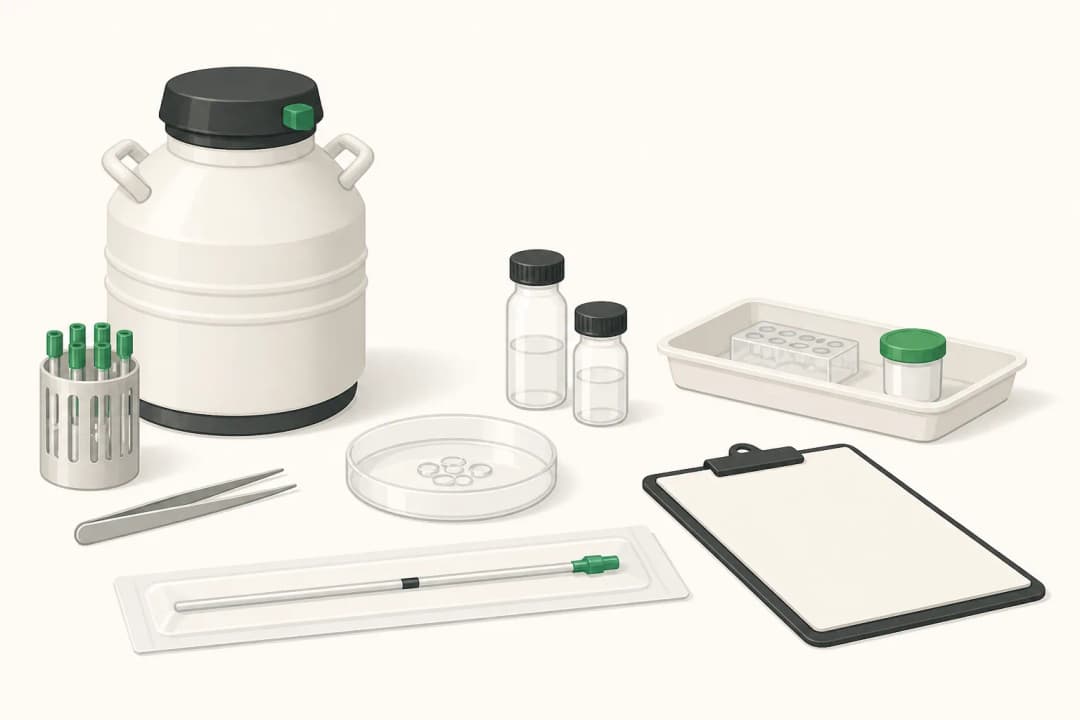
A day-3 frozen embryo transfer places a thawed cleavage-stage embryo into the uterus during a carefully timed treatment cycle.
This answers one question. It is not a diagnosis and does not replace an assessment by a licensed doctor.
At a glance
- Day 3 means
- The embryo's cleavage-stage development
- Timing is based on
- Ovulation or the prescribed hormone schedule
- After transfer
- Continue medication and test on the clinic's assigned date
What day 3 refers to
The term describes the embryo's developmental stage when it was frozen or prepared for transfer, not the third day after your period. At this cleavage stage, the embryo has divided into several cells. The laboratory thaws it and checks whether it is suitable to transfer under the clinic's protocol.
The uterine lining and embryo must be synchronised. Timing may follow your natural ovulation or a medication-prepared cycle using oestrogen and progesterone. The clinic sets the transfer date from ovulation or the start of progesterone, so taking medicines at the instructed times matters.
During the cycle and after transfer
Attend scheduled lining scans or blood tests and tell the fertility team about missed or late medication before changing the plan yourself. Transfer usually involves a thin catheter passed through the cervix while ultrasound helps guide placement. Follow the clinic's bladder instructions because these vary by service.
Continue prescribed medicines until the team tells you to stop, even if light spotting occurs. Ordinary gentle activity is generally compatible with recovery, but use your clinic's advice for exercise, sex, travel and work. Take the pregnancy test on the assigned date; testing too early can give a misleading result.
When to call the fertility team
Contact the clinic promptly for heavy bleeding, worsening or severe abdominal pain, fever, fainting, marked dizziness, breathlessness, persistent vomiting or rapidly increasing abdominal swelling. If a pregnancy test is positive, one-sided pelvic pain, shoulder-tip pain, faintness or bleeding requires urgent assessment because an ectopic pregnancy must be excluded.
Questions for your fertility team
Ask how the lining will be prepared, exactly when each medicine begins, what to do after a late dose and when the embryo will be thawed. Confirm the planned number of embryos, the test date, how results should be reported and whom to contact outside clinic hours.
Find care
General Clinics & Polyclinics in Abu Dhabi
That answer is general. If you want it applied to your own case, these are licensed general clinics & polyclinics listed in Abu Dhabi.
27 Ar Ruwwad St - Shakhbout City - MSH4 - Abu Dhabi - United Arab Emirates
Accepts: Daman, Thiqa, Cigna, MetLife +20 more
Al Ruwais, Al Dhafrah
Accepts: Daman, Thiqa, AXA, Cigna +16 more
Al Bahyah - Al Bahyah Old - Abu Dhabi - United Arab Emirates
Accepts: Daman, Thiqa, Cigna, Allianz Care +18 more
Abu Dhabi
Accepts: Daman, Thiqa, AXA, Cigna +27 more
Ordered by verification status and how complete each clinic's public record is, then alphabetically. This is a directory listing, not a ranking — Zavis does not rate or recommend providers.
A factual listing drawn from the DHA, DOH and MOHAP licence registers. It is not a referral, an endorsement, or advice that any of these providers is right for you.
Questions people ask
Does a day-3 embryo continue developing after transfer?
The intention is for the embryo to continue dividing in the uterus before reaching the stage at which implantation can begin. Development cannot be confirmed from symptoms alone.
Should progesterone continue after frozen embryo transfer?
Continue it exactly as prescribed until your fertility team gives different instructions. The duration depends on the cycle plan and test result.
Related
Related reading
Keep reading
Medical disclaimer. This page is general health information, not medical advice, and it cannot diagnose you. Always consult a licensed healthcare provider about your own symptoms and treatment. In an emergency in the UAE, call 998 for an ambulance.