
Understanding a 24-hour urine copper test
Short answer
A 24-hour urine copper test measures copper excreted in all urine collected over one complete day.
This answers one question. It is not a diagnosis and does not replace an assessment by a licensed doctor.
At a glance
- Purpose
- Measures copper passed in urine during a complete day
- Important detail
- Collect every sample within the timed period
- Container safety
- Follow preservative instructions on the label
The short answer
It can support an investigation into how the body handles copper, but it cannot establish a diagnosis in isolation. Blood results, liver findings, medicines and the clinical reason for testing all shape interpretation.
What the measurement can show
Copper is a trace mineral used by the body and normally processed largely through the liver and bile. Measuring urine across a whole day reduces the effect of natural variation between individual bathroom visits.
A clinician may request the test when copper accumulation or altered copper handling is being considered. Results may also be influenced by liver or kidney problems, certain medicines, supplements, contamination and an incomplete collection.
Preparing and collecting
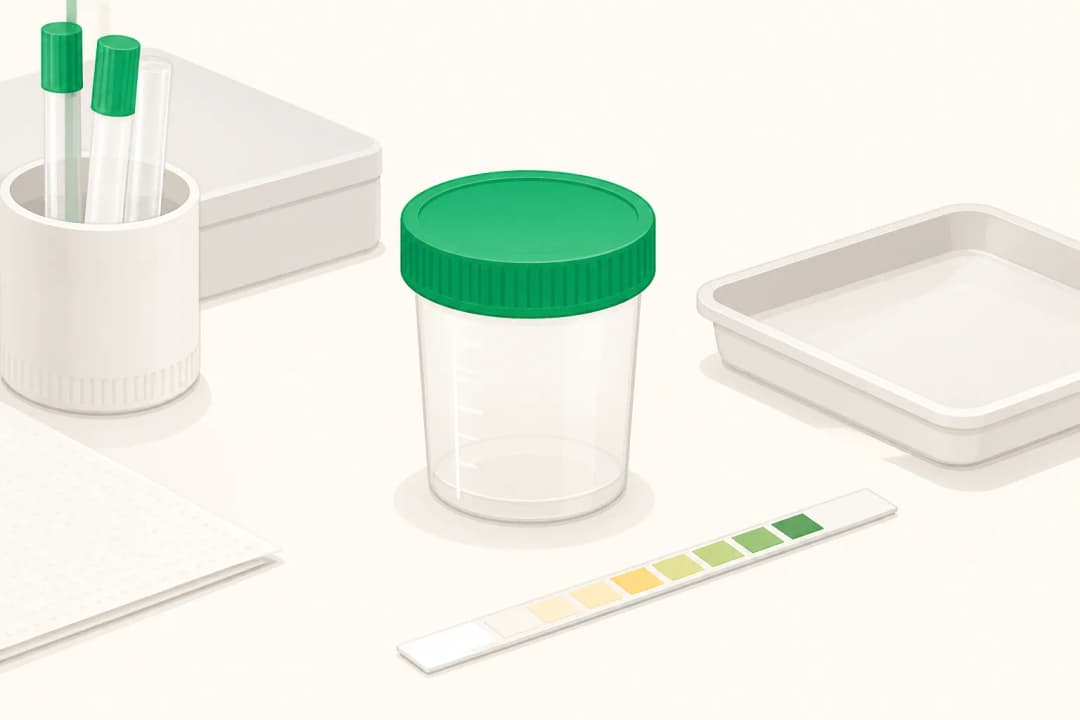
Use the laboratory container provided and read its safety label; some collection containers include a preservative that should not touch your skin. At the chosen start time, empty your bladder into the toilet and note the time.
Collect every subsequent urination for 24 hours, finishing by adding the urine passed at the same time the next day. Store the container exactly as directed and keep it away from children.
Avoid transferring urine through unapproved metal or household containers. Report a missed sample, spill, contamination or timing error rather than submitting a collection that appears complete. Continue medicines and supplements unless the requesting clinician gives different instructions.
When to get medical help
Urgent assessment is appropriate for new confusion, severe weakness, repeated vomiting, yellowing of the eyes or skin with marked illness, severe abdominal pain, or a sudden change in alertness. These concerns are driven by the symptoms, not by waiting for the urine result.
If preservative contacts your skin or eyes, rinse promptly and follow the laboratory container’s safety directions. Tell the laboratory about the exposure and seek medical advice if irritation persists.
Points to discuss
Ask what question the test is intended to answer, which other blood or liver assessments will be considered, and whether any supplement could interfere. Clarify how you will receive the result and what would prompt repeat collection or specialist review.
Find care
General Clinics & Polyclinics in Abu Dhabi
That answer is general. If you want it applied to your own case, these are licensed general clinics & polyclinics listed in Abu Dhabi.
27 Ar Ruwwad St - Shakhbout City - MSH4 - Abu Dhabi - United Arab Emirates
Accepts: Daman, Thiqa, Cigna, MetLife +20 more
Al Ruwais, Al Dhafrah
Accepts: Daman, Thiqa, AXA, Cigna +16 more
Al Bahyah - Al Bahyah Old - Abu Dhabi - United Arab Emirates
Accepts: Daman, Thiqa, Cigna, Allianz Care +18 more
Abu Dhabi
Accepts: Daman, Thiqa, AXA, Cigna +27 more
Ordered by verification status and how complete each clinic's public record is, then alphabetically. This is a directory listing, not a ranking — Zavis does not rate or recommend providers.
A factual listing drawn from the DHA, DOH and MOHAP licence registers. It is not a referral, an endorsement, or advice that any of these providers is right for you.
Questions people ask
Why is a single urine sample not used?
Copper excretion can vary during the day, so a complete timed collection provides a more representative total.
What happens if I forget one collection?
Contact the laboratory. Even one missed urination can alter the total, and staff may advise starting again with a fresh container.
Can the urine copper result confirm a copper disorder?
The result is one part of the assessment. A clinician relates it to symptoms, examination and other laboratory findings before reaching a diagnosis.
Related
Related reading
Keep reading
Medical disclaimer. This page is general health information, not medical advice, and it cannot diagnose you. Always consult a licensed healthcare provider about your own symptoms and treatment. In an emergency in the UAE, call 998 for an ambulance.