
24-hour urine calcium test explained
Short answer
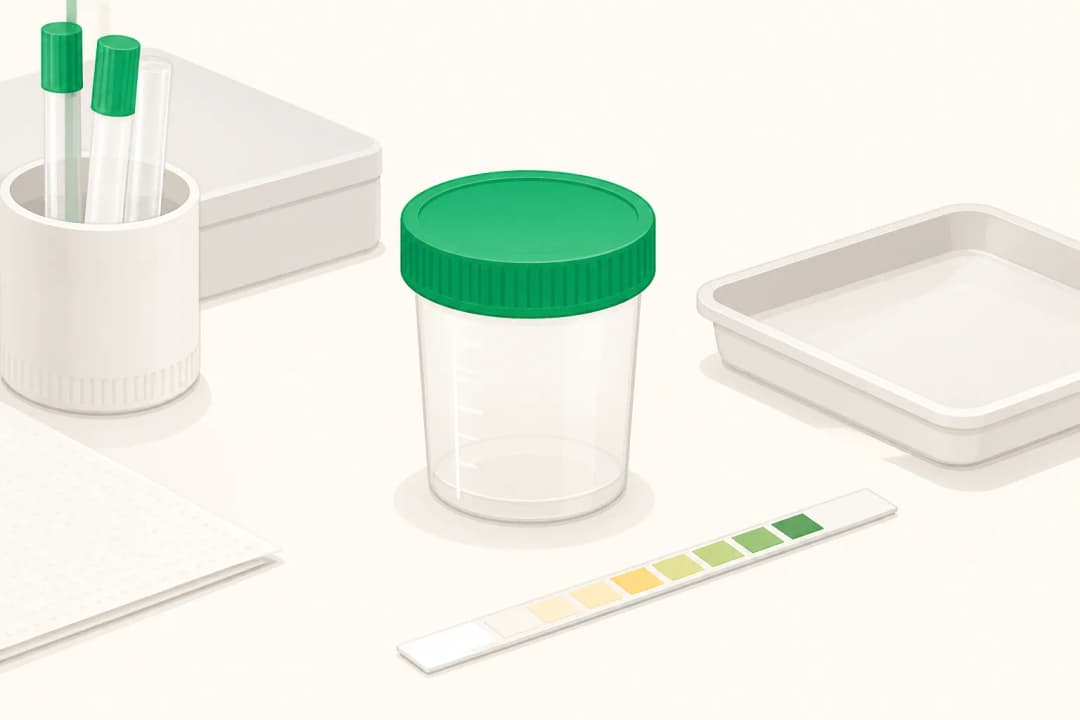
A 24-hour urine calcium test measures how much calcium leaves your body in urine during a full day.
This answers one question. It is not a diagnosis and does not replace an assessment by a licensed doctor.
At a glance
- What it measures
- Calcium excreted in urine across a full day
- Collection rule
- Save every urine sample after the stated start
- If a sample is missed
- Tell the laboratory
The short answer
Clinicians interpret it alongside your symptoms, blood tests, medicines, diet and kidney function. A result outside the laboratory range does not identify a cause by itself.
Why calcium is measured
Calcium circulates in blood, supports bones and muscles, and is filtered by the kidneys. Measuring a whole day of urine gives a broader picture than a single sample because excretion changes with meals, fluids and time of day.
The test may help investigate kidney stones, altered blood calcium or concerns about calcium regulation. Higher or lower excretion can have several explanations, so the number must be considered with other findings.
Collecting the sample correctly
Follow the laboratory’s start-time instructions. You will generally empty your bladder at the start without saving that urine, then collect every urination for the next 24 hours, including the final sample at the stated finish time.
Keep the container as instructed, often cool, and avoid contamination with stool, toilet paper or menstrual blood. If you miss a sample, spill urine or collect beyond the finish time, tell the laboratory because collection may need to restart.
Do not change calcium intake, supplements or prescribed medicines unless your clinician directs you. Record anything the laboratory asks about and return the container promptly.
Symptoms that need attention
The collection itself should not make you ill. Seek urgent care for severe pain in the side or back with vomiting, inability to pass urine, fainting, confusion, or visible blood in urine accompanied by severe symptoms.
Contact your clinician if you develop burning urination, fever, chills or worsening urinary discomfort. These symptoms require assessment based on their severity and are not explained by the calcium result alone.
What to clarify before and after testing
Confirm the exact start and finish method, storage requirements, and whether your usual diet and medicines should continue. Afterward, ask how the urine calcium compares with blood calcium and kidney tests, and whether follow-up testing is planned.
Find care
General Clinics & Polyclinics in Abu Dhabi
That answer is general. If you want it applied to your own case, these are licensed general clinics & polyclinics listed in Abu Dhabi.
27 Ar Ruwwad St - Shakhbout City - MSH4 - Abu Dhabi - United Arab Emirates
Accepts: Daman, Thiqa, Cigna, MetLife +20 more
Al Ruwais, Al Dhafrah
Accepts: Daman, Thiqa, AXA, Cigna +16 more
Al Bahyah - Al Bahyah Old - Abu Dhabi - United Arab Emirates
Accepts: Daman, Thiqa, Cigna, Allianz Care +18 more
Abu Dhabi
Accepts: Daman, Thiqa, AXA, Cigna +27 more
Ordered by verification status and how complete each clinic's public record is, then alphabetically. This is a directory listing, not a ranking — Zavis does not rate or recommend providers.
A factual listing drawn from the DHA, DOH and MOHAP licence registers. It is not a referral, an endorsement, or advice that any of these providers is right for you.
Questions people ask
Can I collect the urine in separate household containers?
Use only the container and collection equipment supplied or approved by the laboratory to reduce contamination and measurement errors.
Should I stop calcium supplements before the test?
Only if the requesting clinician tells you to. Changing supplements without instructions may make the result harder to interpret.
Does an abnormal result diagnose kidney stones?
No. Urine calcium can inform the assessment, but symptoms, imaging and other blood or urine findings may also be needed.
Related
Related reading
Keep reading
Medical disclaimer. This page is general health information, not medical advice, and it cannot diagnose you. Always consult a licensed healthcare provider about your own symptoms and treatment. In an emergency in the UAE, call 998 for an ambulance.