
Nuchal Translucency Scan
At a glance
- Test type
- Ultrasound screening
- Area examined
- Fluid behind the baby’s neck
- Result
- A chance estimate, not a diagnosis
Find care
General Clinics & Polyclinics in Abu Dhabi
Licensed general clinics & polyclinics listed in Abu Dhabi. Appearing here means a provider holds a UAE licence in this category — not that it offers nuchal translucency scan, which is worth confirming with the clinic before you book.
27 Ar Ruwwad St - Shakhbout City - MSH4 - Abu Dhabi - United Arab Emirates
Accepts: Daman, Thiqa, Cigna, MetLife +20 more
Al Ruwais, Al Dhafrah
Accepts: Daman, Thiqa, AXA, Cigna +16 more
Al Bahyah - Al Bahyah Old - Abu Dhabi - United Arab Emirates
Accepts: Daman, Thiqa, Cigna, Allianz Care +18 more
Abu Dhabi
Accepts: Daman, Thiqa, AXA, Cigna +27 more
The New EMI State Tower - 3rd Floor 303 Kan’ad Street - Hamdan Bin Mohammed St - Al Danah - Zone 1 - Abu Dhabi - United Arab Emirates
Accepts: Daman, Thiqa, Cigna, MetLife +22 more
Taj Resorts RV-1, Al Nasser Properties - Mafraq-2 - Mafraq Industrial Area - Abu Dhabi - United Arab Emirates
Accepts: Daman, Thiqa, AXA, Cigna +14 more
Ordered by verification status and how complete each clinic's public record is, then alphabetically. This is a directory listing, not a ranking — Zavis does not rate or recommend providers.
A factual listing drawn from the DHA, DOH and MOHAP licence registers. It is not a referral, an endorsement, or advice that any of these providers is right for you.
What is a nuchal translucency scan?
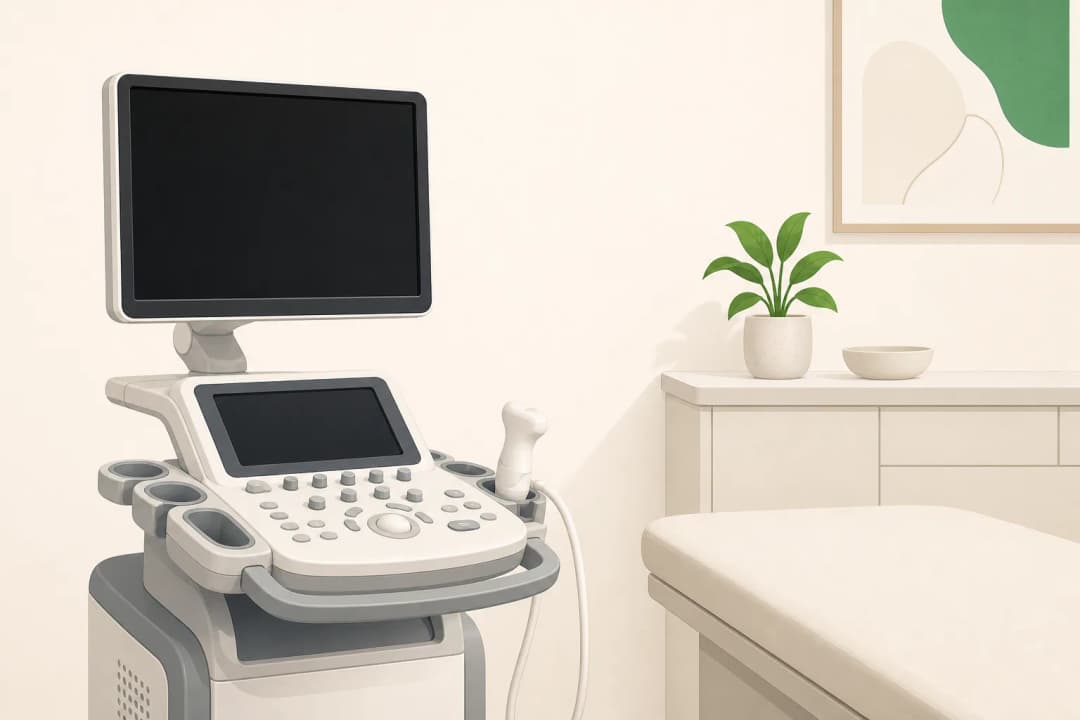
A nuchal translucency scan uses ultrasound to measure fluid behind the baby’s neck as part of early pregnancy screening.
The sonographer also checks the baby’s size, heartbeat, position and visible early anatomy. The measurement is combined with pregnancy details and sometimes a blood test to estimate the chance of certain chromosomal conditions. It is a screening test, so it cannot confirm or exclude a condition on its own.
What happens at each stage?
Before the appointment, you may be asked to have a comfortably full bladder so the uterus can be seen clearly. You lie on your back while gel is placed on your abdomen and an ultrasound probe is moved across the skin. The sonographer takes images and measurements while the baby is in a suitable position; you may be asked to move, cough or empty your bladder if the view is difficult.
The visit usually includes a discussion of dates, the scan itself and an explanation of how results will be reported. If the view is not adequate, another appointment may be offered. A blood test may be arranged separately as part of combined screening.
Is it safe for me and the baby?
The scan uses sound waves rather than ionising radiation, and it does not involve a needle or medication. Most people find the examination straightforward, although pressure from the probe can be uncomfortable when the bladder is full. Screening can create worry when a result is raised, so ask when and how you will receive the result and who will explain it.
A higher-chance screening result does not diagnose Down Syndrome or another condition. Your maternity team can discuss diagnostic testing, such as an invasive test, and the possible benefits and risks before you decide.
What are my choices?
You can choose whether to have the scan and whether to add a blood test. Some people choose screening to prepare for additional information; others prefer not to receive a chance estimate. If screening suggests a higher chance, options may include more detailed ultrasound, non-invasive prenatal testing or diagnostic testing. The decision belongs to you after clear counselling.
Key facts
The scan is timed in early pregnancy when the nuchal area can be measured. A measurement is interpreted alongside gestational age, not in isolation. A clear scan cannot identify every fetal condition, and a higher-chance result needs follow-up rather than an assumption about the baby’s health.
Who may be offered it?
It may be offered to people in early pregnancy as part of a local prenatal screening pathway. Your dates, the number of babies and the timing of care affect whether the measurement can be taken. Tell the team about bleeding, pain, fertility treatment or uncertainty about dates so the appointment can be planned safely.
How the scan is performed
You provide pregnancy details, lie comfortably, and expose the lower abdomen. Gel allows the probe to move over the skin. The sonographer records the baby’s crown-to-rump length, checks the nuchal space and captures images. Results are combined with the relevant screening information and sent through the agreed maternity pathway.
After the scan
There is no recovery period after an abdominal ultrasound, so you can return to usual activities. You may notice mild gel residue or temporary bladder discomfort. Contact your maternity service promptly for significant pain or bleeding, rather than treating those symptoms as a routine scan effect.
Limitations and possible concerns
The main limitation is uncertainty: the result estimates chance and may be affected by pregnancy dating, fetal position and image quality. A raised measurement can occur when the baby does not have a chromosomal condition, while a reassuring result cannot detect every problem. Ask about the next step before leaving.
Other screening and assessment choices
Depending on your maternity pathway, you may discuss a dating scan, an anomaly scan, blood-based screening or diagnostic testing. NIPT uses a blood sample to screen for selected chromosomal conditions, while diagnostic procedures answer a different question and carry their own considerations.
Finding pregnancy care
Choose a maternity service with trained ultrasound staff and access to counselling when a result needs explanation. Before booking, ask which screening components are included, when results are available, and how follow-up is arranged.
Questions people ask
Does the scan diagnose Down Syndrome?
No. It contributes to screening and may identify a higher chance, but diagnostic testing is needed to confirm a condition.
Can I eat and drink before it?
Follow the appointment instructions; some services request a comfortably full bladder for the abdominal view.
What if the baby is in the wrong position?
The sonographer may ask you to move or return for another view if a reliable measurement cannot be obtained.
Related
Related reading
Keep reading
Medical disclaimer. This page is general health information, not medical advice, and it cannot diagnose you. Always consult a licensed healthcare provider about your own symptoms and treatment. In an emergency in the UAE, call 998 for an ambulance.