
Genetic Carrier Screening
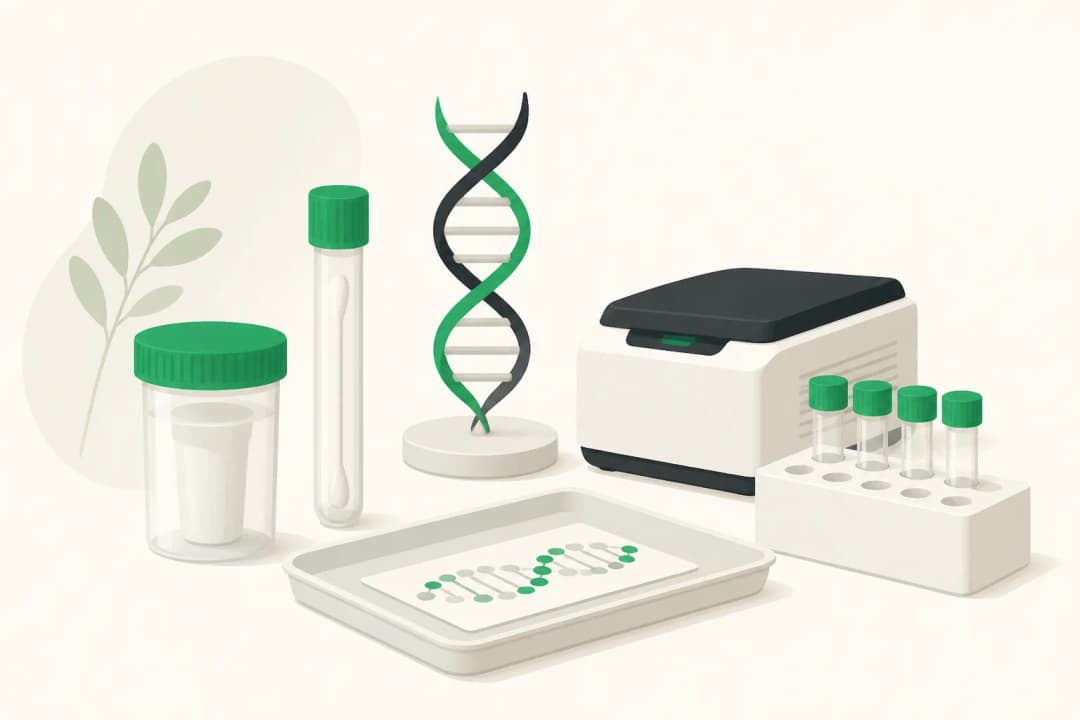
At a glance
- Sample
- Blood or saliva, depending on the service
- Result type
- Screening, not a diagnosis
- Follow-up
- Counselling and targeted testing may be offered
Find care
Hospitals & Medical Centers in Abu Dhabi
Licensed hospitals & medical centers listed in Abu Dhabi. Appearing here means a provider holds a UAE licence in this category — not that it offers genetic carrier screening, which is worth confirming with the clinic before you book.
Ahalia Hospital Musaffah Building - Musaffah - Musaffah Industrial - Abu Dhabi - United Arab Emirates
Accepts: Daman, Thiqa, AXA, Cigna +26 more
Al Ruwais Industrial City - Abu Dhabi - United Arab Emirates
Accepts: Daman, Thiqa, AXA, Cigna +30 more
Abu Dhabi, Abu Dhabi
Accepts: Daman, Thiqa, AXA, Cigna +30 more
Plot No. 11-12, SE 44 Khalifa City A - مدينة خليفة - جنوب شرق 44 - أبو ظبي - United Arab Emirates
Accepts: Daman, Thiqa, AXA, Cigna +26 more
7 Al Kawadir 2 St - Khalifa City - SE44 - Abu Dhabi - United Arab Emirates
Accepts: Daman, Thiqa, AXA, Cigna +25 more
Mohammed Bin Khalif Street 669, Al Mussala, Abu Dhabi, Abu Dhai - 35453 - 669 Mohammed Bin Khalifa St - Al Manhal - W15 02 - Abu Dhabi - United Arab Emirates
Accepts: Daman, Thiqa, AXA, Cigna +22 more
Ordered by verification status and how complete each clinic's public record is, then alphabetically. This is a directory listing, not a ranking — Zavis does not rate or recommend providers.
A factual listing drawn from the DHA, DOH and MOHAP licence registers. It is not a referral, an endorsement, or advice that any of these providers is right for you.
What is genetic carrier screening?
Genetic carrier screening checks whether a person carries gene changes that could be passed to a child. A carrier often has no symptoms because another working copy of the gene is present. Screening may cover selected conditions or a broader panel, depending on family history, ancestry, local practice and the laboratory used.
What does the test involve?
A clinician reviews your personal and family history, explains the scope and obtains consent. The sample is commonly blood or saliva. The laboratory examines selected genes and sends a report to the requesting clinician. A partner may be tested at the same time or after an initial finding. Ask what conditions are included and whether the test looks for carrier status, a diagnosis or both.
Is it safe, and how accurate is it?
Blood or saliva collection has minor practical discomforts, such as a brief sting or throat irritation. A screening result is not a diagnosis and cannot detect every possible gene change. Detection depends on the genes and variants included, sample quality and the laboratory method. A positive screen generally needs confirmatory testing and genetic counselling before decisions are made.
What happens if the result is abnormal?
An abnormal or positive carrier result is discussed with a genetics professional. Testing the biological partner can clarify whether a child could inherit a condition. Depending on timing and values, choices may include natural conception with prenatal options, IVF with PGT-M, donor gametes, adoption or no further testing. A result can also reveal information about relatives, so ask how privacy and sharing will be handled.
Key facts
Carrier screening is most useful when you understand its limits before providing a sample. A negative result reduces the chance for the conditions assessed but does not remove all inherited risk. Results may be reported as carrier, not detected, uncertain or requiring confirmation.
Who may consider it?
People may consider screening before pregnancy, during fertility planning or when a family member has an inherited condition. It can be especially relevant when both partners share ancestry linked with a condition, when couples are related, or after a child or pregnancy has raised a genetic question. Screening can be discussed even without a known family history.
Steps in the screening process
The service records history and ancestry, explains possible findings, selects a panel, collects the sample, and sends it to a laboratory. Once the report returns, a clinician explains what was and was not assessed. If a relevant change is found, partner testing, confirmatory analysis and counselling are arranged as appropriate.
After the sample
There is no special physical recovery after blood or saliva collection. Results may take time because the laboratory must analyze several genes and the clinician may need to interpret them. Keep your contact details current and arrange a results appointment rather than trying to interpret technical wording alone.
Limits and possible concerns
The main concerns are emotional uncertainty, unexpected family information, privacy questions and misunderstanding a screening result. A positive result does not prove that a child has a condition, while a negative result does not exclude every inherited disorder. Genetic counselling can help you weigh testing and reproductive decisions.
Other testing and planning routes
Alternatives include targeted testing for a known family variant, [Pre-marital Screening](/treatments/diagnostics-and-imaging/pre-marital-screening/), diagnostic testing during pregnancy or IVF with [PGT-M](/treatments/fertility-and-assisted-reproduction/pgt-m/). Laboratory methods such as [Next-Generation Sequencing](/technology/next-generation-sequencing/) may examine many genes, but the panel still has defined limits.
Choosing a genetics service
Choose a service that names the laboratory, panel, turnaround process, confirmatory pathway and data-privacy arrangements. Bring family records if available. Ask whether a genetics professional will explain findings and whether partner or relative testing can be coordinated.
Questions people ask
Does being a carrier mean I am ill?
Usually no; carriers often have no symptoms, but the gene change can matter for a child’s inheritance.
Can a negative screen rule out genetic disease?
No. It only lowers the chance for the conditions and variants assessed.
Should my partner be tested?
Partner testing may clarify reproductive risk when a relevant carrier finding is identified.
Related
Related reading
Keep reading
Medical disclaimer. This page is general health information, not medical advice, and it cannot diagnose you. Always consult a licensed healthcare provider about your own symptoms and treatment. In an emergency in the UAE, call 998 for an ambulance.