
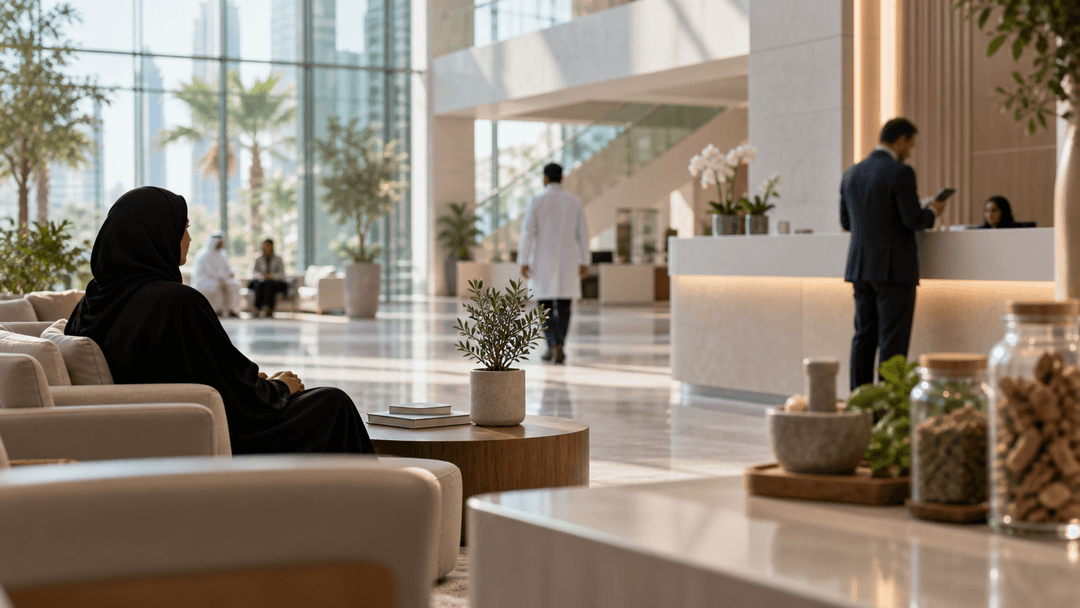
Tulah’s $8,000 Kerala programme puts UAE Ayurveda clinics under insurer scrutiny
Tulah’s Kerala model blends Ayurveda, diagnostics and app follow-up. UAE clinics, insurers and patients need to separate licensed care from wellness travel.
How Zavis verifies this coverage
Editorial standards, source rules, methodology, and review provenance are public.
Tulah Clinical Wellness in Kerala is selling integrative wellness programmes that start at $1,600, with a four-night clinical stay reported at about $8,000 before taxes, according to UA.NEWS, citing The National.
For UAE operators, the issue is less Kerala tourism than category discipline. Dubai clinics that market Ayurveda, dietetics, physiotherapy, diagnostics and medical consultations in one package still sit under Dubai Health Authority (DHA) facility and professional licensing rules. In Abu Dhabi, the same question goes to the Department of Health Abu Dhabi (DOH). In Sharjah, Ajman, Umm Al Quwain, Fujairah and Ras Al Khaimah, operators should check Ministry of Health and Prevention (MOHAP) licensing.
What Tulah is selling
The Kerala centre’s reported pathway starts before arrival. Guests have a video consultation with a facility doctor covering medications, sleep, diet, lifestyle, mental health and physical condition. Day one then includes consultations with an Ayurvedic doctor, a modern medicine doctor, a dietitian and a physiotherapist, plus examinations.
The reported test menu includes fasting blood tests, body composition assessment, cardiopulmonary exercise testing, bone mineral density measurement and a CT scan for calcium score. The treatment side includes clinical yoga, personal training, breathing sessions, padel and hour-long sound sessions in a Sonorium. Ayurveda therapies mentioned include udvartana, abhyanga and shirodhara.
At the dollar-dirham peg, the reported entry price of $1,600 is about AED 5,876. The reported $8,000 four-night clinical programme is about AED 29,380 before taxes. That is a useful benchmark for UAE clinics considering cash-pay longevity, Ayurveda or executive wellness packages.
Why UAE clinics should care
DHA’s health facility guidance recognises Traditional, Complementary and Alternative Medicine (TCAM) centres, including Ayurveda, as a facility category. That matters for any Dubai operator tempted to market an Indian-style integrative package without separating licensed clinical acts, wellness services and pharmacy supply.
For COOs and medical directors, the practical checklist is short:
- Confirm whether Ayurveda, physiotherapy, dietetics and medical consultations are each covered by the facility licence.
- Check that each practitioner has the right authority licence for Dubai, Abu Dhabi or the northern emirate in which care is delivered.
- Keep diagnostic tests, medical advice and wellness services distinct in consent forms, invoices and advertising copy.
- Use MOHAP product registration routes for herbal products with medical claims, rather than treating them as generic retail wellness goods.
Abu Dhabi operators face another constraint. DOH’s TCIM framework states that Ayurveda massage therapists must practise under the supervision of a DOH-licensed Ayurveda practitioner. That rule should shape staffing rosters, appointment templates and supervision records before a centre launches packaged treatments.
Insurers will draw the line
The payer question is harder. Daman, Thiqa and Sukoon network rules vary by plan, pre-authorisation policy and medical necessity criteria. A UAE patient may see one invoice as preventive care. An insurer may see the same package as wellness travel, complementary therapy or uncovered elective diagnostics.
CFOs should price these programmes as cash-pay unless a payer contract states otherwise. The safer revenue model is unbundled: physician consultation, laboratory testing, imaging, physiotherapy, dietetics, pharmacy products and wellness services each carry their own code, licence basis and patient disclosure. Clinics should ask payers for written benefit confirmation before advertising reimbursement eligibility.
Patients need the same discipline. A Kerala retreat can be medically supervised and still fall outside UAE insurance cover. A UAE clinic can offer Ayurveda and still require regulator-specific practitioner licensing. Before buying imported herbal products or local pharmacy items linked to a wellness plan, patients should check whether the product has the right UAE registration and whether the pharmacy is licensed.
The next signal to watch is whether Dubai and Abu Dhabi clinics copy Tulah’s higher-priced model with local diagnostics and follow-up apps. Operators that do so should build the compliance file before the campaign. For licensed pharmacy providers in the UAE, start with the UAE Open Healthcare Directory and filter by pharmacy provider and emirate.
Zavis Intelligence
Healthcare Industry Desk
Contributing to UAE healthcare industry coverage
Related coverage


FAQ
What is happening in UAE healthcare industry?
Tulah’s Kerala model blends Ayurveda, diagnostics and app follow-up. UAE clinics, insurers and patients need to separate licensed care from wellness travel.