
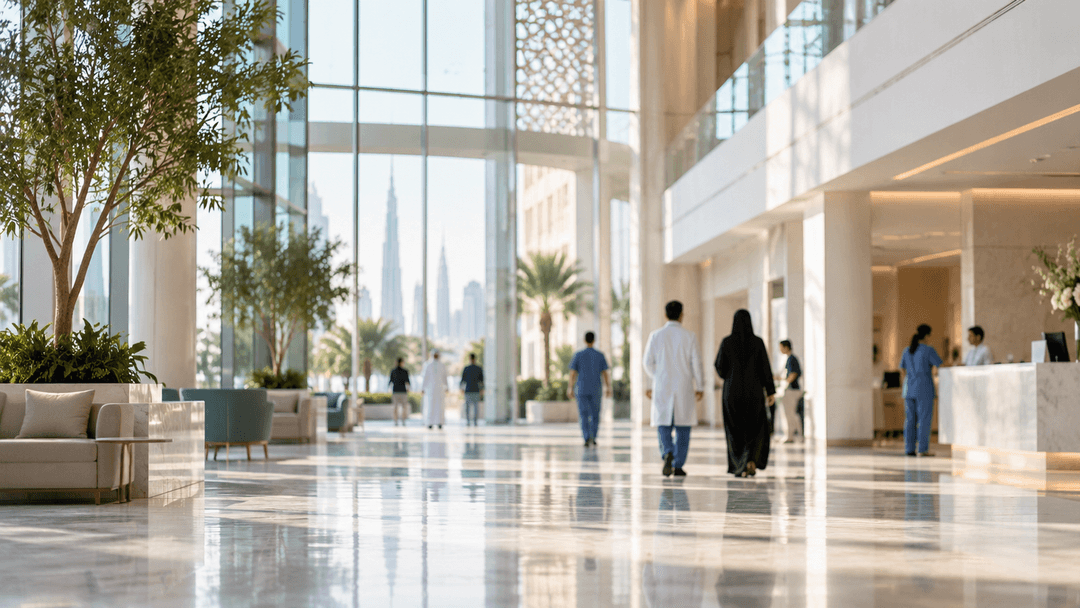
PureHealth starts 3-year Emirati fertility fellowship at 2 SEHA centres
PureHealth has launched a UAE fellowship in reproductive medicine. Clinics, insurers and patients should watch workforce supply, ART quality and costs.
How Zavis verifies this coverage
Editorial standards, source rules, methodology, and review provenance are public.
PureHealth has launched a three-year SEHA National Fellowship Programme in Reproductive Medicine and Surgery for Emirati physicians at SEHA Tawam Fertility Centre in Al Ain and SEHA Corniche Fertility Centre in Abu Dhabi, according to WAM on 8 October 2026.
The highest-stakes readers are Dubai fertility clinic owners, medical directors and payer teams. The fellowship does not change a Dubai licence today, but it gives the market a dated signal: Abu Dhabi is building a local subspecialist pipeline in a field where consultants, embryologists, genetic counselling and pharmacy-led medication pathways decide capacity and cost.
What changed
The programme is jointly accredited by the Department of Health – Abu Dhabi (DOH Abu Dhabi) and the National Institute for Health Specialties. WAM described it as the UAE’s first reproductive medicine fellowship for Emirati physicians with joint accreditation. Graduates are expected to be licensed as specialists in reproductive medicine and infertility in the UAE.
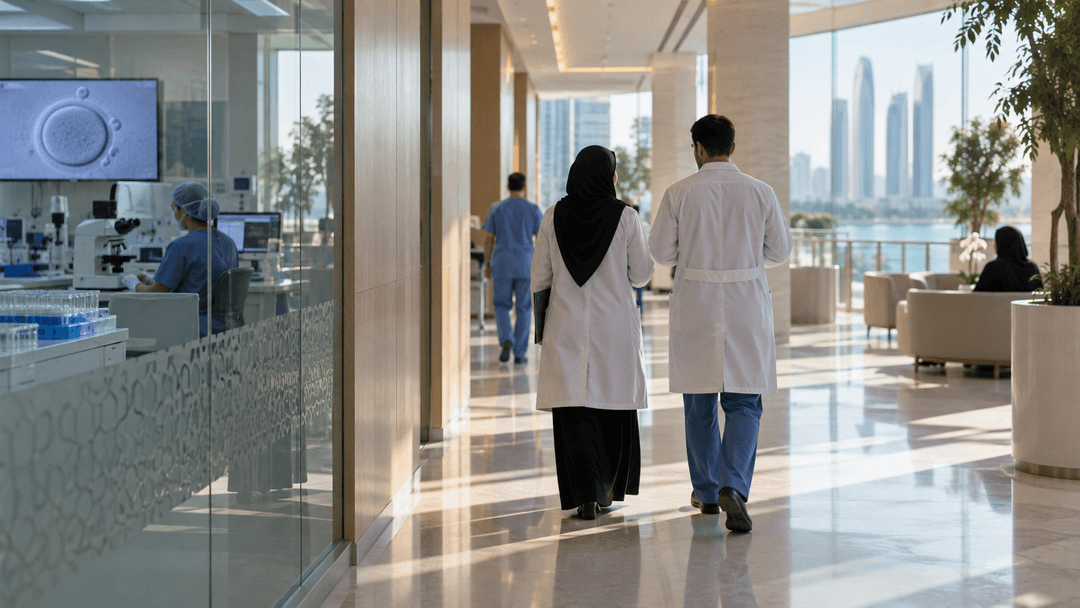
The training covers clinical practice, fertility surgery, research and leadership in assisted reproductive technologies. Fellows will train inside SEHA fertility centres and take part in research linked to precision medicine and population-specific genomic insights. That matters for clinics because fertility care now sits across several cost centres: imaging, operating theatre time, embryology, genetic testing, cryostorage, specialist pharmacy dispensing and maternity follow-up.
“National healthcare resilience depends on strong clinical capability.” Saeed Jaber Mohd Al Kuwaiti, Group Chief Executive Officer, SEHA.
SEHA fertility centres have more than 35 years of reproductive medicine experience and a reported record of more than 7,000 births, according to WAM. The programme is tied to the UAE’s National Family Growth Agenda 2031 and Abu Dhabi’s Family Wellbeing Strategy.
Why Dubai clinics should watch
Dubai operators remain regulated by the Dubai Health Authority (DHA). DHA issued an external circular on 25 March 2026 on standards for assisted reproductive medicine centres, addressed to all health professionals and facilities under DHA jurisdiction. Any clinic adding fertility services in Dubai should check Sheryan licensing, DHA facility standards and the professional scope attached to reproductive medicine and infertility.
DOH Abu Dhabi already treats ART as a monitored service line. DOH Abu Dhabi reported 695 childbirths via IVF in 2024, a more than 51% IVF success rate, 14 licensed assisted reproductive facilities and more than 2,800 healthcare professionals delivering obstetrics and gynaecology services. Those figures give Dubai and northern emirates operators a benchmark for service density, workforce planning and outcome reporting.
For Sharjah, Ajman, Ras Al Khaimah, Fujairah and Umm Al Quwain, the relevant facility regulator is the Ministry of Health and Prevention (MOHAP). MOHAP’s current service guide lists an AED 20,000 licensing fee for one-day surgery centres and assisted reproductive medicine centres, and a post-expiry fine equal to 25% of the licensing fee for each month after licence expiry, capped at 180 days.
Costs, cover and patient impact
For patients, the fellowship is a medium-term access story rather than a new subsidy. Published UAE fertility prices still vary by package contents. Dubai Fertility Center’s public FAQ lists AED 14,000 for IVF, AED 18,000 for ICSI and AED 2,500 for IUI, with medicines and tests often treated separately. ART Fertility Clinics publishes an AED 39,000 UAE package including IVF or ICSI, PGT-A, freezing and frozen embryo transfer with medication.
- COOs should audit DHA, DOH Abu Dhabi or MOHAP facility permissions before marketing ART services.
- CFOs should model pharmacy drugs, genetic testing and storage as separate billable lines, not as a single IVF headline price.
- Medical directors should track when the first fellowship graduates enter the specialist labour market after the three-year cycle.
- Payers such as Daman and Thiqa in Abu Dhabi should watch whether locally trained subspecialists change referral patterns and prior-authorisation review.
Private cover remains plan-specific. Patients should ask insurers such as Daman, Thiqa and Sukoon for a written answer on consultations, ovarian stimulation drugs, egg retrieval, embryo transfer, PGT-A and cryostorage before starting a cycle. Clinics should give itemised estimates because medication doses can change after stimulation begins.
The next question is whether Abu Dhabi’s training model pulls referrals from Dubai or raises the supply of UAE-trained reproductive specialists across the country. For fertility medicines and related dispensing, operators and patients can use the UAE Open Healthcare Directory to check licensed pharmacy providers, including 1,680 DHA-licensed pharmacies in Dubai.
Zavis Intelligence
Healthcare Industry Desk
Contributing to UAE healthcare industry coverage
Related coverage



FAQ
What is happening in UAE healthcare industry?
PureHealth has launched a UAE fellowship in reproductive medicine. Clinics, insurers and patients should watch workforce supply, ART quality and costs.