
Dubai Health’s 116-bed cancer hospital raises the bar for oncology referrals
Dubai’s new cancer hospital changes referral, insurer and patient access planning. Clinics should prepare for tighter oncology pathways.
How Zavis verifies this coverage
Editorial standards, source rules, methodology, and review provenance are public.
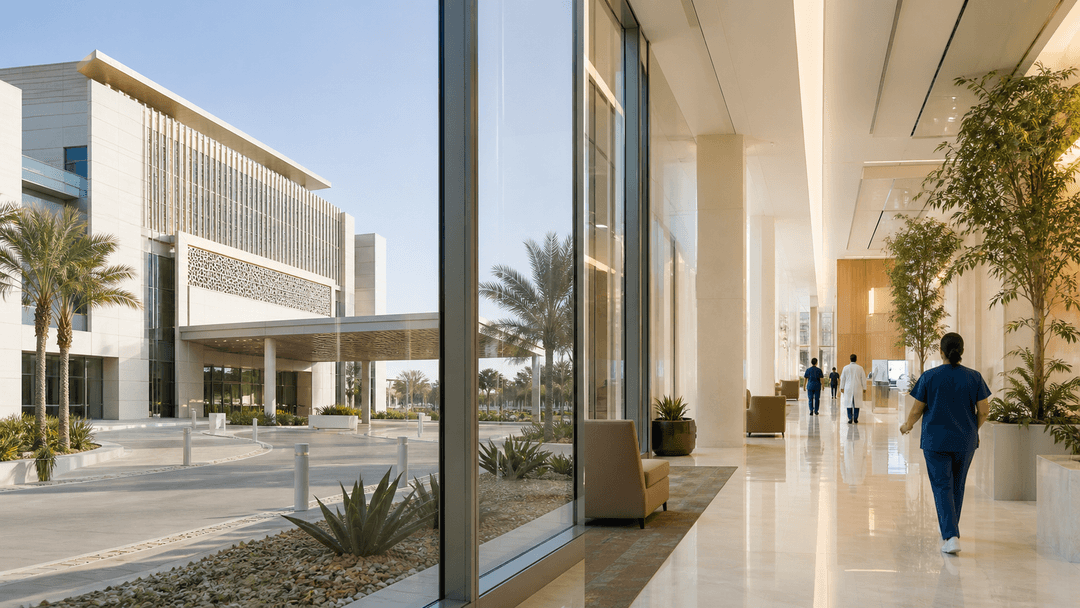
Dubai Health is developing the 116-bed Hamdan Bin Rashid Cancer Hospital in Dubai Healthcare City Phase 2, giving Dubai its first integrated comprehensive cancer hospital as oncology demand moves toward larger multidisciplinary centres.
The story matters most to COOs, CFOs and medical directors. Private clinics will need clearer referral pathways, insurers will need tighter authorisation rules for chemotherapy, radiotherapy and second opinions, and patients will gain another Dubai-based route for diagnosis, treatment and supportive care. Dubai providers sit under the Dubai Health Authority (DHA); comparable oncology services in Abu Dhabi and Al Ain are regulated by the Department of Health Abu Dhabi (DOH), while the northern emirates fall under the Ministry of Health and Prevention (MOHAP).
What Dubai Health is building
OncoDaily reported on 20 August 2026 that the hospital is designed as a full-continuum oncology facility. Dubai Health’s project page says the 59,000-square-metre hospital is planned with 53 clinics, 21 clinical research areas, 60 infusion rooms, 10 urgent care rooms, five radiotherapy rooms and 19 gardens.
The capacity profile points to a centre built for high-throughput ambulatory treatment as much as inpatient care. For operators, the 60 infusion rooms are the number to watch. They can change where chemotherapy, immunotherapy and biologic infusions are scheduled in Dubai once the hospital opens. Al Jalila Foundation previously described the project as an AED 1.2 billion investment with capacity to treat 30,000 patients a year.
“Today, we announce plans to establish the ‘Hamdan Bin Rashid Cancer Charity Hospital’ to provide free cancer care for people in need.” — Sheikh Mohammed bin Rashid Al Maktoum, quoted by Dubai Media Office on 27 April 2021
Why clinics and insurers should care
DHA moved before the hospital opening. On 25 June 2024, Emirates News Agency reported that DHA had issued standards for oncology services in Dubai, developed with the Emirates Oncology Society. Dr. Marwan Al Mulla, CEO of DHA’s Health Regulation Sector, said oncology services were a main challenge for health authorities worldwide. Dr. Hanan Obaid, Director of Health Policies and Standards at DHA, said the standards include medical care, patient safety and KPIs for quality and performance.
That gives Dubai clinics a practical checklist before the new hospital comes online. Oncology providers should review licensing scope, tumour board documentation, referral turnaround times, infusion safety protocols and patient-reported outcome tracking against DHA standards. Facilities in Abu Dhabi should benchmark against DOH requirements, especially if they refer complex cases between Abu Dhabi, Al Ain and Dubai. Providers in Sharjah, Ajman, Ras Al Khaimah, Fujairah and Umm Al Quwain should check MOHAP licensing files before advertising oncology services across emirates.
- COOs: map referral criteria for surgery, medical oncology, radiotherapy, urgent symptoms and supportive care by Q4 2026.
- CFOs: review pre-authorisation workflows for high-cost drug regimens and radiotherapy episodes before signing new payer terms.
- Medical directors: document multidisciplinary case review for patients moving between clinic, hospital and trial settings.
- CIOs: prepare referral packs that can carry pathology, imaging, prior authorisations and consent records without manual re-entry.
Costs, access and the patient route
Cash pricing remains fragmented. The UAE Open Healthcare Directory lists typical oncology consultation fees in Dubai at AED 600 to AED 1,500, with final charges depending on provider, complexity and insurance status. Medical travel platforms publish chemotherapy ranges that vary by drug protocol, but those figures should be treated as indicative only. A Dubai patient should request three documents before treatment starts: the oncologist’s treatment plan, the hospital’s itemised estimate and the insurer’s written approval or rejection.
For insurers, the near-term pressure is authorisation discipline. Daman and Thiqa are material for Abu Dhabi-funded or Abu Dhabi-resident patients, while Sukoon is a major UAE commercial insurer with Dubai exposure. Each payer’s actual liability depends on the member’s card, network tier, annual limit and cancer benefit wording. Clinics should avoid promising coverage until the payer confirms the treating facility, drug code, cycle count and co-payment in writing.
The hospital also changes patient acquisition. Dubai patients who previously considered Abu Dhabi oncology centres, including Cleveland Clinic Abu Dhabi or Burjeel Cancer Institute, may have a Dubai Health option for complex care once the new hospital is operational. Northern emirates providers will need fast referral agreements for radiotherapy, trials and urgent complications rather than trying to replicate every service locally.
The next commercial signal is opening detail: commissioning date, payer network status, clinical leadership, trial portfolio and whether charity-supported care has published eligibility criteria. Until those are released, clinics should prepare referral pathways and patients should compare licensed oncology providers on the UAE Open Healthcare Directory, including insurance acceptance, location, ratings and contact details.
Zavis Intelligence
Healthcare Industry Desk
Contributing to UAE healthcare industry coverage
Related coverage


FAQ
What is happening in UAE healthcare industry?
Dubai’s new cancer hospital changes referral, insurer and patient access planning. Clinics should prepare for tighter oncology pathways.