
Runny Nose vs Sore Throat
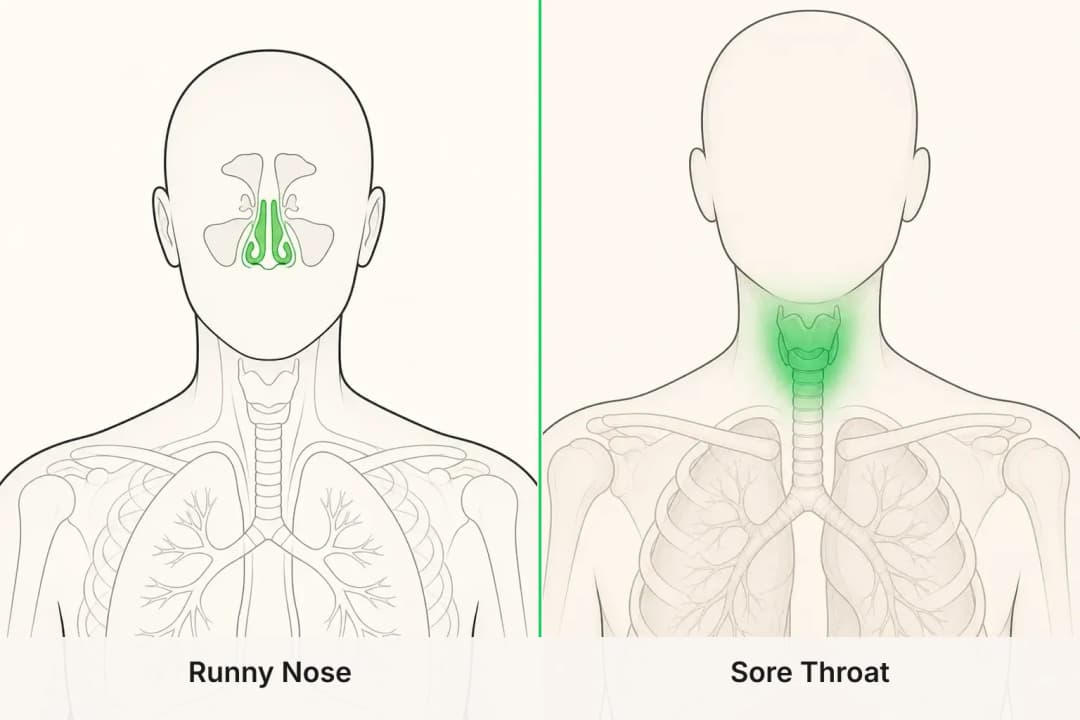
At a glance
- Runny nose
- Fluid from the nostrils or postnasal drip
- Sore throat
- Pain or irritation, often worse with swallowing
- Urgent signs
- Breathing trouble, drooling, or inability to swallow
Find care
General Clinics & Polyclinics in Abu Dhabi
Licensed general clinics & polyclinics listed in Abu Dhabi. Appearing here means a provider holds a UAE licence in this category — not that it offers runny nose vs sore throat, which is worth confirming with the clinic before you book.
27 Ar Ruwwad St - Shakhbout City - MSH4 - Abu Dhabi - United Arab Emirates
Accepts: Daman, Thiqa, Cigna, MetLife +20 more
Al Ruwais, Al Dhafrah
Accepts: Daman, Thiqa, AXA, Cigna +16 more
Al Bahyah - Al Bahyah Old - Abu Dhabi - United Arab Emirates
Accepts: Daman, Thiqa, Cigna, Allianz Care +18 more
Abu Dhabi
Accepts: Daman, Thiqa, AXA, Cigna +27 more
The New EMI State Tower - 3rd Floor 303 Kan’ad Street - Hamdan Bin Mohammed St - Al Danah - Zone 1 - Abu Dhabi - United Arab Emirates
Accepts: Daman, Thiqa, Cigna, MetLife +22 more
Taj Resorts RV-1, Al Nasser Properties - Mafraq-2 - Mafraq Industrial Area - Abu Dhabi - United Arab Emirates
Accepts: Daman, Thiqa, AXA, Cigna +14 more
Ordered by verification status and how complete each clinic's public record is, then alphabetically. This is a directory listing, not a ranking — Zavis does not rate or recommend providers.
A factual listing drawn from the DHA, DOH and MOHAP licence registers. It is not a referral, an endorsement, or advice that any of these providers is right for you.
Where the symptom is felt
A runny nose involves nasal fluid or drainage, whereas a sore throat is pain, scratchiness, or irritation in the throat.
They commonly overlap because drainage from the nose can irritate the throat, and viral illnesses can inflame both areas. A sore throat may be most noticeable on swallowing; a runny nose may involve dripping from the nostrils, congestion, or mucus moving down the back of the throat.
Focus on a runny nose when nasal drainage leads
Use this description when fluid from the nose, congestion, or a drip into the throat is the first or most troublesome symptom. Notice whether symptoms occur after dust, smoke, perfume, animals, air conditioning, or contact with someone who is unwell.
Drinking fluids and using gentle nasal care can support comfort. Avoid sharing tissues, cups, or utensils when you may have an infection, and wash hands after blowing your nose to reduce spread to others.
Focus on a sore throat when swallowing hurts
Use the sore-throat description when pain, burning, or scratchiness in the throat is the dominant problem, particularly if it makes swallowing food or liquids uncomfortable. Tell a clinician whether the pain is on one side, whether your voice has changed, and whether you can swallow saliva normally.
Warm drinks, cool fluids, and soft foods can be more comfortable for some people. Avoid smoke and other throat irritants. If you use non-prescription pain relief, choose a product that is appropriate for your health conditions and other medicines.
Red flags for urgent care
Seek urgent medical care for trouble breathing, inability to swallow saliva, drooling, rapidly increasing throat or neck swelling, a muffled voice, severe dehydration, or confusion. These signs can indicate a problem that needs urgent examination.
Arrange medical assessment for severe throat pain, a persistent sore throat, repeated episodes, a rash with fever, or nasal symptoms with substantial facial swelling or pain. Children and people with weakened immune systems may need earlier individual advice.
When the main problem may be different
Cough, fever, ear pain, blocked nose, heartburn, mouth ulcers, or a hoarse voice may provide a clearer starting point when they are more prominent. Reflux, dry air, voice strain, and mouth breathing can also irritate the throat without a runny nose.
Describe what came first and how symptoms changed. This timeline helps a clinician separate a short-lived irritation from an infection, allergy pattern, or another cause that needs targeted care.
What medical assessment may involve
A clinician may ask about illness contacts, allergens, medicines, reflux symptoms, smoking or vaping, and the ability to eat and drink. They may examine the nose, throat, ears, neck, chest, and hydration status.
Further tests are considered when the examination or symptom pattern suggests they would clarify the cause. Care may focus on relieving pain and congestion, treating an identified condition, or reducing a known trigger.
Questions people ask
Can postnasal drip make my throat sore?
Yes. Mucus draining down the back of the throat can cause irritation, throat clearing, or cough. The wider pattern helps determine whether infection, allergy, or another trigger may be involved.
When should a sore throat be checked?
Seek prompt assessment if the pain is severe or persistent, swallowing becomes difficult, there is a rash with fever, or you have breathing difficulty, drooling, or neck swelling.
Related
Related reading
Keep reading
Medical disclaimer. This page is general health information, not medical advice, and it cannot diagnose you. Always consult a licensed healthcare provider about your own symptoms and treatment. In an emergency in the UAE, call 998 for an ambulance.