
Dupilumab Therapy vs Narrowband UVB Phototherapy
At a glance
- Dupilumab
- Targeted injectable treatment
- Narrowband UVB
- Clinic-supervised light treatment
- Key choice
- Medical fit and visit schedule
Find care
Dermatology & Skin Care in Dubai
Licensed dermatology & skin care listed in Dubai. Appearing here means a provider holds a UAE licence in this category — not that it offers dupilumab therapy vs narrowband UVB phototherapy, which is worth confirming with the clinic before you book.
Wafi Mall - 1st Floor - Code “B”/ Entrance - Gate 3 Oud Metha Rd - inside the mall - Umm Hurair Second - Dubai Healthcare City - Dubai - United Arab Emirates
Accepts: Insurance Accepted
Al Ferdous 4, Al Wasl Road 603, AL SAFFA FIRST, Dubai
Accepts: Daman, Thiqa, AXA, Cigna +24 more
The mall, Jumeira Street 856a, UM SUQAIM SECOND, Dubai
Accepts: Thiqa, AXA, Bupa Global, Dubai Insurance Company +10 more
The Arcade, 4 Street 8, Al Garhoud, Dubai
Accepts: Daman, Thiqa, AXA, Cigna +26 more
Office # 102, SMJ-1, 1st Floor - شارع الشيخ زايد - الصفا 1 - الصفا - دبي - United Arab Emirates
Accepts: AXA, Cigna, MetLife, Allianz Care +19 more
Commercial Entrance, The Onyx Tower - 2 Sheikh Zayed Rd - Al Thanyah Third - The Greens - Dubai - United Arab Emirates
Accepts: Daman, Thiqa, AXA, Cigna +23 more
Ordered by verification status and how complete each clinic's public record is, then alphabetically. This is a directory listing, not a ranking — Zavis does not rate or recommend providers.
A factual listing drawn from the DHA, DOH and MOHAP licence registers. It is not a referral, an endorsement, or advice that any of these providers is right for you.
How the approaches differ
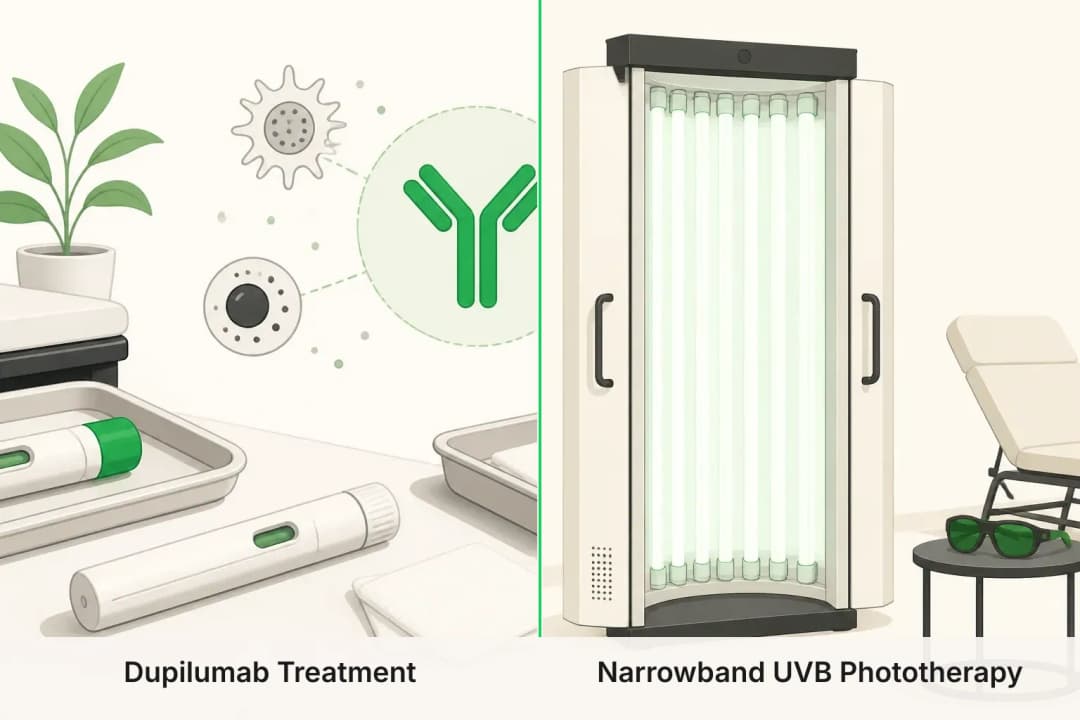
Dupilumab is a targeted injectable medicine, while narrowband UVB uses scheduled ultraviolet light exposure under clinical supervision.
They differ most in how treatment is delivered. Dupilumab is taken at home after suitable instruction, whereas phototherapy requires attendance at a treatment unit. A clinician considers the skin diagnosis, extent of involvement, itch, prior treatment response, other health conditions, and whether regular visits are realistic.
When dupilumab may suit the plan
Dupilumab may be considered when inflammatory eczema remains troublesome despite a dependable skin-care routine and appropriate topical treatment, or when the practical burden of frequent light appointments is too high. It can be useful for widespread disease where a systemic treatment is appropriate.
An injection-based option also calls for comfort with the technique, safe storage, and follow-up. New or persistent eye irritation, redness, pain, or visual changes should be reported promptly because they may need assessment.
When narrowband UVB may suit the plan
Narrowband UVB may fit a person who can attend consistently and prefers a non-injectable approach. It can be used for inflammatory conditions affecting larger areas when topical products alone are not enough, and it allows the clinical team to adjust exposure according to the skin response.
The schedule matters: missed sessions can interrupt progress and may require cautious re-escalation. Tell the team about medicines or skin products that can increase sensitivity to light, and follow the unit's instructions about shielding unaffected areas.
Side effects and precautions
Dupilumab can cause injection-site reactions and may be associated with eye symptoms. Phototherapy can cause temporary redness, dryness, itch, or a sunburn-like reaction if the skin receives more exposure than it tolerates. Neither option replaces routine review when symptoms change.
A rapidly spreading rash, facial swelling, trouble breathing, blistering, fever, or painful skin needs urgent medical assessment. These symptoms are not a reason to self-adjust treatment without clinical advice.
When another approach may be needed
Neither option is automatically the next step for every flare. A clinician may first check whether the diagnosis is correct, whether infection or contact allergy is contributing, and whether the topical regimen is being applied in a workable amount and formulation.
Localised disease may be managed differently from widespread disease. If skin is oozing, crusted, unusually painful, or accompanied by feeling unwell, assessment should happen before arranging routine phototherapy or starting a new injectable medicine.
How clinicians help choose
The decision is usually shared. Your clinician weighs disease severity and location against the demands of each option, then reviews your medical history, current medicines, pregnancy plans, skin sensitivity, and capacity for appointments. The aim is a plan you can use safely and consistently.
Bring a brief record of flares, treatments tried, missed work or sleep, and any eye or light-related reactions. This gives the consultation concrete information for choosing, changing, or combining treatments.
Questions people ask
Can dupilumab and narrowband UVB be used in the same treatment plan?
A dermatologist may consider a combined or staged plan in selected circumstances. The choice depends on the condition, response, tolerance, and the monitoring needed for each treatment.
What should I do if phototherapy makes my skin very red?
Contact the phototherapy unit before the next session. They can advise on skin care and decide whether the exposure plan needs to change.
Related
Related reading
Keep reading
Medical disclaimer. This page is general health information, not medical advice, and it cannot diagnose you. Always consult a licensed healthcare provider about your own symptoms and treatment. In an emergency in the UAE, call 998 for an ambulance.