
Blood in Urine vs Painful Urination
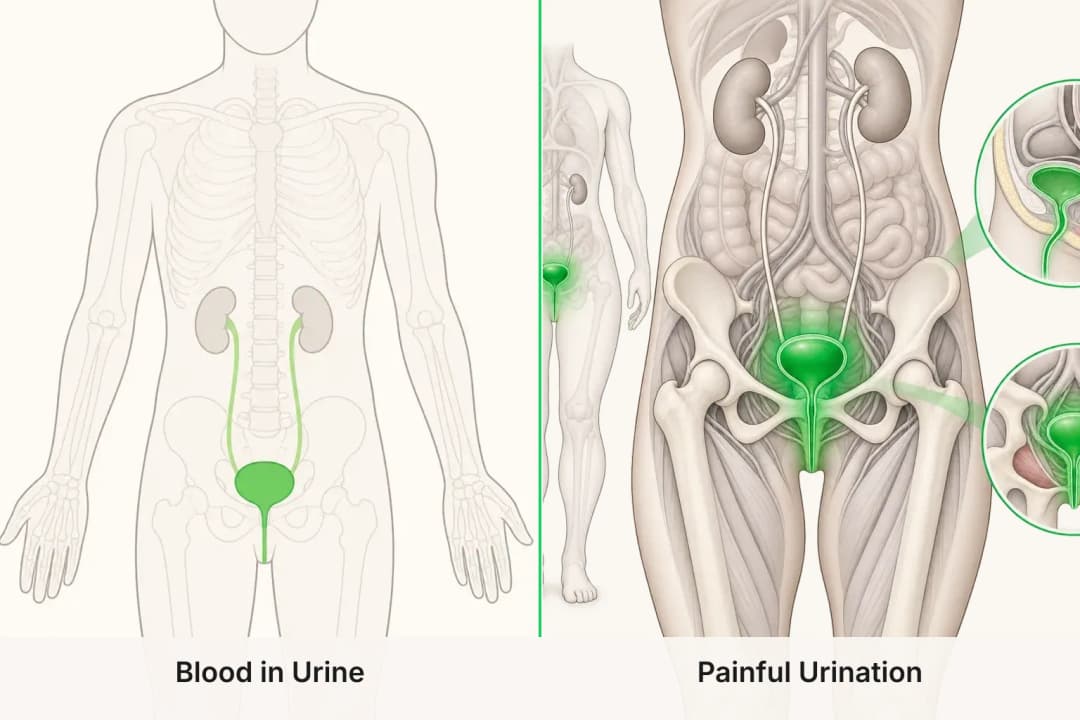
At a glance
- Key difference
- One is a finding in urine; the other is pain during urination.
- Do not ignore
- Visible blood, urinary blockage, fever with severe illness, or intense flank pain.
- Common assessment
- Symptom history, examination and urine testing.
Find care
General Clinics & Polyclinics in Abu Dhabi
Licensed general clinics & polyclinics listed in Abu Dhabi. Appearing here means a provider holds a UAE licence in this category — not that it offers blood in urine vs painful urination, which is worth confirming with the clinic before you book.
27 Ar Ruwwad St - Shakhbout City - MSH4 - Abu Dhabi - United Arab Emirates
Accepts: Daman, Thiqa, Cigna, MetLife +20 more
Al Ruwais, Al Dhafrah
Accepts: Daman, Thiqa, AXA, Cigna +16 more
Al Bahyah - Al Bahyah Old - Abu Dhabi - United Arab Emirates
Accepts: Daman, Thiqa, Cigna, Allianz Care +18 more
Abu Dhabi
Accepts: Daman, Thiqa, AXA, Cigna +27 more
The New EMI State Tower - 3rd Floor 303 Kan’ad Street - Hamdan Bin Mohammed St - Al Danah - Zone 1 - Abu Dhabi - United Arab Emirates
Accepts: Daman, Thiqa, Cigna, MetLife +22 more
Taj Resorts RV-1, Al Nasser Properties - Mafraq-2 - Mafraq Industrial Area - Abu Dhabi - United Arab Emirates
Accepts: Daman, Thiqa, AXA, Cigna +14 more
Ordered by verification status and how complete each clinic's public record is, then alphabetically. This is a directory listing, not a ranking — Zavis does not rate or recommend providers.
A factual listing drawn from the DHA, DOH and MOHAP licence registers. It is not a referral, an endorsement, or advice that any of these providers is right for you.
How the symptoms differ
Blood in urine is a visible or test-detected change, while painful urination is discomfort during passing urine; either can need medical assessment.
Blood may make urine look pink, red or tea-coloured, but it can also be found only on testing. Painful urination may feel like burning, stinging or sharp discomfort at the urethral opening or lower abdomen. The two symptoms can occur together, but they describe different observations.
Focus on blood in urine when
Arrange prompt clinical assessment when you see blood in the urine, even if it happens once or there is no pain. Tell the clinician whether the urine was uniformly discoloured, whether blood appeared at the beginning or end of the stream, and whether you noticed small clots.
Urgent care is appropriate for heavy bleeding, inability to pass urine, severe side or back pain, fever with feeling very unwell, dizziness, or blood after a significant injury. Menstrual bleeding or bleeding from the genital area can sometimes be mistaken for blood in urine, so the source may need to be checked.
Focus on painful urination when
Painful urination deserves assessment when it persists, recurs, or comes with a need to pass urine often, sudden urgency, cloudy urine, lower abdominal discomfort, fever, or new genital symptoms. These details can help distinguish a bladder or urethral problem from irritation outside the urinary tract.
Seek urgent advice if pain is accompanied by fever, vomiting, severe flank pain, pregnancy, confusion, or difficulty passing urine. Do not use leftover antibiotics or someone else’s medicine, because the cause and suitable treatment can differ.
Why the pattern matters
Both symptoms can occur with urinary tract infection, stones, inflammation, injury, medicines or conditions affecting the kidneys, bladder, prostate or genital tissues. A urine test can look for blood, cells and signs that guide the next step, but it does not replace a discussion of the full pattern.
Blood in urine without pain should not be dismissed simply because it settles. Painful urination can also result from skin irritation, dehydration, sexually transmitted infection or inflammation, so burning alone does not identify the cause.
When the label may not fit
Dark urine is not always blood. Concentrated urine, some foods, supplements and medicines can alter colour. Likewise, discomfort around urination may come from vaginal, vulval, penile or pelvic irritation rather than the urine itself.
If the change follows strenuous exercise, a new medicine, a procedure or an injury, mention that context. A clinician may repeat testing or collect a carefully obtained sample when contamination is possible.
How a clinician chooses next steps
The consultation usually starts with timing, pain location, urinary frequency, fever, medicines, recent procedures and relevant sexual or menstrual history. Examination and a urine sample may be followed by blood tests, imaging or specialist review when the pattern calls for it.
Bring a list of medicines and a clear account of what you saw or felt. If blood is visible, a photo of the urine colour can sometimes help describe an episode, but it should never delay seeking urgent care for severe symptoms.
Questions people ask
Can blood in urine and painful urination happen together?
Yes. They can occur together in several urinary or genital conditions, but one symptom does not establish the cause of the other.
Should I wait to see if visible blood in urine clears?
Visible blood should be assessed promptly, including when it is painless or appears to settle.
Related
Related reading
Keep reading
Medical disclaimer. This page is general health information, not medical advice, and it cannot diagnose you. Always consult a licensed healthcare provider about your own symptoms and treatment. In an emergency in the UAE, call 998 for an ambulance.