
Why is skin imaging system used in skin analysis imaging?
Short answer
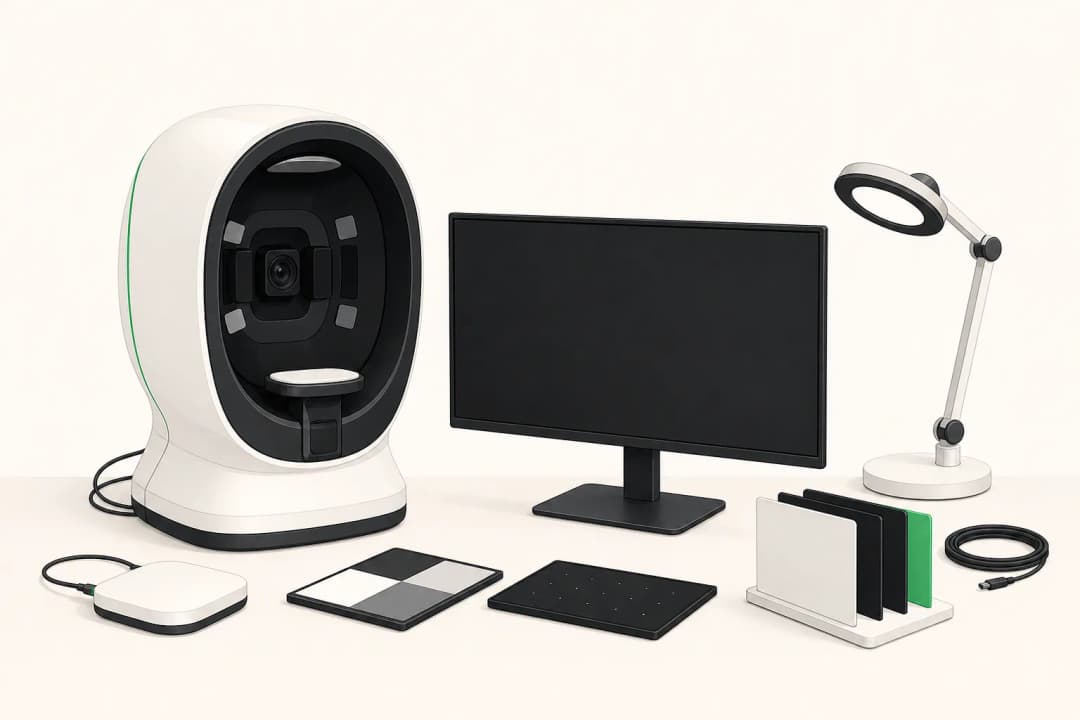
A skin imaging system is used in skin analysis imaging to capture consistent, magnified views that help assess skin features, compare changes, and plan care.
This answers one question. It is not a diagnosis and does not replace an assessment by a licensed doctor.
At a glance
- Main role
- Consistent visual documentation
- May assess
- Colour, redness, pores, texture, and lines
- Not a substitute for
- Clinical examination of a concerning lesion
What the images can show
The system may use controlled lighting, close-up photography, or other imaging modes to document features such as pores, oiliness, uneven colour, redness, lines, and texture. Some systems highlight patterns that are difficult to see in an ordinary mirror. The images support a clinician’s examination; they do not replace a diagnosis, skin biopsy, or assessment of a changing lesion.
A consistent baseline can make follow-up conversations clearer. Differences between images can also reflect lighting, camera position, makeup, hydration, or recent sun exposure, so the pictures need clinical context rather than being read as a standalone score.
Before and during imaging
Arrive with clean skin if requested and tell the clinician about recent tanning, self-tanner, makeup, active treatments, or a new rash. Ask what each image mode is intended to assess and how the findings will affect your plan. If a mole or patch has changed, point it out directly; do not rely on the scan to identify every warning sign.
When to seek care
Arrange a clinical assessment promptly for a spot that is changing in size, shape, or colour, repeatedly bleeding, crusting, not healing, or becoming persistently painful. Seek urgent help for rapidly spreading facial swelling or a severe allergic reaction. An imaging appointment should not delay review of a concerning lesion.
Questions for your doctor
Ask what the system can and cannot detect, whether the same settings will be used at follow-up, who interprets the images, and how your photographs are stored. Ask whether any finding needs examination or another test.
Find care
General Clinics & Polyclinics in Abu Dhabi
That answer is general. If you want it applied to your own case, these are licensed general clinics & polyclinics listed in Abu Dhabi.
27 Ar Ruwwad St - Shakhbout City - MSH4 - Abu Dhabi - United Arab Emirates
Accepts: Daman, Thiqa, Cigna, MetLife +20 more
Al Ruwais, Al Dhafrah
Accepts: Daman, Thiqa, AXA, Cigna +16 more
Al Bahyah - Al Bahyah Old - Abu Dhabi - United Arab Emirates
Accepts: Daman, Thiqa, Cigna, Allianz Care +18 more
Abu Dhabi
Accepts: Daman, Thiqa, AXA, Cigna +27 more
Ordered by verification status and how complete each clinic's public record is, then alphabetically. This is a directory listing, not a ranking — Zavis does not rate or recommend providers.
A factual listing drawn from the DHA, DOH and MOHAP licence registers. It is not a referral, an endorsement, or advice that any of these providers is right for you.
Questions people ask
Can imaging diagnose skin cancer by itself?
No. A clinician must assess a concerning lesion and may recommend additional testing.
Why might two scans look different?
Lighting, positioning, makeup, tanning, and hydration can change an image even when the skin has not meaningfully changed.
Keep reading
Medical disclaimer. This page is general health information, not medical advice, and it cannot diagnose you. Always consult a licensed healthcare provider about your own symptoms and treatment. In an emergency in the UAE, call 998 for an ambulance.