
When is a urine test recommended for benign prostatic hyperplasia?
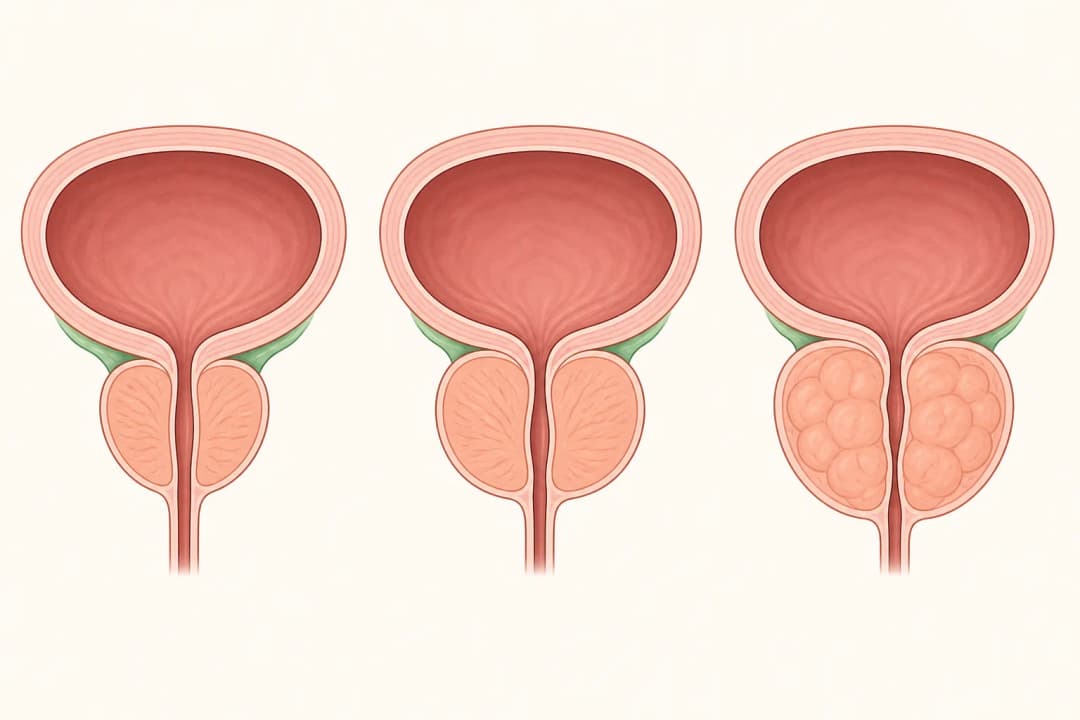
Short answer
A urine test is commonly recommended when urinary symptoms need checking for infection, blood, or another cause alongside benign prostatic hyperplasia.
This answers one question. It is not a diagnosis and does not replace an assessment by a licensed doctor.
At a glance
- Main purpose
- To look for infection, blood, or another explanation for urinary symptoms
- What it cannot do alone
- Confirm that the prostate is enlarged
- Urgent symptom
- Being unable to pass urine
When is a urine test recommended?
Testing may be considered during an initial assessment of an enlarged prostate, especially when there is burning during urination, an urgent or frequent need to pass urine, cloudy or strong-smelling urine, or visible blood. It may also be useful if symptoms change suddenly or do not fit the usual pattern of bladder outlet obstruction.
What the result can mean
A urine dipstick or laboratory sample can look for signs such as white blood cells, bacteria-related changes, blood, glucose, and protein. These findings can point toward a urinary infection, stones, diabetes, or another urinary or kidney problem. A normal result does not confirm benign prostatic hyperplasia, and an abnormal result does not by itself prove that the prostate is enlarged.
The clinician combines the result with your symptoms, examination, medicines, and sometimes a prostate assessment or other tests. The sample may be collected before treatment if infection is suspected, because antibiotics can affect later testing.
What to do before and after testing
Tell the clinician about pain, fever, blood in the urine, difficulty starting, weak flow, leakage, night-time urination, and any recent change. Mention antibiotics, urinary medicines, and supplements. Follow the collection instructions, use the supplied container, and avoid touching its inside. The clinician will explain whether the sample needs to be repeated or whether another test is more appropriate.
When to seek care promptly
Seek urgent medical care if you cannot pass urine, have severe lower-abdominal pain, or see substantial blood or clots in the urine. Prompt assessment is also needed for urinary symptoms with fever, chills, back or side pain, vomiting, or feeling markedly unwell, because these may signal infection or obstruction requiring treatment.
Questions for your doctor
Ask what the urine test is checking in your case, whether you should provide the sample before taking an antibiotic, when to expect the result, and what will happen if the result is abnormal. You can also ask which symptoms would mean you should return sooner.
Find care
General Clinics & Polyclinics in Abu Dhabi
That answer is general. If you want it applied to your own case, these are licensed general clinics & polyclinics listed in Abu Dhabi.
27 Ar Ruwwad St - Shakhbout City - MSH4 - Abu Dhabi - United Arab Emirates
Accepts: Daman, Thiqa, Cigna, MetLife +20 more
Al Ruwais, Al Dhafrah
Accepts: Daman, Thiqa, AXA, Cigna +16 more
Al Bahyah - Al Bahyah Old - Abu Dhabi - United Arab Emirates
Accepts: Daman, Thiqa, Cigna, Allianz Care +18 more
Abu Dhabi
Accepts: Daman, Thiqa, AXA, Cigna +27 more
Ordered by verification status and how complete each clinic's public record is, then alphabetically. This is a directory listing, not a ranking — Zavis does not rate or recommend providers.
A factual listing drawn from the DHA, DOH and MOHAP licence registers. It is not a referral, an endorsement, or advice that any of these providers is right for you.
Questions people ask
Does a urine test diagnose benign prostatic hyperplasia?
No. It helps identify infection, blood, or other problems that can cause similar symptoms; the clinician uses the overall assessment to evaluate an enlarged prostate.
Is urine testing needed for everyone with an enlarged prostate?
The clinician decides based on your symptoms, examination, medical history, and changes over time. Testing is particularly useful when infection, blood, or another cause needs consideration.
Related
Related reading
Keep reading
Medical disclaimer. This page is general health information, not medical advice, and it cannot diagnose you. Always consult a licensed healthcare provider about your own symptoms and treatment. In an emergency in the UAE, call 998 for an ambulance.