
When Is Tumour Removal Surgery Recommended for Chondrosarcoma?
Short answer
Tumour removal surgery for chondrosarcoma is considered when the tumour can be removed with a clear margin and the operation can protect or reconstruct nearby structures where possible.
This answers one question. It is not a diagnosis and does not replace an assessment by a licensed doctor.
At a glance
- Key information
- Grade, location and contact with nearby structures
- Surgical goal
- Remove the tumour while planning for useful reconstruction when possible
Why location and grade matter
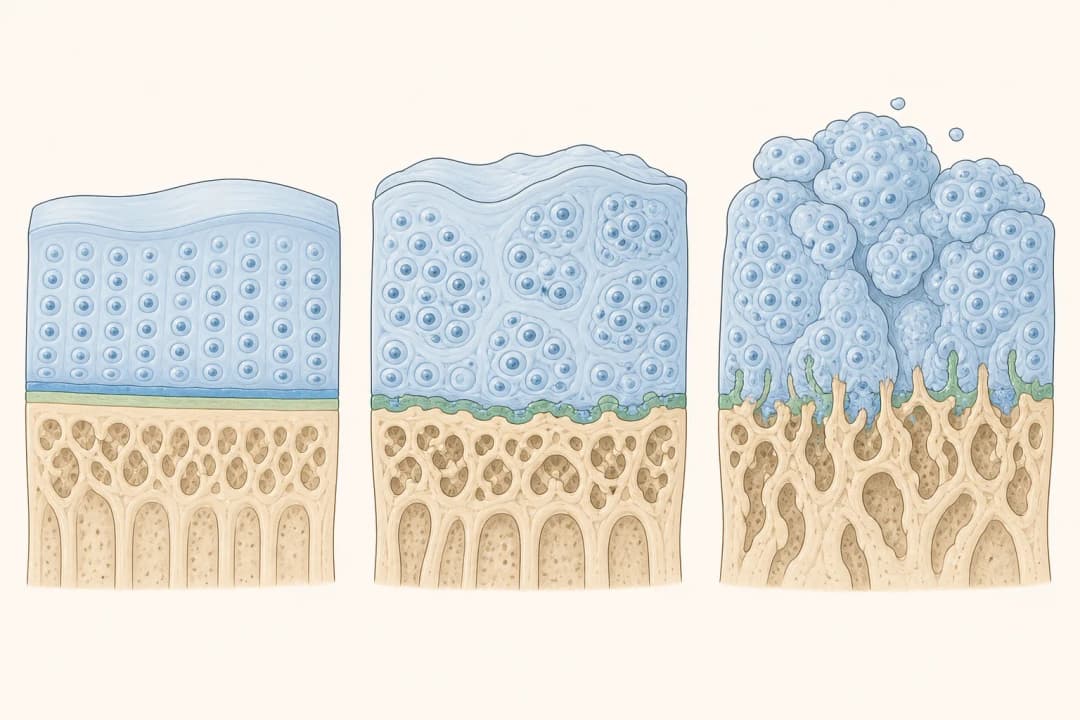
Chondrosarcoma develops from cartilage-forming cells and can arise in the pelvis, ribs, shoulder, hip or another bone. The grade describes how the cells look and behave; it helps the team judge how wide surgery needs to be and whether additional treatment should be considered.
Some tumours are close to joints, nerves, blood vessels or organs. The surgeon uses MRI or other imaging to map those relationships before deciding whether limb-sparing removal, reconstruction or a more extensive operation is appropriate. Chondrosarcoma often responds differently to drug treatment than some other bone cancers, so surgery may have a central role when removal is feasible.
How to prepare
Ask for the grade, exact site and measured boundaries of the tumour, and whether the biopsy sample was reviewed by a bone tumour pathologist. Discuss the expected effect on movement, strength and everyday activities, particularly for pelvic or limb tumours.
Bring imaging reports and a complete medicine list to the surgical consultation. Ask whether reconstruction, physiotherapy, pain support or a staged operation could be needed. If the proposed surgery is complex, specialist sarcoma review can clarify the balance between tumour control and function.
When to seek urgent care
Seek urgent care for sudden worsening pain, a new loss of movement, numbness, limb colour or temperature change, rapidly growing swelling, fever, or new shortness of breath. These symptoms can indicate a fracture, pressure on nearby structures, infection or a chest problem requiring assessment.
Questions for your doctor
What is the tumour grade and exact relationship to nearby nerves or vessels? What margin is planned? Will bone or joint reconstruction be needed? Which movements may change? How will pathology after surgery guide further treatment?
Questions people ask
Does chondrosarcoma always need chemotherapy?
Not always. The role of drug treatment depends on the tumour type, grade, location and the wider treatment plan; your specialist team will explain the reason for each treatment.
Can a chondrosarcoma be removed without removing the whole limb?
In some cases, limb-sparing surgery is possible. The decision depends on whether the tumour can be removed safely while preserving or rebuilding important structures.
Related
Related reading
Keep reading
Cancer care in the UAE
Hospitals & Medical Centers in Abu Dhabi
Most UAE cancer care is delivered inside hospital services rather than by standalone oncology clinics, so these are licensed hospitals & medical centers listed in Abu Dhabi. Confirm the specific cancer service exists before you travel, and know that asking for a second opinion is routine.
Ahalia Hospital Musaffah Building - Musaffah - Musaffah Industrial - Abu Dhabi - United Arab Emirates
Accepts: Daman, Thiqa, AXA, Cigna +26 more
Al Ruwais Industrial City - Abu Dhabi - United Arab Emirates
Accepts: Daman, Thiqa, AXA, Cigna +30 more
Abu Dhabi, Abu Dhabi
Accepts: Daman, Thiqa, AXA, Cigna +30 more
Second opinions are routine in cancer care and asking for one does not affect your treatment. How to arrange a second opinion in the UAE.
Ordered by verification status and how complete each clinic's public record is, then alphabetically. This is a directory listing, not a ranking — Zavis does not rate or recommend providers.
A factual listing drawn from the DHA, DOH and MOHAP licence registers. It is not a referral, an endorsement, or advice that any of these providers is right for you.
Medical disclaimer. This page is general health information, not medical advice, and it cannot diagnose you. Always consult a licensed healthcare provider about your own symptoms and treatment. In an emergency in the UAE, call 998 for an ambulance.