
When Are Topical Corticosteroids Recommended for Irritant Contact Dermatitis?
Short answer
Topical corticosteroids may be recommended for a short course when irritant contact dermatitis is inflamed, itchy, or uncomfortable.
This answers one question. It is not a diagnosis and does not replace an assessment by a licensed doctor.
At a glance
- Core step
- Remove or reduce the irritant
- Treatment role
- Calm inflammation while the barrier heals
Understanding the flare
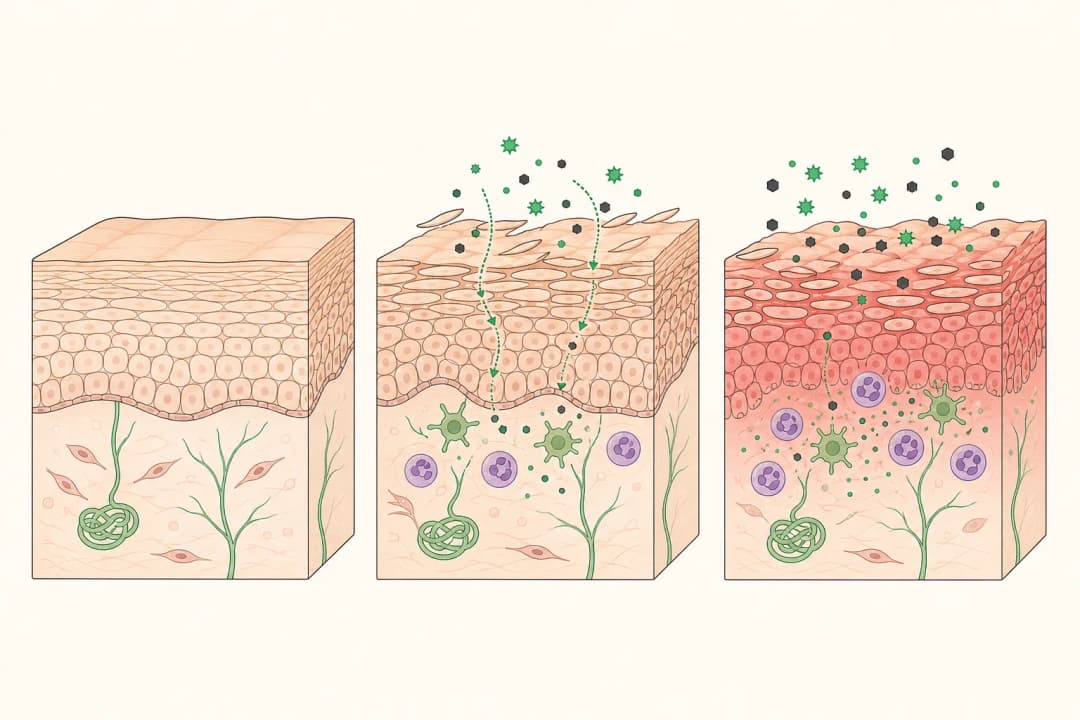
Irritant contact dermatitis develops when repeated or intense exposure damages the skin barrier. Water, soaps, cleaning products, solvents, sweat, and friction can all contribute. The skin may feel sore, dry, tight, cracked, red, or itchy. A topical corticosteroid reduces the inflammatory response, but it cannot make continued exposure harmless.
Treatment is selected according to the site and severity. Facial, eyelid, genital, and skin-fold areas usually need extra caution because skin there is more vulnerable to side effects. A clinician may consider another diagnosis if the rash has a sharp pattern, blisters, or does not improve after the suspected irritant is removed.
Protect the skin
Identify and reduce contact with the suspected irritant. Rinse exposed skin with lukewarm water, pat it dry, and use a bland fragrance-free moisturiser regularly. Wear protective gloves for wet or chemical work, with suitable cotton layers when sweating is a problem. Apply the corticosteroid in a thin layer exactly as directed, and do not use it on cracked or infected skin unless a clinician has advised this.
Improvement can be gradual while the barrier repairs. Keep a simple record of products, tasks, and flare timing; this can reveal an avoidable trigger and make the treatment plan more effective.
When to seek care
Arrange medical review if the rash is spreading, very painful, blistered, weeping, crusted, or interfering with sleep or work. Prompt assessment is needed for pus, increasing warmth, fever, or red streaks. Seek urgent help for swelling of the face or throat, breathing difficulty, or a rapidly widespread reaction.
Questions for your doctor
Ask which exposure is most likely responsible, which corticosteroid strength fits the body site, and when to stop. Ask how to protect your hands during work, which moisturiser to use, and how to recognise infection or a different type of dermatitis.
Find care
General Clinics & Polyclinics in Abu Dhabi
That answer is general. If you want it applied to your own case, these are licensed general clinics & polyclinics listed in Abu Dhabi.
27 Ar Ruwwad St - Shakhbout City - MSH4 - Abu Dhabi - United Arab Emirates
Accepts: Daman, Thiqa, Cigna, MetLife +20 more
Al Ruwais, Al Dhafrah
Accepts: Daman, Thiqa, AXA, Cigna +16 more
Al Bahyah - Al Bahyah Old - Abu Dhabi - United Arab Emirates
Accepts: Daman, Thiqa, Cigna, Allianz Care +18 more
Abu Dhabi
Accepts: Daman, Thiqa, AXA, Cigna +27 more
Ordered by verification status and how complete each clinic's public record is, then alphabetically. This is a directory listing, not a ranking — Zavis does not rate or recommend providers.
A factual listing drawn from the DHA, DOH and MOHAP licence registers. It is not a referral, an endorsement, or advice that any of these providers is right for you.
Questions people ask
Will a corticosteroid cure irritant contact dermatitis?
It can settle inflammation, but ongoing exposure may keep the rash active; trigger avoidance and skin protection remain central.
Can moisturiser be used with it?
Often yes, but follow the prescribed order and allow products to absorb as advised by your clinician or pharmacist.
Related
Related reading
Keep reading
Medical disclaimer. This page is general health information, not medical advice, and it cannot diagnose you. Always consult a licensed healthcare provider about your own symptoms and treatment. In an emergency in the UAE, call 998 for an ambulance.