
When is topical antibiotic therapy recommended for pitted keratolysis?
Short answer
Topical antibiotic therapy may be recommended for pitted keratolysis when examination supports a local bacterial infection of the soles.
This answers one question. It is not a diagnosis and does not replace an assessment by a licensed doctor.
At a glance
- Typical site
- Moist, softened skin on the soles
- Supportive care
- Dry feet, socks, and footwear thoroughly
- Avoid
- Aggressive scrubbing and shared footwear
What happens in pitted keratolysis
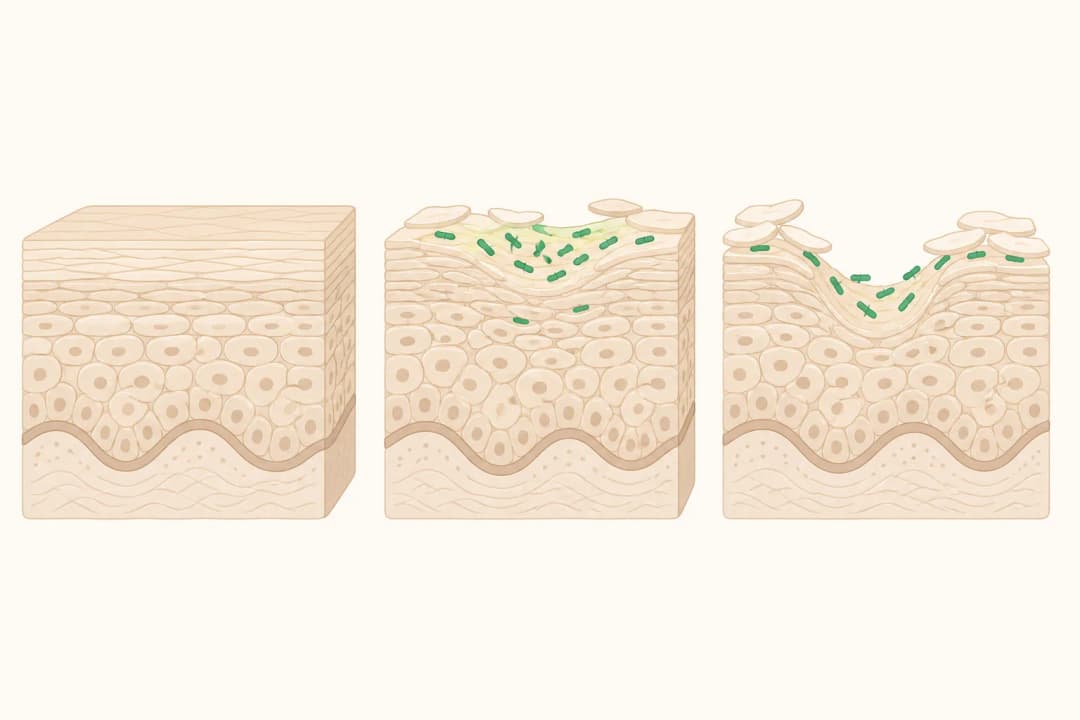
Pitted keratolysis affects the outer skin of the soles and can cause tiny depressions, softened white skin, and a strong odour. Warmth, sweat, and shoes that hold moisture create conditions in which bacteria can thrive. The appearance can overlap with other foot problems, so a clinician may inspect the soles and the spaces between the toes before treatment.
A topical antibiotic acts at the skin surface. It works best as part of a plan that also reduces moisture and friction. If the skin is deeply painful, inflamed, or not improving, the diagnosis may need to be revisited.
Keeping the soles dry
Apply the prescribed product to clean, thoroughly dried skin and follow the stated schedule. Change damp socks, choose breathable footwear, rotate shoes so they can dry, and wash and dry the feet carefully after sweating. Avoid sharing towels or footwear, and do not scrub the pits aggressively.
Continue the moisture-control measures after the skin improves because sweating and occlusive shoes can allow the problem to return. Ask a clinician about suitable foot antiperspirant use if sweating is a major trigger.
When to seek medical care
Arrange prompt assessment for increasing pain, spreading redness, warmth, swelling, pus, or difficulty walking. Fever, red streaking, or rapidly worsening tissue needs urgent attention, especially for someone with diabetes, poor circulation, or reduced sensation in the feet.
Questions for your doctor
Ask how long to use the treatment, which drying measures are suitable, whether excess sweating needs separate care, and what signs would suggest athlete's foot, eczema, or a deeper infection instead.
Find care
General Clinics & Polyclinics in Abu Dhabi
That answer is general. If you want it applied to your own case, these are licensed general clinics & polyclinics listed in Abu Dhabi.
27 Ar Ruwwad St - Shakhbout City - MSH4 - Abu Dhabi - United Arab Emirates
Accepts: Daman, Thiqa, Cigna, MetLife +20 more
Al Ruwais, Al Dhafrah
Accepts: Daman, Thiqa, AXA, Cigna +16 more
Al Bahyah - Al Bahyah Old - Abu Dhabi - United Arab Emirates
Accepts: Daman, Thiqa, Cigna, Allianz Care +18 more
Abu Dhabi
Accepts: Daman, Thiqa, AXA, Cigna +27 more
Ordered by verification status and how complete each clinic's public record is, then alphabetically. This is a directory listing, not a ranking — Zavis does not rate or recommend providers.
A factual listing drawn from the DHA, DOH and MOHAP licence registers. It is not a referral, an endorsement, or advice that any of these providers is right for you.
Questions people ask
Will an antibiotic alone prevent pitted keratolysis from returning?
Not necessarily. Moisture control and breathable footwear help address the conditions that allow the problem to recur.
Is foot odour enough to diagnose pitted keratolysis?
No. Odour has several possible causes, so the pits and surrounding skin should be examined.
Keep reading
Medical disclaimer. This page is general health information, not medical advice, and it cannot diagnose you. Always consult a licensed healthcare provider about your own symptoms and treatment. In an emergency in the UAE, call 998 for an ambulance.