
When is surgical sperm retrieval recommended for male factor infertility?
Short answer
Surgical sperm retrieval may be recommended when sperm is absent from the ejaculate, blocked from reaching it, or not obtained with other planned methods.
This answers one question. It is not a diagnosis and does not replace an assessment by a licensed doctor.
At a glance
- Common reason
- Sperm may be made in the testicle but blocked from entering semen.
- Before treatment
- Semen tests and a specialist assessment guide the approach.
How the decision is made
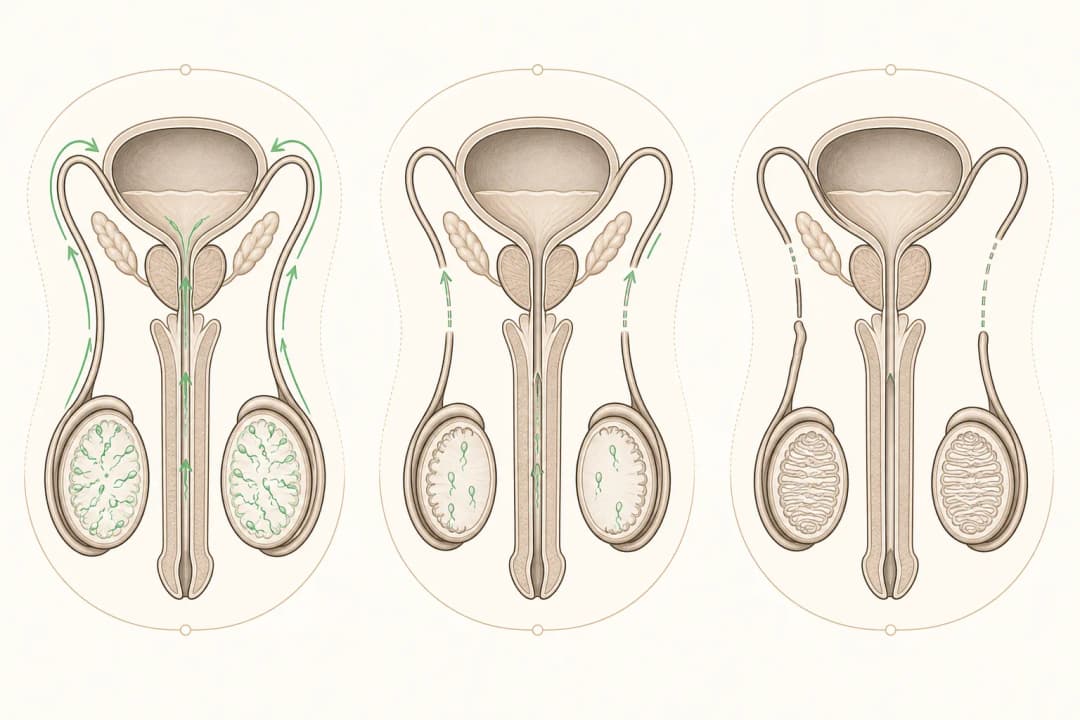
A fertility specialist first reviews semen analyses, medical history, hormone results, examination findings, and any previous procedures. Obstructive azoospermia means sperm may be produced but blocked from entering the semen. Non-obstructive azoospermia means sperm production is very low or uneven, so retrieval may be more difficult and may require a targeted technique. The sample can be used immediately or frozen for assisted reproduction, depending on the treatment plan. The procedure, anaesthetic, possible discomfort, and chance of finding usable sperm should be discussed individually.
Planning the procedure
Bring details of medicines, supplements, infections, testicular surgery, chemotherapy, and fertility treatment to the consultation. Ask whether hormone treatment or repair of a blockage should come first and whether your partner’s egg-collection timing affects the plan. Follow instructions about fasting, medicines, transport home, and sample handling. Keep the laboratory and clinic contact details available so results and next steps are clear.
When to contact the clinic
After retrieval, contact the clinic promptly for increasing swelling, severe pain, fever, wound redness, bleeding that does not settle, or difficulty passing urine. Seek urgent help for severe symptoms or rapid deterioration. Before the procedure, report a new infection or significant change in health because it may affect anaesthesia or scheduling.
Questions for your doctor
Ask why retrieval is advised, which technique fits your findings, whether sperm will be frozen, and what happens if no usable sperm is found. Discuss recovery, the laboratory process, assisted-reproduction options, and whether genetic counselling is appropriate.
Find care
General Clinics & Polyclinics in Abu Dhabi
That answer is general. If you want it applied to your own case, these are licensed general clinics & polyclinics listed in Abu Dhabi.
27 Ar Ruwwad St - Shakhbout City - MSH4 - Abu Dhabi - United Arab Emirates
Accepts: Daman, Thiqa, Cigna, MetLife +20 more
Al Ruwais, Al Dhafrah
Accepts: Daman, Thiqa, AXA, Cigna +16 more
Al Bahyah - Al Bahyah Old - Abu Dhabi - United Arab Emirates
Accepts: Daman, Thiqa, Cigna, Allianz Care +18 more
Abu Dhabi
Accepts: Daman, Thiqa, AXA, Cigna +27 more
Ordered by verification status and how complete each clinic's public record is, then alphabetically. This is a directory listing, not a ranking — Zavis does not rate or recommend providers.
A factual listing drawn from the DHA, DOH and MOHAP licence registers. It is not a referral, an endorsement, or advice that any of these providers is right for you.
Questions people ask
Is surgical retrieval used when sperm cannot be ejaculated?
It can be considered when sperm cannot reach the ejaculate, including some blockages or ejaculation problems.
Will retrieval always find sperm?
No. The likelihood depends on sperm production and the underlying cause, which your specialist can explain from your results.
Related
Related reading
Keep reading
Medical disclaimer. This page is general health information, not medical advice, and it cannot diagnose you. Always consult a licensed healthcare provider about your own symptoms and treatment. In an emergency in the UAE, call 998 for an ambulance.