
When Is Shockwave Therapy Recommended for Rotator Cuff Tendinitis?
Short answer
Shockwave therapy may be recommended for rotator cuff tendinitis when pain and movement limits persist after appropriate rehabilitation, and examination supports a tendon-related cause.
This answers one question. It is not a diagnosis and does not replace an assessment by a licensed doctor.
At a glance
- Common reason to consider it
- Persistent tendon-related shoulder pain after a rehabilitation trial
- Assessment focus
- Strength, movement, pain location, and competing causes
What the recommendation means
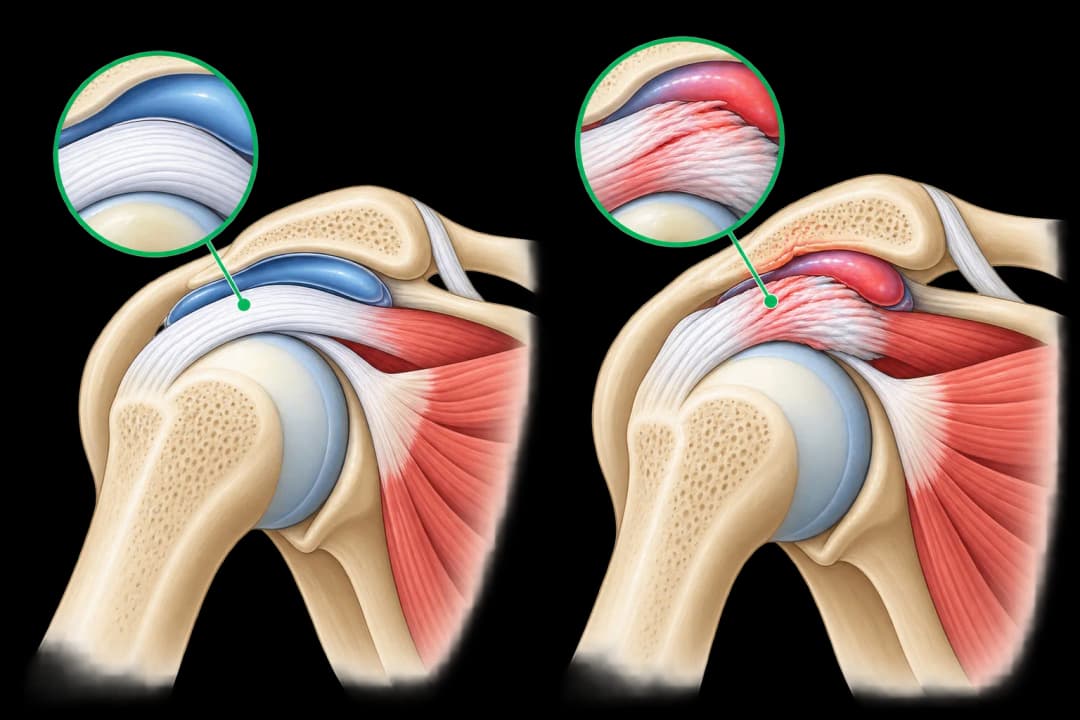
The shoulder tendons help centre and move the upper arm. Irritation can make reaching overhead, dressing, lifting, or lying on the painful side difficult. Shockwaves are delivered through the skin to a targeted area; they are intended to stimulate a local response and support rehabilitation. A clinician first checks that the symptoms are coming from the rotator cuff rather than the neck, a joint problem, or a significant tear.
What to do before treatment
Arrange an assessment with a physiotherapist or doctor who can review your shoulder history, strength, range of motion, and previous care. Keep the rehabilitation exercises that have been prescribed, while adjusting activities that repeatedly provoke pain. Discuss imaging if the diagnosis is uncertain or weakness is marked. Ask about the proposed treatment area, expected sensations, number and spacing of visits, and how exercise will continue alongside treatment. More detail is available in Shockwave Therapy and Rotator Cuff Tendinitis.
When to seek prompt care
Seek prompt medical assessment after a sudden injury with immediate weakness, a visible change in shoulder shape, inability to raise the arm, fever, marked swelling, or rapidly worsening pain. New chest discomfort, breathlessness, or pain spreading into the jaw or arm needs urgent attention rather than a shockwave consultation.
Questions for your doctor
Which finding confirms that my rotator cuff is the pain source? Could a tear or neck problem change the plan? What rehabilitation goals will guide treatment, and how should I modify overhead work while the shoulder settles?
Find care
General Clinics & Polyclinics in Abu Dhabi
That answer is general. If you want it applied to your own case, these are licensed general clinics & polyclinics listed in Abu Dhabi.
27 Ar Ruwwad St - Shakhbout City - MSH4 - Abu Dhabi - United Arab Emirates
Accepts: Daman, Thiqa, Cigna, MetLife +20 more
Al Ruwais, Al Dhafrah
Accepts: Daman, Thiqa, AXA, Cigna +16 more
Al Bahyah - Al Bahyah Old - Abu Dhabi - United Arab Emirates
Accepts: Daman, Thiqa, Cigna, Allianz Care +18 more
Abu Dhabi
Accepts: Daman, Thiqa, AXA, Cigna +27 more
Ordered by verification status and how complete each clinic's public record is, then alphabetically. This is a directory listing, not a ranking — Zavis does not rate or recommend providers.
A factual listing drawn from the DHA, DOH and MOHAP licence registers. It is not a referral, an endorsement, or advice that any of these providers is right for you.
Questions people ask
Is shockwave therapy the first treatment?
Usually, clinicians first establish the diagnosis and address activity, movement, and strengthening. Shockwave therapy may be considered when symptoms continue despite that approach.
Will I still need exercises?
Yes. A progressive rehabilitation plan remains central, because treatment does not replace restoring shoulder control and strength.
Related
Related reading
Keep reading
Medical disclaimer. This page is general health information, not medical advice, and it cannot diagnose you. Always consult a licensed healthcare provider about your own symptoms and treatment. In an emergency in the UAE, call 998 for an ambulance.