
When Is a Return-to-Sport Programme Recommended for MCL Injury?
Short answer
A return-to-sport programme is recommended when MCL pain and swelling are settling, the knee feels stable, and graded sport movements are controlled.
This answers one question. It is not a diagnosis and does not replace an assessment by a licensed doctor.
At a glance
- Key checks
- Stability, movement range, strength and single-leg control
- Sport demands
- Running, landing, lateral movement and contact are progressed
What this means for an MCL injury
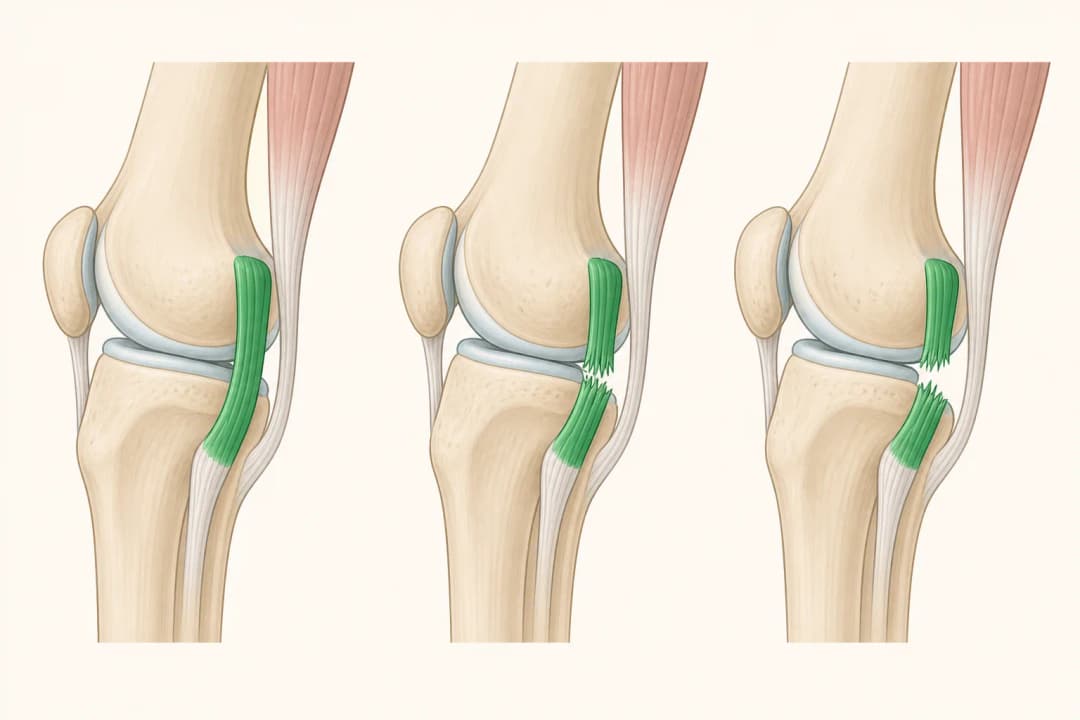
The medial collateral ligament supports the inner side of the knee. Readiness depends on more than reduced pain: the knee should move well, straighten fully, bend adequately, and tolerate strengthening without giving way. A clinician may assess tenderness, stability and single-leg control before progressing activity.
Rehabilitation can move from walking and strength exercises to jogging, landing, lateral movement and sport-specific drills. Bracing, if advised, should be used as directed. Contact and twisting demands are introduced according to examination findings and the knee’s response.
What to do next
Book a review with an orthopaedic clinician or physiotherapist to grade the injury and set milestones. Work on quadriceps, hamstring, hip and calf strength as prescribed. Increase distance, speed and sideways movement gradually, and stop a session if instability, swelling or sharp pain develops.
When to seek care
Seek prompt care if the knee gives way, becomes locked, swells suddenly, cannot bear weight, or has severe pain after a new injury. Ongoing instability or repeated swelling needs reassessment because another knee structure may also be involved.
Questions for your doctor
Ask whether the ligament is stable, whether a brace is needed, which tests determine readiness, and when running, cutting and contact practice can be added.
Find care
General Clinics & Polyclinics in Abu Dhabi
That answer is general. If you want it applied to your own case, these are licensed general clinics & polyclinics listed in Abu Dhabi.
27 Ar Ruwwad St - Shakhbout City - MSH4 - Abu Dhabi - United Arab Emirates
Accepts: Daman, Thiqa, Cigna, MetLife +20 more
Al Ruwais, Al Dhafrah
Accepts: Daman, Thiqa, AXA, Cigna +16 more
Al Bahyah - Al Bahyah Old - Abu Dhabi - United Arab Emirates
Accepts: Daman, Thiqa, Cigna, Allianz Care +18 more
Abu Dhabi
Accepts: Daman, Thiqa, AXA, Cigna +27 more
Ordered by verification status and how complete each clinic's public record is, then alphabetically. This is a directory listing, not a ranking — Zavis does not rate or recommend providers.
A factual listing drawn from the DHA, DOH and MOHAP licence registers. It is not a referral, an endorsement, or advice that any of these providers is right for you.
Questions people ask
Can I return when the knee only hurts during twisting?
Twisting pain suggests the knee is not ready for that demand. Have the movement assessed and follow a progression that addresses strength, control and stability.
Is a brace enough to make sport safe?
A brace may support the knee when prescribed, but it does not replace rehabilitation or confirm that the ligament and surrounding muscles can handle sport loads.
Related
Related reading
Keep reading
Medical disclaimer. This page is general health information, not medical advice, and it cannot diagnose you. Always consult a licensed healthcare provider about your own symptoms and treatment. In an emergency in the UAE, call 998 for an ambulance.