
When Is a Return-to-Sport Programme Recommended for Groin Strain?
Short answer
A return-to-sport programme is recommended when groin pain has settled enough for progressive strengthening and sport-specific drills without a significant flare-up.
This answers one question. It is not a diagnosis and does not replace an assessment by a licensed doctor.
At a glance
- Focus
- Strength, control and sport-specific loading
- Progression
- Advance from basic movement to running and direction changes
What this means for a groin strain
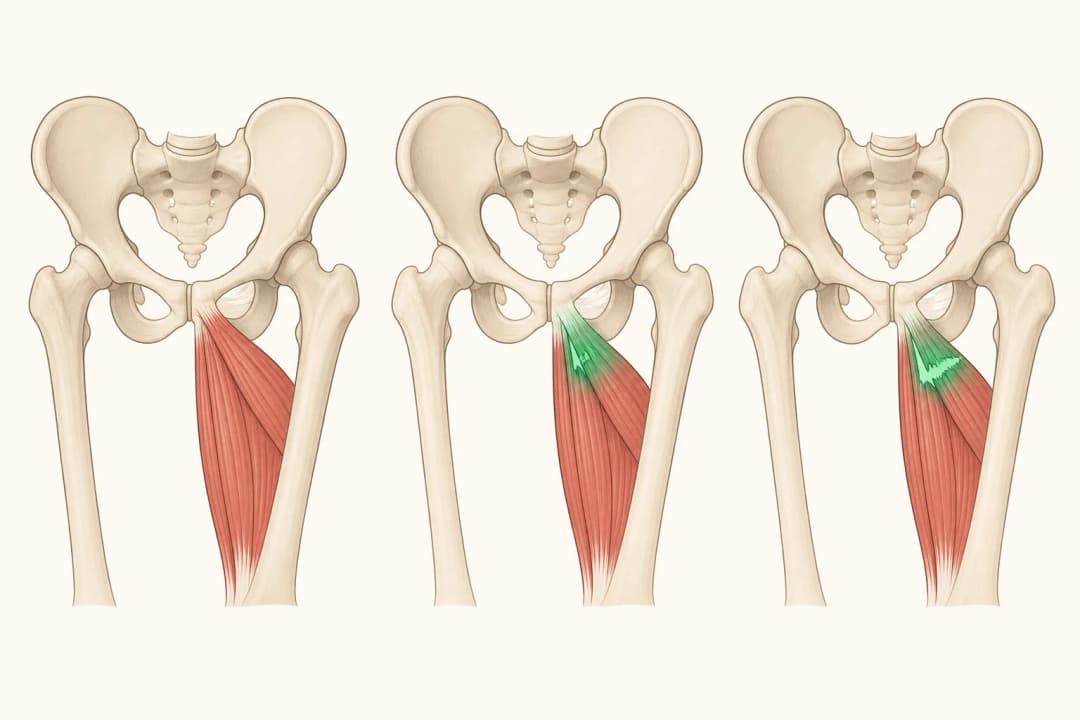
A groin strain commonly affects the adductor muscles on the inner thigh. Returning to running, cutting or kicking too quickly can overload healing tissue. A clinician may look for comfortable walking, improving hip movement, near-symmetrical strength and the ability to perform controlled tasks before adding faster drills.
The programme usually moves from gentle loading to jogging, acceleration, changes of direction and skills that match your sport. Progress is guided by symptoms during exercise and later that day, rather than by a fixed calendar.
What to do next
Arrange an assessment with a physiotherapist or sports clinician if you are unsure whether the strain is ready for loading. Follow the prescribed exercises, warm up before activity and increase one training demand at a time. Keep pain or tightness from becoming progressively worse, and tell the clinician if symptoms linger after a session.
When to seek care
Seek prompt medical assessment for severe pain, inability to walk normally, marked bruising or swelling, a sudden pop with immediate weakness, numbness, or pain that is not improving. Groin pain can also come from the hip, abdomen or other structures, so persistent or unclear symptoms deserve an examination.
Questions for your doctor
Ask which movements are safe now, how strength will be tested, what symptoms should pause progression, and which running or sport drills should come first.
Find care
General Clinics & Polyclinics in Abu Dhabi
That answer is general. If you want it applied to your own case, these are licensed general clinics & polyclinics listed in Abu Dhabi.
27 Ar Ruwwad St - Shakhbout City - MSH4 - Abu Dhabi - United Arab Emirates
Accepts: Daman, Thiqa, Cigna, MetLife +20 more
Al Ruwais, Al Dhafrah
Accepts: Daman, Thiqa, AXA, Cigna +16 more
Al Bahyah - Al Bahyah Old - Abu Dhabi - United Arab Emirates
Accepts: Daman, Thiqa, Cigna, Allianz Care +18 more
Abu Dhabi
Accepts: Daman, Thiqa, AXA, Cigna +27 more
Ordered by verification status and how complete each clinic's public record is, then alphabetically. This is a directory listing, not a ranking — Zavis does not rate or recommend providers.
A factual listing drawn from the DHA, DOH and MOHAP licence registers. It is not a referral, an endorsement, or advice that any of these providers is right for you.
Questions people ask
Can I start the programme while I still feel some tightness?
Possibly, if a clinician considers the tightness mild and stable. Exercises should be adjusted if it becomes sharper, spreads or remains worse after training.
Does completing a few exercises mean I can play a full match?
No. Match readiness also involves repeated efforts, changes of direction and sport skills completed with control and without a meaningful symptom flare.
Related
Related reading
Keep reading
Medical disclaimer. This page is general health information, not medical advice, and it cannot diagnose you. Always consult a licensed healthcare provider about your own symptoms and treatment. In an emergency in the UAE, call 998 for an ambulance.