
When is physiotherapy recommended for scapular dyskinesis?
Short answer
Physiotherapy is recommended when scapular dyskinesis affects shoulder movement, causes pain or fatigue, or persists during work, sport or daily activities.
This answers one question. It is not a diagnosis and does not replace an assessment by a licensed doctor.
At a glance
- What is assessed
- Blade motion, shoulder strength, neck function and task demands.
- Training approach
- Control first, then progressive strength and real-life movement.
Making sense of shoulder-blade movement
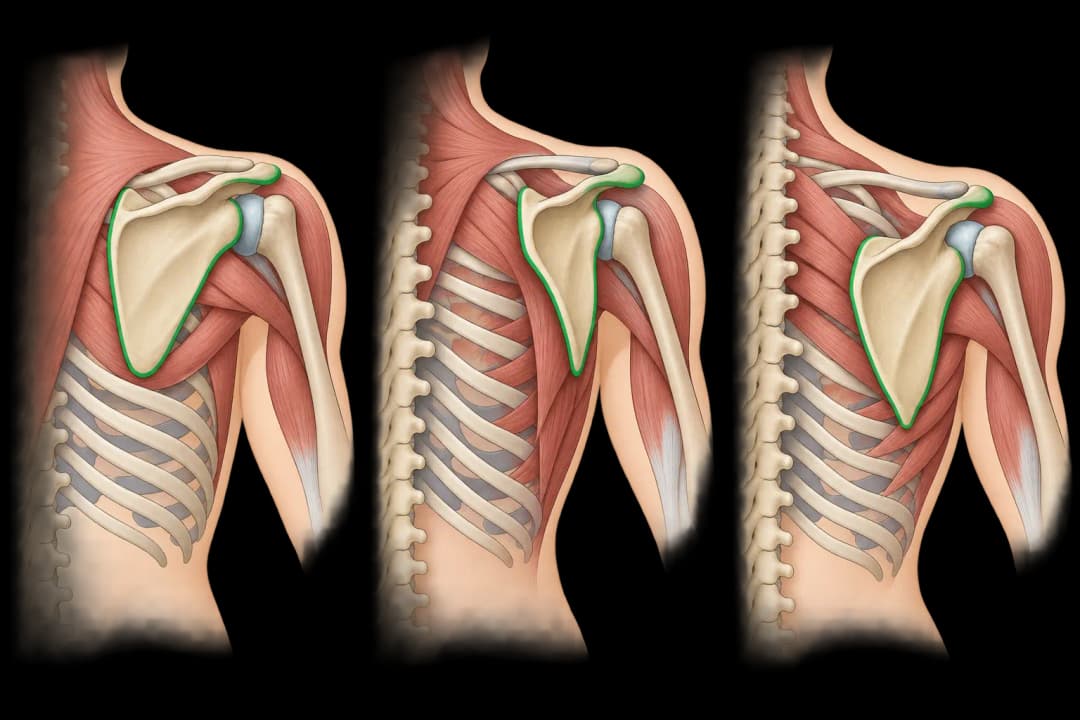
Scapular dyskinesis describes altered movement or position of the shoulder blade as the arm moves. It may be associated with weakness, stiffness, pain, posture, repeated overhead activity, or irritation of nearby nerves. A physiotherapist observes the shoulder during reaching and lifting, checks the neck and shoulder, and looks for the movement pattern that can be changed with coaching.
What rehabilitation can include
Sessions may combine shoulder-blade control drills, mobility work for the chest and shoulder, and gradual strengthening of the serratus anterior, trapezius and rotator-cuff muscles. Exercises often start with precise low-load movement before progressing to reaching, pushing, throwing or work tasks. Practise slowly, avoid repeatedly training into sharp pain, and describe the positions that make the blade wing or fatigue. Explore Physiotherapy.
When to seek further care
Arrange assessment for sudden weakness, a shoulder blade that begins to wing after an injury, persistent numbness, or loss of active arm movement. Seek urgent care for chest pain, breathing difficulty, a deformed shoulder, or a cold or blue hand. If the pattern is worsening or does not change with guided rehabilitation, ask for a medical review of the neck, nerves and shoulder.
Questions for your doctor
Ask whether the movement is driven by pain, weakness, stiffness or nerve involvement, which exercises fit your pattern, and when you can safely return to overhead activity.
Find care
General Clinics & Polyclinics in Abu Dhabi
That answer is general. If you want it applied to your own case, these are licensed general clinics & polyclinics listed in Abu Dhabi.
27 Ar Ruwwad St - Shakhbout City - MSH4 - Abu Dhabi - United Arab Emirates
Accepts: Daman, Thiqa, Cigna, MetLife +20 more
Al Ruwais, Al Dhafrah
Accepts: Daman, Thiqa, AXA, Cigna +16 more
Al Bahyah - Al Bahyah Old - Abu Dhabi - United Arab Emirates
Accepts: Daman, Thiqa, Cigna, Allianz Care +18 more
Abu Dhabi
Accepts: Daman, Thiqa, AXA, Cigna +27 more
Ordered by verification status and how complete each clinic's public record is, then alphabetically. This is a directory listing, not a ranking — Zavis does not rate or recommend providers.
A factual listing drawn from the DHA, DOH and MOHAP licence registers. It is not a referral, an endorsement, or advice that any of these providers is right for you.
Questions people ask
Does scapular dyskinesis always cause pain?
No. Some people notice altered movement or fatigue without pain. Symptoms and functional limits determine whether assessment and rehabilitation are useful.
Can exercises change shoulder-blade control?
Targeted practice can improve coordination and strength when the contributing factors are suitable for rehabilitation. The exercises need to match the observed pattern.
Keep reading
Medical disclaimer. This page is general health information, not medical advice, and it cannot diagnose you. Always consult a licensed healthcare provider about your own symptoms and treatment. In an emergency in the UAE, call 998 for an ambulance.