
When is physiotherapy recommended for rotator cuff tendinitis?
Short answer
Physiotherapy is recommended when rotator cuff tendinitis causes ongoing pain, stiffness or weakness, or when shoulder function has not returned with sensible activity changes.
This answers one question. It is not a diagnosis and does not replace an assessment by a licensed doctor.
At a glance
- Typical focus
- Mobility, gradual strengthening and load management.
- Common triggers
- Overhead reaching, lifting and lying on the shoulder.
Understanding the shoulder problem
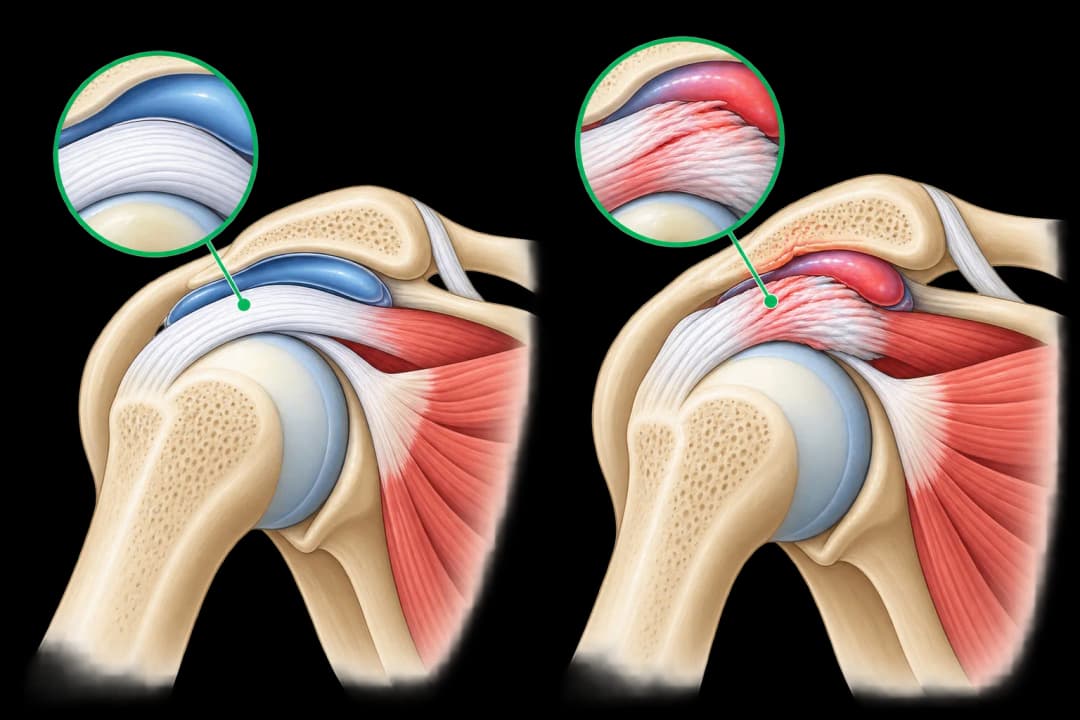
Rotator cuff tendinitis, also called tendinopathy, involves irritation or reduced load tolerance in tendons around the shoulder. Pain may appear when reaching overhead, dressing, lifting, or lying on the affected side. A physiotherapist examines movement, strength and the tasks that provoke symptoms, then uses those findings to set a gradual plan rather than relying on rest alone.
How rehabilitation may help
Treatment may include gentle mobility, progressive resistance for the cuff and shoulder-blade muscles, and advice on changing repeated overhead work. Keep active within tolerable limits and avoid repeatedly testing the painful movement. Increase exercise load gradually, practise the home programme as directed, and mention any neck symptoms or arm tingling because they may change the assessment. Learn more about Rotator Cuff Tendinitis and Physiotherapy.
When to seek medical review
Seek prompt assessment after a significant injury, sudden loss of strength, or inability to lift the arm. Urgent care is appropriate for a deformed shoulder, a blue or unusually cold hand, new major numbness, chest pain, or breathing difficulty. Arrange review if pain is steadily worsening, sleep is repeatedly disrupted, or the shoulder is not responding to the agreed programme.
Questions to take along
Ask which activities are safe now, how exercise discomfort should feel, whether your neck needs assessment, and what signs would prompt imaging or another treatment.
Find care
General Clinics & Polyclinics in Abu Dhabi
That answer is general. If you want it applied to your own case, these are licensed general clinics & polyclinics listed in Abu Dhabi.
27 Ar Ruwwad St - Shakhbout City - MSH4 - Abu Dhabi - United Arab Emirates
Accepts: Daman, Thiqa, Cigna, MetLife +20 more
Al Ruwais, Al Dhafrah
Accepts: Daman, Thiqa, AXA, Cigna +16 more
Al Bahyah - Al Bahyah Old - Abu Dhabi - United Arab Emirates
Accepts: Daman, Thiqa, Cigna, Allianz Care +18 more
Abu Dhabi
Accepts: Daman, Thiqa, AXA, Cigna +27 more
Ordered by verification status and how complete each clinic's public record is, then alphabetically. This is a directory listing, not a ranking — Zavis does not rate or recommend providers.
A factual listing drawn from the DHA, DOH and MOHAP licence registers. It is not a referral, an endorsement, or advice that any of these providers is right for you.
Questions people ask
Is complete rest the best treatment?
Usually, the shoulder needs a balance between reducing aggravating loads and maintaining suitable movement. A tailored programme helps determine that balance.
How should I respond to exercise discomfort?
Follow the pain guidance from your clinician. Stop and seek advice if an exercise causes sharp pain, increasing weakness, or symptoms that persist or spread.
Related
Related reading
Keep reading
Medical disclaimer. This page is general health information, not medical advice, and it cannot diagnose you. Always consult a licensed healthcare provider about your own symptoms and treatment. In an emergency in the UAE, call 998 for an ambulance.