
When is physiotherapy recommended for MCL injury?
Short answer
Physiotherapy is recommended for an MCL injury when pain and swelling allow guided movement, and it can help restore knee strength, stability and confidence before normal activity.
This answers one question. It is not a diagnosis and does not replace an assessment by a licensed doctor.
At a glance
- Area
- Inner knee ligament
- Rehabilitation focus
- Movement, strength and stability
What an MCL injury involves
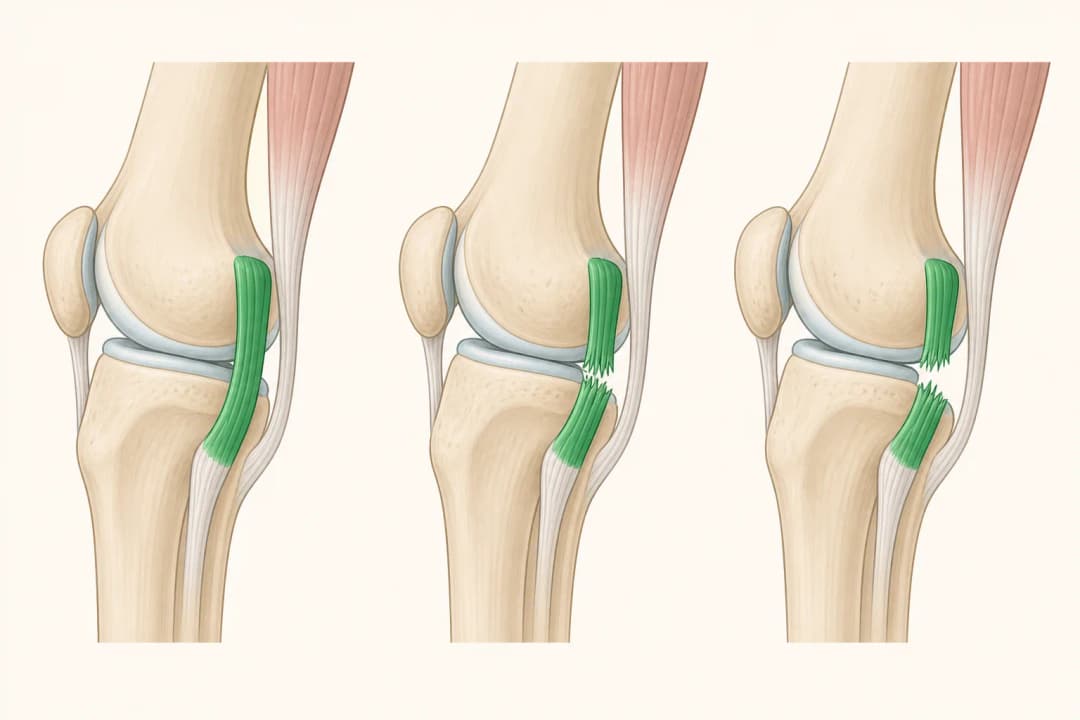
The medial collateral ligament runs along the inner side of the knee and helps resist the knee moving inward. An injury may cause tenderness, swelling, reduced bending or straightening, and a feeling of looseness. A clinician assesses the knee before choosing exercises. Mild injuries may begin with gentle range-of-motion work and gradual strengthening. More significant injuries may need a brace, protected weight-bearing, and a staged rehabilitation plan. Physiotherapy does not replace assessment when the knee is unstable or another structure may also be injured.
How rehabilitation is usually progressed
Early sessions may focus on comfortable knee movement, swelling management, and activating the thigh muscles without provoking sharp pain. Later work can include controlled squats, step exercises, balance practice, and tasks that match work or sport. Your therapist can adjust the load according to walking quality, knee control and symptoms afterward. Follow the prescribed home programme, use support as advised, and avoid twisting or contact activity until you have been assessed for readiness.
When to seek medical care
Arrange prompt assessment if you cannot bear weight, the knee gives way repeatedly, swelling appears quickly after injury, or you cannot fully move the joint. Seek urgent care for a cold or pale foot, new numbness, severe worsening pain, or an obvious deformity. A physiotherapist or doctor can also reassess symptoms that are not steadily improving.
Questions to ask
Ask which ligament grade is suspected, whether a brace or walking aid is needed, which movements to avoid, and what signs show that strengthening can progress. Ask how return to driving, work, running or sport will be tested.
Find care
General Clinics & Polyclinics in Abu Dhabi
That answer is general. If you want it applied to your own case, these are licensed general clinics & polyclinics listed in Abu Dhabi.
27 Ar Ruwwad St - Shakhbout City - MSH4 - Abu Dhabi - United Arab Emirates
Accepts: Daman, Thiqa, Cigna, MetLife +20 more
Al Ruwais, Al Dhafrah
Accepts: Daman, Thiqa, AXA, Cigna +16 more
Al Bahyah - Al Bahyah Old - Abu Dhabi - United Arab Emirates
Accepts: Daman, Thiqa, Cigna, Allianz Care +18 more
Abu Dhabi
Accepts: Daman, Thiqa, AXA, Cigna +27 more
Ordered by verification status and how complete each clinic's public record is, then alphabetically. This is a directory listing, not a ranking — Zavis does not rate or recommend providers.
A factual listing drawn from the DHA, DOH and MOHAP licence registers. It is not a referral, an endorsement, or advice that any of these providers is right for you.
Questions people ask
Can physiotherapy help without surgery?
Many MCL injuries are managed with rehabilitation, but the right plan depends on examination findings and any associated knee injury.
When can exercise start?
Gentle, guided movement may start when symptoms permit; impact, twisting and contact exercises should wait for clinical advice.
Related
Related reading
Keep reading
Medical disclaimer. This page is general health information, not medical advice, and it cannot diagnose you. Always consult a licensed healthcare provider about your own symptoms and treatment. In an emergency in the UAE, call 998 for an ambulance.