
When is pelvic floor physiotherapy recommended for interstitial cystitis?
Short answer
Pelvic floor physiotherapy is recommended when interstitial cystitis symptoms occur with pelvic floor tightness, tenderness, or difficulty relaxing.
This answers one question. It is not a diagnosis and does not replace an assessment by a licensed doctor.
At a glance
- Muscle pattern
- Tightness or difficulty relaxing may add pelvic pain
- Bring to review
- A record of urgency, frequency, pain, and triggers
Why muscles may matter
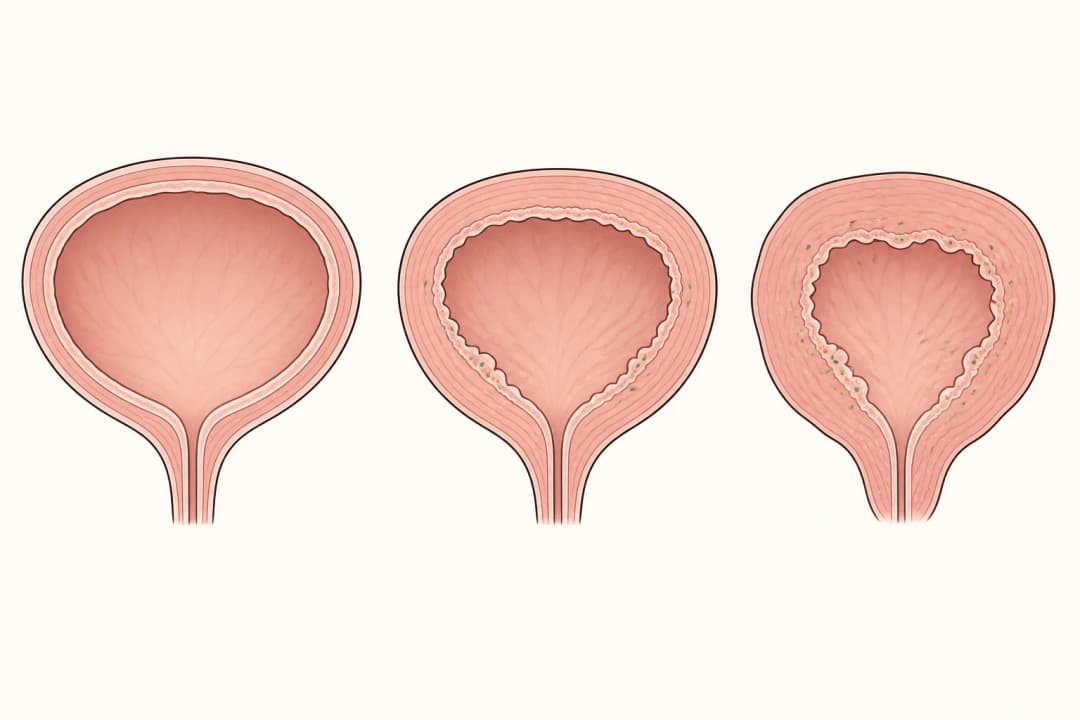
Interstitial cystitis, also called bladder pain syndrome, can involve bladder discomfort, urinary frequency, urgency, and pain that changes with filling or emptying. Some people also develop protective tightening in the pelvic floor. Those muscles may become tender or remain contracted, adding pain around the bladder, vagina, rectum, hips, or lower abdomen. Physiotherapy is considered when an assessment finds this pattern. It is not a replacement for checking other explanations for urinary symptoms, such as infection or another bladder condition.
What to do next
Discuss physiotherapy with the clinician managing your bladder symptoms, especially if sitting, sex, bowel movements, or pelvic examination increases pain. A pelvic health physiotherapist may assess breathing, posture, hip movement, and the ability to relax the pelvic floor. Care may include down-training, gentle movement, manual treatment with consent, bladder-friendly routines, and a paced home plan. Avoid automatically adding strengthening exercises when your symptoms involve tightness or pain with clenching. Bring a diary of urgency, frequency, pain, drinks, and symptom triggers to make the assessment more useful.
When to seek care
Get prompt medical advice for fever, chills, vomiting, blood in the urine, severe flank pain, or feeling acutely unwell, as these symptoms may signal a problem needing urgent evaluation. Seek immediate help for inability to pass urine or sudden new leg weakness or numbness. New or rapidly changing bladder symptoms should be reassessed rather than attributed to interstitial cystitis alone.
Questions to ask
Ask how infection and other bladder causes have been assessed, whether your pelvic floor seems tight or tender, and which activities to pause during a flare. Clarify whether internal treatment is suitable, how consent works, and when progress should be reviewed.
Find care
General Clinics & Polyclinics in Abu Dhabi
That answer is general. If you want it applied to your own case, these are licensed general clinics & polyclinics listed in Abu Dhabi.
27 Ar Ruwwad St - Shakhbout City - MSH4 - Abu Dhabi - United Arab Emirates
Accepts: Daman, Thiqa, Cigna, MetLife +20 more
Al Ruwais, Al Dhafrah
Accepts: Daman, Thiqa, AXA, Cigna +16 more
Al Bahyah - Al Bahyah Old - Abu Dhabi - United Arab Emirates
Accepts: Daman, Thiqa, Cigna, Allianz Care +18 more
Abu Dhabi
Accepts: Daman, Thiqa, AXA, Cigna +27 more
Ordered by verification status and how complete each clinic's public record is, then alphabetically. This is a directory listing, not a ranking — Zavis does not rate or recommend providers.
A factual listing drawn from the DHA, DOH and MOHAP licence registers. It is not a referral, an endorsement, or advice that any of these providers is right for you.
Questions people ask
Should I strengthen my pelvic floor for bladder pain?
Not automatically; strengthening can aggravate symptoms when the muscles are already tense, so assessment comes first.
Can physiotherapy diagnose interstitial cystitis?
No. A medical clinician evaluates bladder symptoms and uses physiotherapy to address suitable muscle and movement findings.
Related
Related reading
Keep reading
Medical disclaimer. This page is general health information, not medical advice, and it cannot diagnose you. Always consult a licensed healthcare provider about your own symptoms and treatment. In an emergency in the UAE, call 998 for an ambulance.