
When is inhaler therapy recommended for COPD?
Short answer
Inhaler therapy is recommended for COPD when symptoms or flare-ups need medicine delivered directly to the airways.
This answers one question. It is not a diagnosis and does not replace an assessment by a licensed doctor.
At a glance
- Treatment goal
- Improve airway symptoms and support daily activity.
- Technique
- Correct inhaler technique helps medicine reach the lungs.
What this means
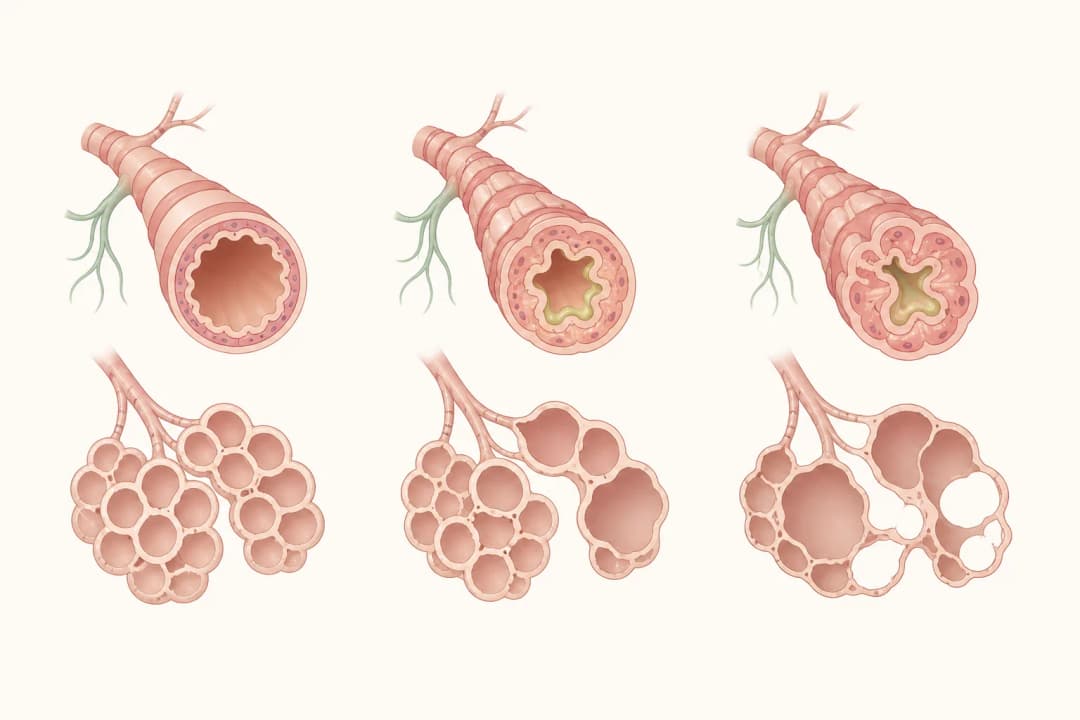
COPD can narrow the airways and make it harder to move air. A clinician may recommend a reliever inhaler for episodes of breathlessness, or a regular long-acting inhaler when symptoms continue between episodes. Some people need more than one inhaled medicine, with each one serving a different purpose. The choice depends on breathlessness, cough, mucus, previous flare-ups, other conditions, smoking exposure, and breathing-test results. Correct technique matters because medicine that stays in the mouth does not reach the lungs effectively.
What to do next
Arrange a review if breathlessness limits walking, work or sleep, or if you are using a reliever more often than planned. Take every inhaler and spacer to the appointment so the technique and doses can be checked. Use maintenance inhalers on the prescribed schedule, even on a better day, and ask whether a spacer or a different device would make use easier. Do not start, stop or share an inhaler without advice. Avoid smoke and follow your written COPD action plan if you have one.
When to seek care urgently
Seek urgent medical help for severe or rapidly worsening breathlessness, blue or grey lips, new confusion, fainting, chest pain, or inability to speak in full sentences. A sudden increase in coughing, wheezing or mucus, especially with fever or marked weakness, can signal a flare-up and needs prompt assessment.
Questions for your doctor
Ask which inhaler is for immediate relief and which is for regular control, how long to try it, how to recognise side effects, and when your treatment should be reviewed.
Find care
General Clinics & Polyclinics in Abu Dhabi
That answer is general. If you want it applied to your own case, these are licensed general clinics & polyclinics listed in Abu Dhabi.
27 Ar Ruwwad St - Shakhbout City - MSH4 - Abu Dhabi - United Arab Emirates
Accepts: Daman, Thiqa, Cigna, MetLife +20 more
Al Ruwais, Al Dhafrah
Accepts: Daman, Thiqa, AXA, Cigna +16 more
Al Bahyah - Al Bahyah Old - Abu Dhabi - United Arab Emirates
Accepts: Daman, Thiqa, Cigna, Allianz Care +18 more
Abu Dhabi
Accepts: Daman, Thiqa, AXA, Cigna +27 more
Ordered by verification status and how complete each clinic's public record is, then alphabetically. This is a directory listing, not a ranking — Zavis does not rate or recommend providers.
A factual listing drawn from the DHA, DOH and MOHAP licence registers. It is not a referral, an endorsement, or advice that any of these providers is right for you.
Questions people ask
Does everyone with COPD need an inhaler?
Not everyone needs the same inhaler. A clinician matches treatment to symptoms, flare-ups, examination findings and breathing-test results.
What if an inhaler does not help?
Have your technique and diagnosis reviewed, and report persistent or worsening breathlessness rather than increasing doses yourself.
Related
Related reading
Keep reading
Medical disclaimer. This page is general health information, not medical advice, and it cannot diagnose you. Always consult a licensed healthcare provider about your own symptoms and treatment. In an emergency in the UAE, call 998 for an ambulance.