
When is GP consultation recommended for prostatitis?
Short answer
A GP consultation is recommended when urinary, pelvic, or genital symptoms suggest prostatitis, especially if they persist, recur, or interfere with daily activities.
This answers one question. It is not a diagnosis and does not replace an assessment by a licensed doctor.
At a glance
- Book a GP visit for
- Persistent, recurring, or disruptive urinary, pelvic, or genital symptoms
- Seek urgent care for
- Inability to pass urine, severe worsening pain, or fever with shaking chills
- Assessment may include
- Symptom history, examination, and urine testing
When to arrange a GP consultation
Arrange an appointment for burning or painful urination, needing to urinate often or urgently, difficulty starting or maintaining the stream, pain in the area between the scrotum and anus, discomfort in the lower abdomen or lower back, or pain during ejaculation. A GP can assess whether prostatitis is a possible explanation and check for other causes of similar symptoms.
What prostatitis can involve
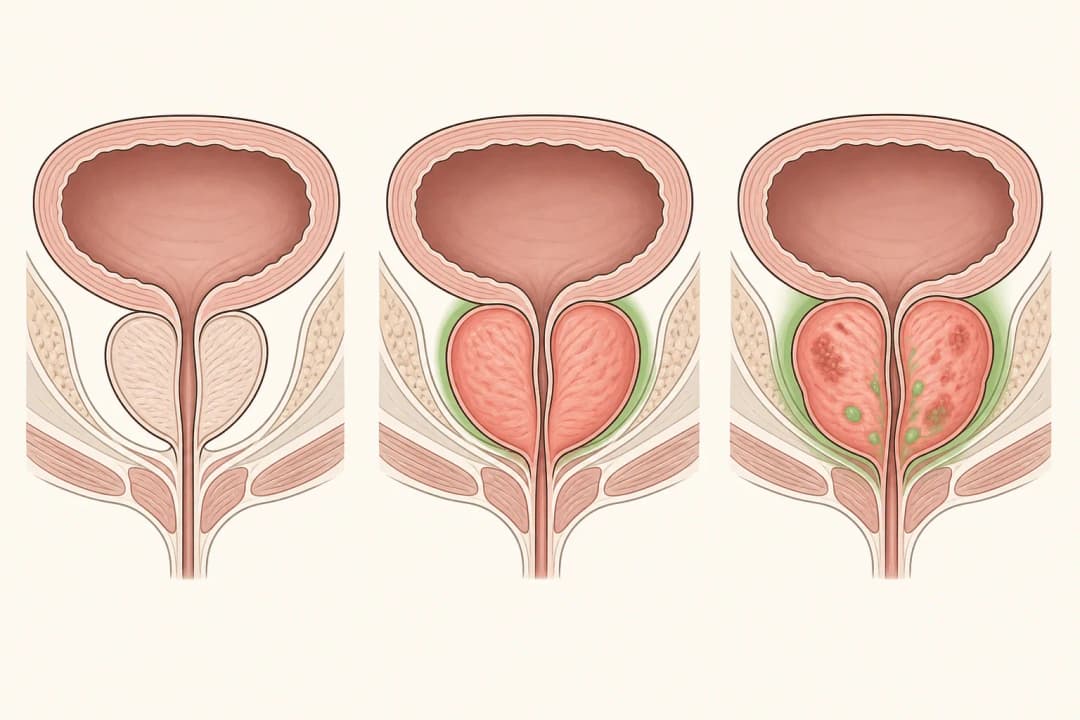
Prostatitis means inflammation or irritation involving the prostate. It can cause urinary symptoms and pain, and some forms develop suddenly while others continue or return over time. Symptoms may overlap with a urinary infection or other prostate and bladder conditions, so a clinical assessment matters rather than relying on symptoms alone.
During a GP consultation, the clinician may ask when symptoms began, whether they are changing, and whether you have had fever, urinary infections, recent procedures, or difficulty emptying your bladder. Assessment may include an examination and urine testing. The next step depends on the findings and how unwell you feel.
What to do before the appointment
Write down your symptoms, when they started, how often you pass urine, and whether pain occurs with urination or ejaculation. Note any feverish feeling, chills, blood in the urine, unusual discharge, or recent urinary procedure. Bring a list of medicines and mention allergies, previous urinary infections, and treatments you have already tried.
Drink fluids according to your usual needs unless a clinician has told you to restrict them. Avoid taking leftover antibiotics or using someone else’s prescription, because the treatment choice depends on the assessment and may require testing. If symptoms are worsening while you wait for an appointment, contact the GP service again.
When to seek urgent care
Seek urgent medical care if you cannot pass urine, develop a high temperature with shaking chills, or have severe or rapidly worsening pain in the pelvis, lower abdomen, back, or genital area. These symptoms can indicate a more serious infection or urinary blockage that needs prompt assessment.
Get urgent help as well if you feel faint or confused, are repeatedly vomiting, or notice significant blood in the urine. If you are seriously unwell, use local emergency services. Do not wait for a routine appointment when symptoms are escalating quickly.
Questions for your doctor
Useful questions include: What other conditions could cause these symptoms? Do I need a urine test or another examination? Which changes should prompt urgent help? How should I manage discomfort while the cause is being assessed? Ask when you should follow up if symptoms do not improve or return.
Find care
General Clinics & Polyclinics in Abu Dhabi
That answer is general. If you want it applied to your own case, these are licensed general clinics & polyclinics listed in Abu Dhabi.
27 Ar Ruwwad St - Shakhbout City - MSH4 - Abu Dhabi - United Arab Emirates
Accepts: Daman, Thiqa, Cigna, MetLife +20 more
Al Ruwais, Al Dhafrah
Accepts: Daman, Thiqa, AXA, Cigna +16 more
Al Bahyah - Al Bahyah Old - Abu Dhabi - United Arab Emirates
Accepts: Daman, Thiqa, Cigna, Allianz Care +18 more
Abu Dhabi
Accepts: Daman, Thiqa, AXA, Cigna +27 more
Ordered by verification status and how complete each clinic's public record is, then alphabetically. This is a directory listing, not a ranking — Zavis does not rate or recommend providers.
A factual listing drawn from the DHA, DOH and MOHAP licence registers. It is not a referral, an endorsement, or advice that any of these providers is right for you.
Questions people ask
Should I see a GP for mild prostatitis symptoms?
Yes. Arrange a consultation if symptoms continue, return, or affect urination, comfort, sleep, or normal activities. Early assessment can help distinguish prostatitis from other causes.
Can prostatitis symptoms need emergency care?
Yes. Inability to pass urine, severe worsening pain, fever with shaking chills, confusion, faintness, or repeated vomiting needs urgent medical assessment.
What should I tell the GP?
Describe the symptoms, their timing, urinary changes, pain location, feverish feelings, recent procedures, medicines, allergies, and any previous urinary infections.
Related
Related reading
Keep reading
Medical disclaimer. This page is general health information, not medical advice, and it cannot diagnose you. Always consult a licensed healthcare provider about your own symptoms and treatment. In an emergency in the UAE, call 998 for an ambulance.