
When is chemotherapy recommended for metastatic cancer?
Short answer
Chemotherapy may be recommended for metastatic cancer when the disease needs active control, symptoms need relief, or other treatments are unsuitable or no longer effective.
This answers one question. It is not a diagnosis and does not replace an assessment by a licensed doctor.
At a glance
- Treatment choice
- It is guided by the original cancer type, biology, spread, prior treatment and health.
- Main aims
- Control disease, ease symptoms and preserve daily function.
What metastatic treatment involves
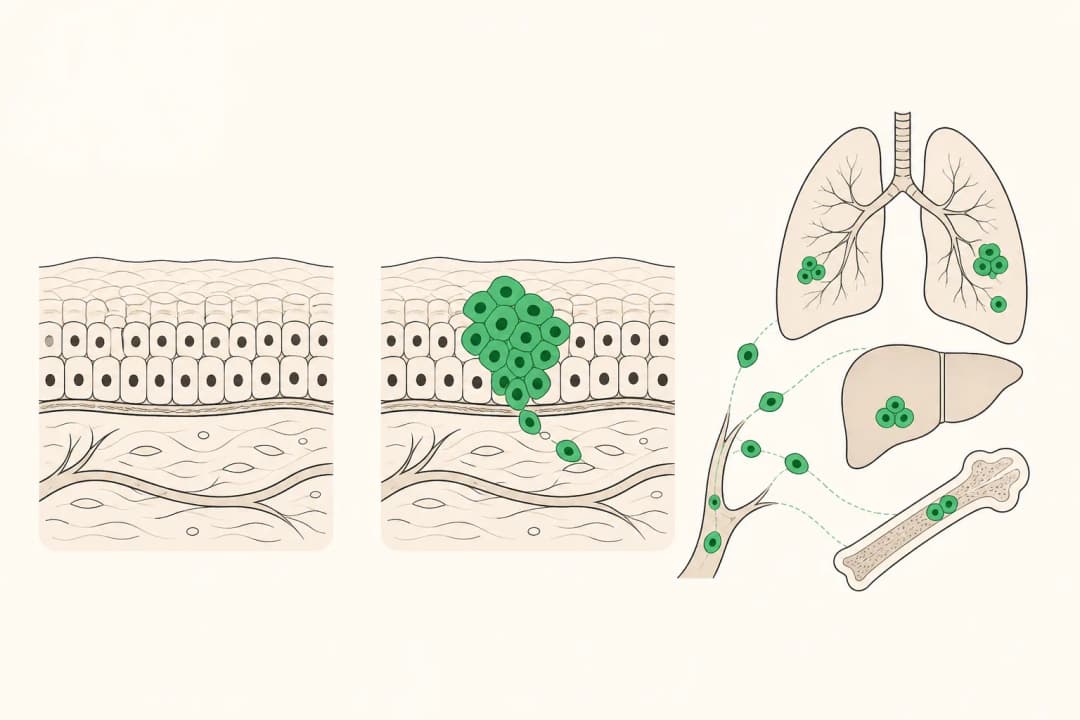
Metastatic cancer has travelled from its original site to another part of the body. The treatment plan depends first on where the cancer began, because different cancers respond to different medicines. Doctors also review pathology and biomarker results, the sites involved, the pace of change, previous therapies, general health and personal priorities.
Chemotherapy may be used to shrink or slow cancer, reduce symptoms, or prevent a threatened organ from losing function. Some people receive it with another treatment, while others move between treatments as the cancer responds or side effects become difficult. The purpose and expected trade-offs should be clear before starting.
What to discuss before treatment
Take your pathology reports and medication list to the appointment if available. Ask what the treatment is intended to achieve, whether a biomarker changes the options, how the medicine is given, and how the team will assess response. Tell the team about kidney, liver, heart or nerve problems, prior chemotherapy, allergies and medicines or supplements.
Arrange help for transport and daily tasks if fatigue or nausea affects you. Ask for an after-hours contact number and a written plan for fever, vomiting, diarrhoea, pain or reduced fluid intake.
When to seek urgent help
Call your cancer team promptly for fever or chills during chemotherapy, or for vomiting or diarrhoea that makes it hard to drink. Emergency assessment is needed for severe breathlessness, chest pain, fainting, confusion, uncontrolled bleeding or sudden weakness. New severe pain, yellowing of the skin, or very little urine should also be assessed without delay.
Questions to take with you
What is the goal of chemotherapy in my case? Which alternatives are appropriate? What tests will guide the choice? How will we know whether to continue, change or stop? Which symptoms require a same-day call?
Questions people ask
Is chemotherapy used for every metastatic cancer?
No. The best option depends on the cancer's origin and biology, available treatments, previous therapy, symptoms and your goals.
Can treatment be changed?
Yes. Scans, symptoms, examination findings and side effects can lead the oncology team to continue, adjust or change the plan.
Related
Related reading
Keep reading
Cancer care in the UAE
Hospitals & Medical Centers in Abu Dhabi
Most UAE cancer care is delivered inside hospital services rather than by standalone oncology clinics, so these are licensed hospitals & medical centers listed in Abu Dhabi. Confirm the specific cancer service exists before you travel, and know that asking for a second opinion is routine.
Ahalia Hospital Musaffah Building - Musaffah - Musaffah Industrial - Abu Dhabi - United Arab Emirates
Accepts: Daman, Thiqa, AXA, Cigna +26 more
Al Ruwais Industrial City - Abu Dhabi - United Arab Emirates
Accepts: Daman, Thiqa, AXA, Cigna +30 more
Abu Dhabi, Abu Dhabi
Accepts: Daman, Thiqa, AXA, Cigna +30 more
Second opinions are routine in cancer care and asking for one does not affect your treatment. How to arrange a second opinion in the UAE.
Ordered by verification status and how complete each clinic's public record is, then alphabetically. This is a directory listing, not a ranking — Zavis does not rate or recommend providers.
A factual listing drawn from the DHA, DOH and MOHAP licence registers. It is not a referral, an endorsement, or advice that any of these providers is right for you.
Medical disclaimer. This page is general health information, not medical advice, and it cannot diagnose you. Always consult a licensed healthcare provider about your own symptoms and treatment. In an emergency in the UAE, call 998 for an ambulance.