
What to know about dermatosis papulosa nigra in skin of colour
Short answer
Dermatosis papulosa nigra causes small harmless dark bumps, often on the face and neck; diagnosis and careful removal help protect skin of colour.
This answers one question. It is not a diagnosis and does not replace an assessment by a licensed doctor.
At a glance
- Also called
- DPN or dark facial bumps
- Typical sites
- Face, neck and upper chest
- Key consideration
- Post-treatment pigment change in skin of colour
Recognising DPN
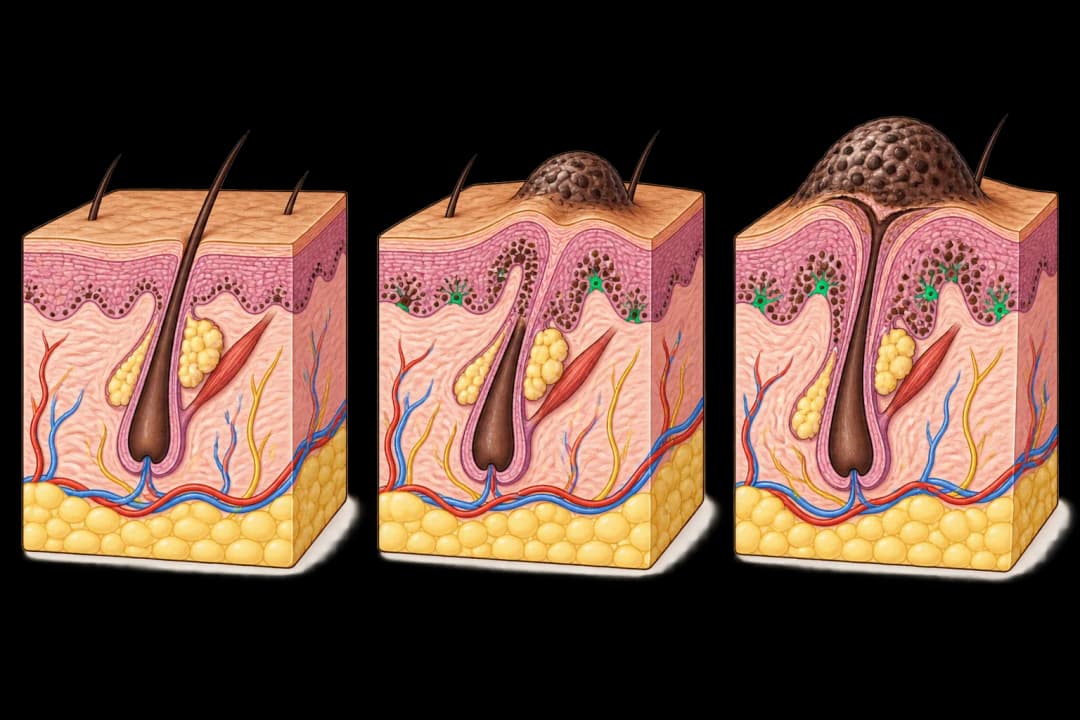
Dermatosis papulosa nigra, or DPN, appears as multiple small, smooth, brown or black bumps. They commonly develop on the cheeks, temples, forehead, neck or upper chest and may increase gradually over time. DPN is a benign skin growth and is not caused by dirt or poor skincare.
A clinician should confirm the diagnosis before removal because moles, seborrhoeic keratoses and other pigmented lesions can look similar. A bump that changes quickly, bleeds, crusts, becomes painful or differs from the others deserves examination rather than cosmetic treatment.
Treatment and skin-tone planning
DPN does not need treatment unless it catches on clothing, becomes irritated or bothers you cosmetically. A dermatologist may discuss electrosurgery, curettage, cryotherapy or laser-based removal, depending on the size, number and location of bumps.
In skin of colour, any injury can leave darker or lighter marks, and some procedures can cause texture change or scarring. Ask about conservative settings, treating a small test area, wound care and sun protection. Do not cut, burn or apply household acids to the bumps.
When to seek assessment
Book a medical review for a new solitary lesion, a bump that changes in colour or shape, spontaneous bleeding, persistent crusting, pain or rapid growth. These features do not prove a serious diagnosis, but they mean the lesion should be assessed before removal.
After a procedure, contact the clinic for increasing redness, warmth, pus, worsening pain, delayed healing or a spreading dark or pale patch. Seek urgent help for severe swelling, breathing difficulty or eye symptoms after treatment near the face.
Questions for your doctor
Ask how confident the diagnosis is, which removal method suits your skin and lesion pattern, and how pigment change or scarring will be managed. Clarify whether a test area, staged treatment and follow-up examination are appropriate.
Find care
General Clinics & Polyclinics in Abu Dhabi
That answer is general. If you want it applied to your own case, these are licensed general clinics & polyclinics listed in Abu Dhabi.
27 Ar Ruwwad St - Shakhbout City - MSH4 - Abu Dhabi - United Arab Emirates
Accepts: Daman, Thiqa, Cigna, MetLife +20 more
Al Ruwais, Al Dhafrah
Accepts: Daman, Thiqa, AXA, Cigna +16 more
Al Bahyah - Al Bahyah Old - Abu Dhabi - United Arab Emirates
Accepts: Daman, Thiqa, Cigna, Allianz Care +18 more
Abu Dhabi
Accepts: Daman, Thiqa, AXA, Cigna +27 more
Ordered by verification status and how complete each clinic's public record is, then alphabetically. This is a directory listing, not a ranking — Zavis does not rate or recommend providers.
A factual listing drawn from the DHA, DOH and MOHAP licence registers. It is not a referral, an endorsement, or advice that any of these providers is right for you.
Questions people ask
Is dermatosis papulosa nigra cancer?
DPN is a benign growth, but a changing or unusual bump should be examined because other lesions can look similar.
Can DPN be removed at home?
No. Home cutting, burning or acids can cause infection, scarring and pigment changes; removal should be planned by a qualified clinician.
Medical disclaimer. This page is general health information, not medical advice, and it cannot diagnose you. Always consult a licensed healthcare provider about your own symptoms and treatment. In an emergency in the UAE, call 998 for an ambulance.