
What to expect from tumour removal surgery for adrenal cancer
Short answer
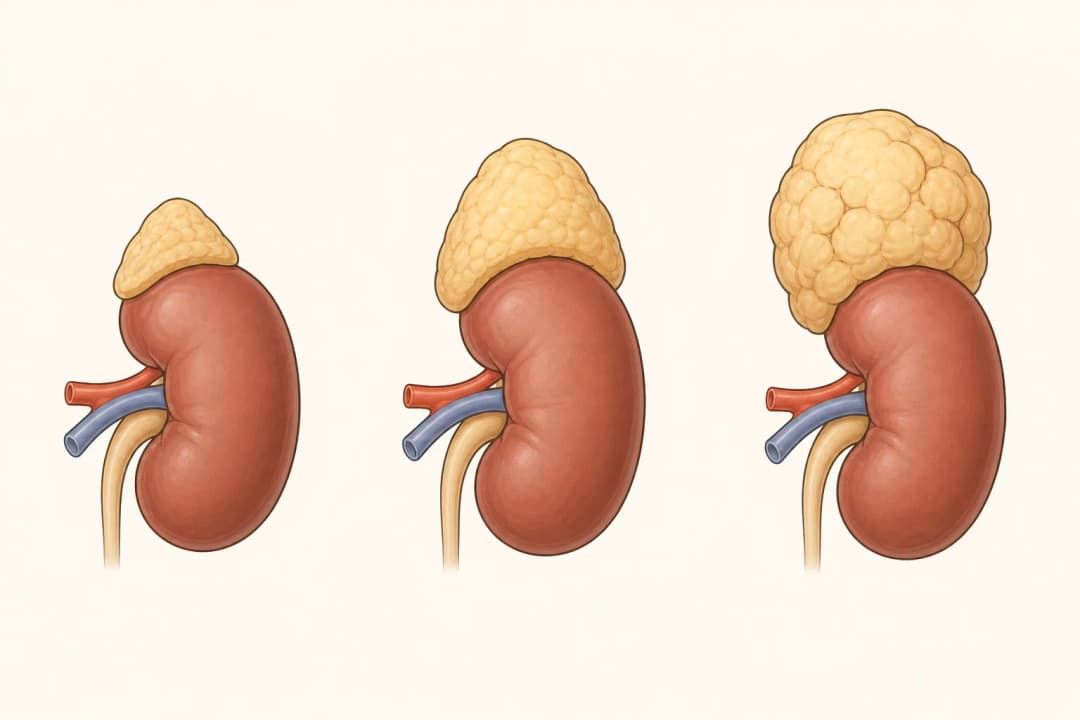
Tumour removal surgery for adrenal cancer removes the affected adrenal gland and sometimes nearby tissue, while the team manages hormone levels, monitors recovery and plans follow-up care.
This answers one question. It is not a diagnosis and does not replace an assessment by a licensed doctor.
At a glance
- Main operation
- Removal of the affected adrenal gland
- Planning
- Scans and hormone tests
- Aftercare
- Wound, pathology and hormone follow-up
How adrenal surgery is planned
Before surgery, scans help show the tumour’s position and whether nearby structures are involved. Blood and urine tests may check hormones made by the adrenal gland. An operation may use keyhole cuts or a larger incision, depending on tumour size and location. The surgeon may remove one adrenal gland and surrounding tissue or lymph nodes when needed.
Hormone-producing tumours need careful preparation because hormone levels can affect blood pressure, heart rate and blood sugar during surgery. If both adrenal glands are affected or the remaining gland cannot make enough hormones, replacement medicine may be needed.
Getting ready and healing
Give the surgical team a complete list of medicines, including steroids and blood-pressure treatment. Follow fasting instructions and plan for someone to take you home. Afterward, expect gradual improvement rather than immediate full strength. Walk as advised, protect the incision, take prescribed pain relief and attend appointments for wound review, hormone assessment and pathology results. Do not change steroid medicine without medical direction.
Warning signs after surgery
Seek urgent advice for fever, increasing wound redness, drainage, worsening abdominal or back pain, repeated vomiting, dizziness or very low energy. Emergency care is needed for fainting, severe weakness, confusion, chest pain, breathing difficulty or symptoms that may reflect a serious hormone imbalance.
Useful questions
Ask whether the operation will be keyhole or open, whether nearby tissue may be removed, how hormone medicines will be handled, what activity limits apply, when pathology will be discussed and which symptoms require immediate help.
Questions people ask
Will I need hormone replacement?
Some people do, depending on adrenal function and the operation; the care team will assess this.
How should I take steroid medicine afterward?
Use it exactly as prescribed and contact the team before any dose change.
Related
Related reading
Keep reading
Cancer care in the UAE
Hospitals & Medical Centers in Abu Dhabi
Most UAE cancer care is delivered inside hospital services rather than by standalone oncology clinics, so these are licensed hospitals & medical centers listed in Abu Dhabi. Confirm the specific cancer service exists before you travel, and know that asking for a second opinion is routine.
Ahalia Hospital Musaffah Building - Musaffah - Musaffah Industrial - Abu Dhabi - United Arab Emirates
Accepts: Daman, Thiqa, AXA, Cigna +26 more
Al Ruwais Industrial City - Abu Dhabi - United Arab Emirates
Accepts: Daman, Thiqa, AXA, Cigna +30 more
Abu Dhabi, Abu Dhabi
Accepts: Daman, Thiqa, AXA, Cigna +30 more
Second opinions are routine in cancer care and asking for one does not affect your treatment. How to arrange a second opinion in the UAE.
Ordered by verification status and how complete each clinic's public record is, then alphabetically. This is a directory listing, not a ranking — Zavis does not rate or recommend providers.
A factual listing drawn from the DHA, DOH and MOHAP licence registers. It is not a referral, an endorsement, or advice that any of these providers is right for you.
Medical disclaimer. This page is general health information, not medical advice, and it cannot diagnose you. Always consult a licensed healthcare provider about your own symptoms and treatment. In an emergency in the UAE, call 998 for an ambulance.