
What to expect from topical corticosteroids for irritant contact dermatitis
Short answer
Topical corticosteroids may settle redness and itch from irritant contact dermatitis, while avoiding the triggering irritant protects healing skin.
This answers one question. It is not a diagnosis and does not replace an assessment by a licensed doctor.
At a glance
- Core treatment
- Remove or reduce the irritating exposure.
- What the steroid does
- Calms inflammation and itch.
- Barrier support
- Gentle care and suitable moisturising.
Why it can help
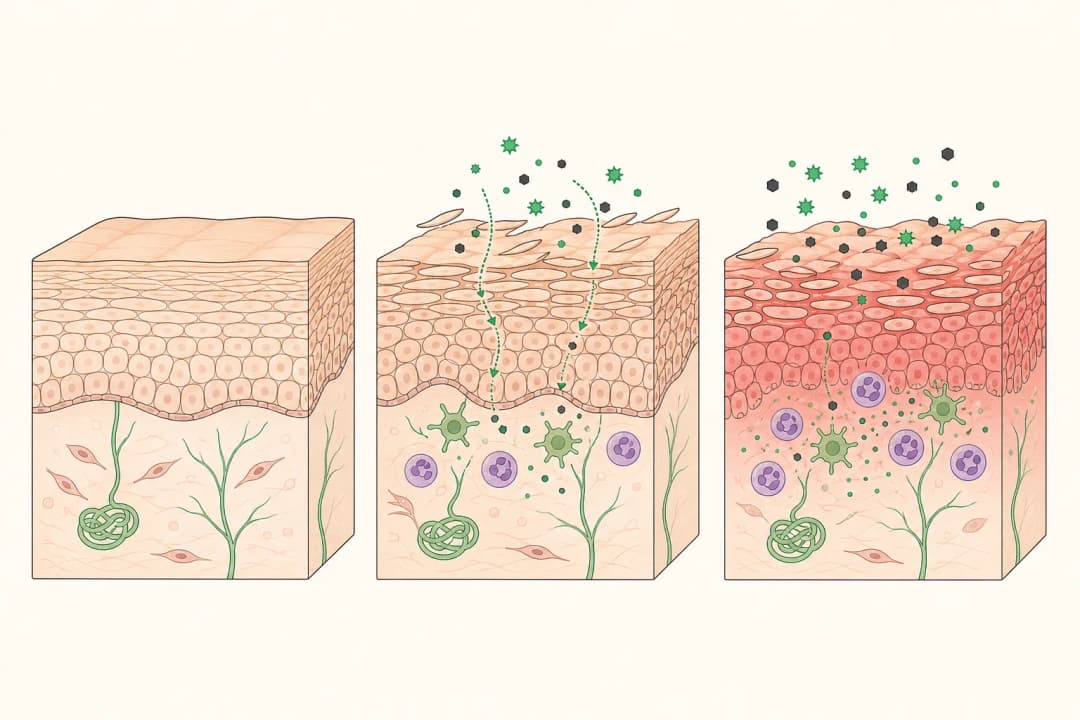
Irritant contact dermatitis occurs when direct exposure damages the skin barrier. Soaps, cleaning products, solvents, repeated handwashing, sweat and friction can all contribute. A topical corticosteroid reduces the inflammatory response, which may ease burning, redness, swelling and itch. It does not repair the barrier on its own and does not make continued exposure harmless. Cracked, weeping or infected skin may need a different plan.
Protecting the skin barrier
Follow the prescribed instructions and apply a thin layer to clean, dry skin. Identify the likely irritant with your clinician and reduce contact using suitable gloves or other protection; remove contaminated clothing and rinse exposed skin when appropriate. Use a bland moisturiser recommended for your situation, especially after washing. Avoid fragranced products and new cosmetics on the affected area until it settles. If work or household exposure continues, ask for a practical prevention plan.
When assessment is needed
Contact a clinician if the rash is spreading, repeatedly returning, painful, cracked or not improving after the exposure is removed. Prompt care is needed for pus, increasing warmth, fever or rapidly worsening swelling. Seek urgent help for facial or throat swelling, breathing difficulty or a widespread reaction. Persistent dermatitis may reflect allergy, infection or another skin condition rather than irritation alone.
Questions for your doctor
Ask which exposure is most likely, how long to use the corticosteroid, what moisturiser is suitable and whether protective equipment is needed. Ask how to distinguish irritation from allergy or infection if the rash returns.
Find care
General Clinics & Polyclinics in Abu Dhabi
That answer is general. If you want it applied to your own case, these are licensed general clinics & polyclinics listed in Abu Dhabi.
27 Ar Ruwwad St - Shakhbout City - MSH4 - Abu Dhabi - United Arab Emirates
Accepts: Daman, Thiqa, Cigna, MetLife +20 more
Al Ruwais, Al Dhafrah
Accepts: Daman, Thiqa, AXA, Cigna +16 more
Al Bahyah - Al Bahyah Old - Abu Dhabi - United Arab Emirates
Accepts: Daman, Thiqa, Cigna, Allianz Care +18 more
Abu Dhabi
Accepts: Daman, Thiqa, AXA, Cigna +27 more
Ordered by verification status and how complete each clinic's public record is, then alphabetically. This is a directory listing, not a ranking — Zavis does not rate or recommend providers.
A factual listing drawn from the DHA, DOH and MOHAP licence registers. It is not a referral, an endorsement, or advice that any of these providers is right for you.
Questions people ask
Will the corticosteroid protect me from the irritant?
No. It can calm inflammation, but ongoing exposure can continue damaging the skin barrier.
Why might the rash keep returning?
Repeated contact, an unrecognised exposure, allergy or another diagnosis can cause recurrence and needs review.
Keep reading
Medical disclaimer. This page is general health information, not medical advice, and it cannot diagnose you. Always consult a licensed healthcare provider about your own symptoms and treatment. In an emergency in the UAE, call 998 for an ambulance.