
What to expect from topical corticosteroids for bullous pemphigoid
Short answer
Topical corticosteroids can reduce blistering inflammation in bullous pemphigoid, but treatment needs close medical supervision.
This answers one question. It is not a diagnosis and does not replace an assessment by a licensed doctor.
At a glance
- Main aim
- Suppress blistering inflammation
- Care needed
- Specialist direction and wound monitoring
What to expect
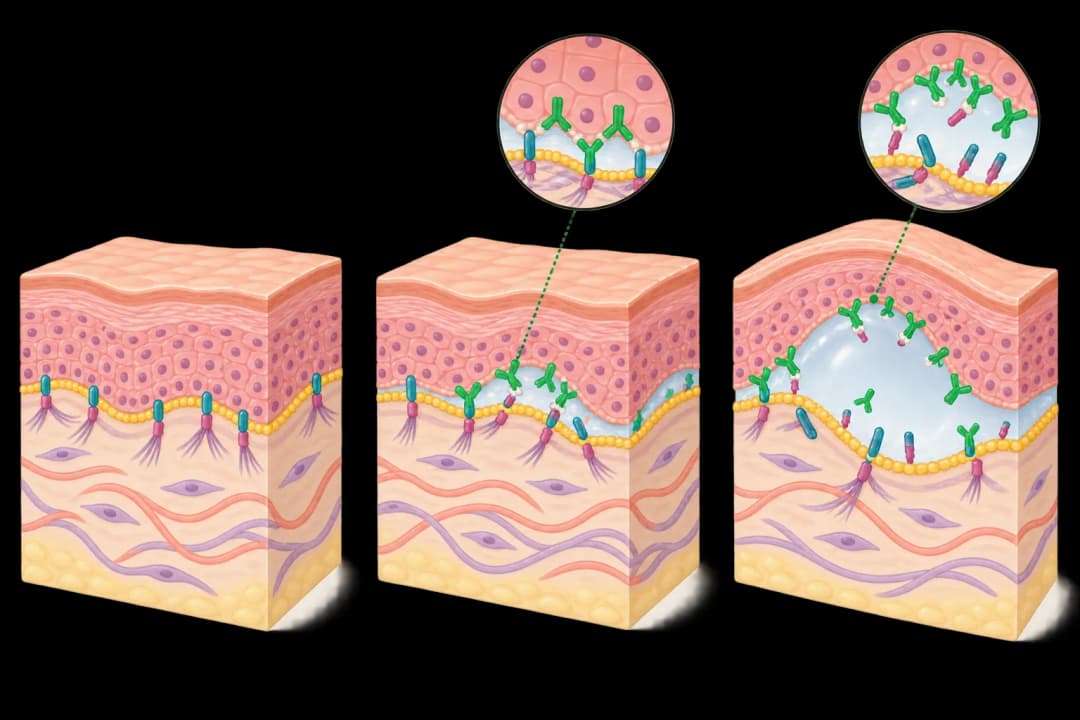
Bullous pemphigoid is an autoimmune blistering condition. A prescribed corticosteroid applied to affected skin can suppress inflammation, reduce new blister formation, and help existing areas heal. The treatment may involve large or multiple skin areas, so the plan should be set by a dermatologist rather than adjusted at home.
Blisters may take time to dry and heal, and fragile skin can remain vulnerable after inflammation improves. Your clinician may combine topical treatment with wound care or other medicines, depending on the extent of disease and your general health.
Care during treatment
Apply the medicine exactly as prescribed and avoid rupturing blisters. If a blister opens, keep the area clean and protect it with the dressing recommended by your care team. Wash hands before and after applying treatment, and use separate guidance for the face, folds, or mucosal areas.
Attend monitoring appointments and report new blisters, mouth soreness, swallowing difficulty, or treatment side effects. Do not stop a regular treatment suddenly or share medication. Older adults and people with other illnesses may need especially careful review of the overall plan.
When to seek care
Contact your care team promptly for rapidly increasing blisters, spreading redness, pus, fever, or worsening pain. Seek urgent help if mouth or throat involvement makes swallowing or breathing difficult, or if extensive skin loss causes weakness or poor fluid intake. Eye involvement also needs prompt assessment.
Questions for your doctor
Ask how much medicine to apply, how to dress open blisters, and which symptoms require same-day advice. Ask how progress will be monitored and whether any tablets or other treatments are part of your plan.
Find care
General Clinics & Polyclinics in Abu Dhabi
That answer is general. If you want it applied to your own case, these are licensed general clinics & polyclinics listed in Abu Dhabi.
27 Ar Ruwwad St - Shakhbout City - MSH4 - Abu Dhabi - United Arab Emirates
Accepts: Daman, Thiqa, Cigna, MetLife +20 more
Al Ruwais, Al Dhafrah
Accepts: Daman, Thiqa, AXA, Cigna +16 more
Al Bahyah - Al Bahyah Old - Abu Dhabi - United Arab Emirates
Accepts: Daman, Thiqa, Cigna, Allianz Care +18 more
Abu Dhabi
Accepts: Daman, Thiqa, AXA, Cigna +27 more
Ordered by verification status and how complete each clinic's public record is, then alphabetically. This is a directory listing, not a ranking — Zavis does not rate or recommend providers.
A factual listing drawn from the DHA, DOH and MOHAP licence registers. It is not a referral, an endorsement, or advice that any of these providers is right for you.
Questions people ask
Can topical treatment be used without specialist review?
Bullous pemphigoid can require extensive care, so treatment should be prescribed and monitored by a qualified clinician.
What if a blister breaks?
Clean and protect it according to your care team's instructions, and report increasing pain, redness, drainage, or fever.
Keep reading
Medical disclaimer. This page is general health information, not medical advice, and it cannot diagnose you. Always consult a licensed healthcare provider about your own symptoms and treatment. In an emergency in the UAE, call 998 for an ambulance.